

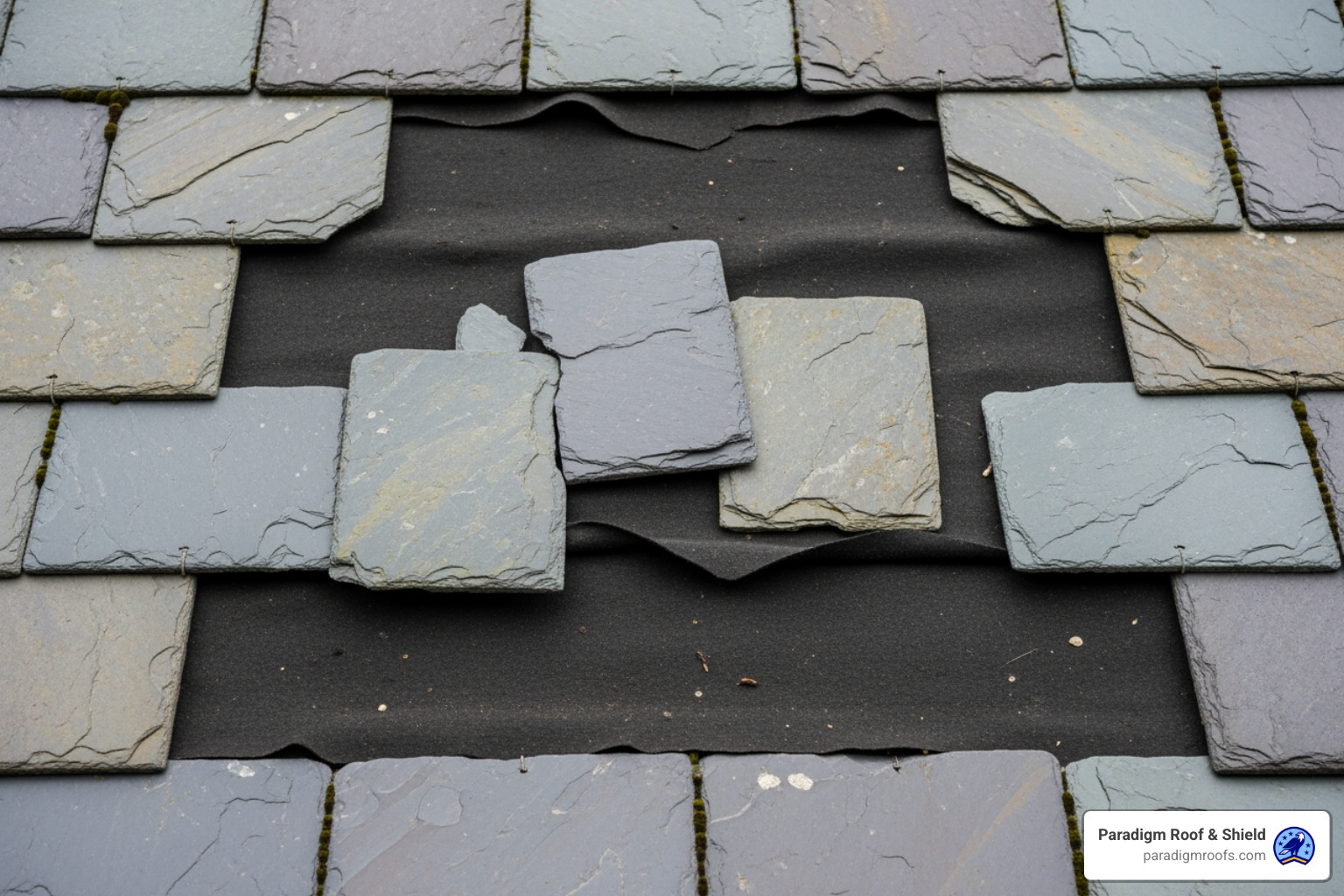
Why Loose Slates Demand Your Immediate Attention
Loose slates on roof systems are more than a cosmetic issue—they are an urgent maintenance problem that can lead to thousands of dollars in structural damage. A single slipping slate creates a pathway for water to compromise your underlayment, rot the roof deck, and damage interior ceilings. For homeowners looking to protect their property, partnering with experienced roofing professionals ensures repairs meet the exacting standards that slate roofing demands.
Quick Answer: How to Address Loose Slates
- Inspect annually from the ground using binoculars for visible gaps or uneven rows.
- Remove damaged slate using a slate ripper to extract old nails without breaking adjacent tiles.
- Install a replacement slate that matches the original’s size, texture, and color.
- Secure with copper nails or slate hooks, using a copper bib to prevent water penetration at the new nail hole.
- Call professionals if more than 20% of slates are damaged or if your roof pitch exceeds 6:12.
When to Replace vs. Repair: If 20-25% or more of your slates show damage, a full roof replacement is more cost-effective than ongoing repairs.
Slate roofs are prized for their beauty and durability, with lifespans exceeding 100 years. However, the nails or hooks holding them often fail long before the slate. Corroded nails, severe weather, and poor installation cause most slippage. When caught early, most loose slate problems are preventable and repairable, saving you from expensive emergency repairs.
I’m Greg Hiltz, CEO of Paradigm Roof & Shield. Throughout my career in construction and roofing, I’ve seen how a few loose slates can spiral into catastrophic failures. My experience has taught me that slate roofs require a unique combination of technical expertise and proactive maintenance to deliver their promised century-plus lifespan.
Why Do Slate Tiles Become Loose? The 5 Primary Causes
Slate roofs are celebrated for their resilience, but even the strongest materials have vulnerabilities. When you find loose slates on roof surfaces, it’s typically a symptom of one or more underlying issues. Understanding these primary causes is the first step toward effective repair and prevention. As experts in roofing, we’ve seen these issues manifest across various properties in McKinney TX, Houston TX, and Neptune Beach FL.
Failing Fixings and “Nail Sickness”
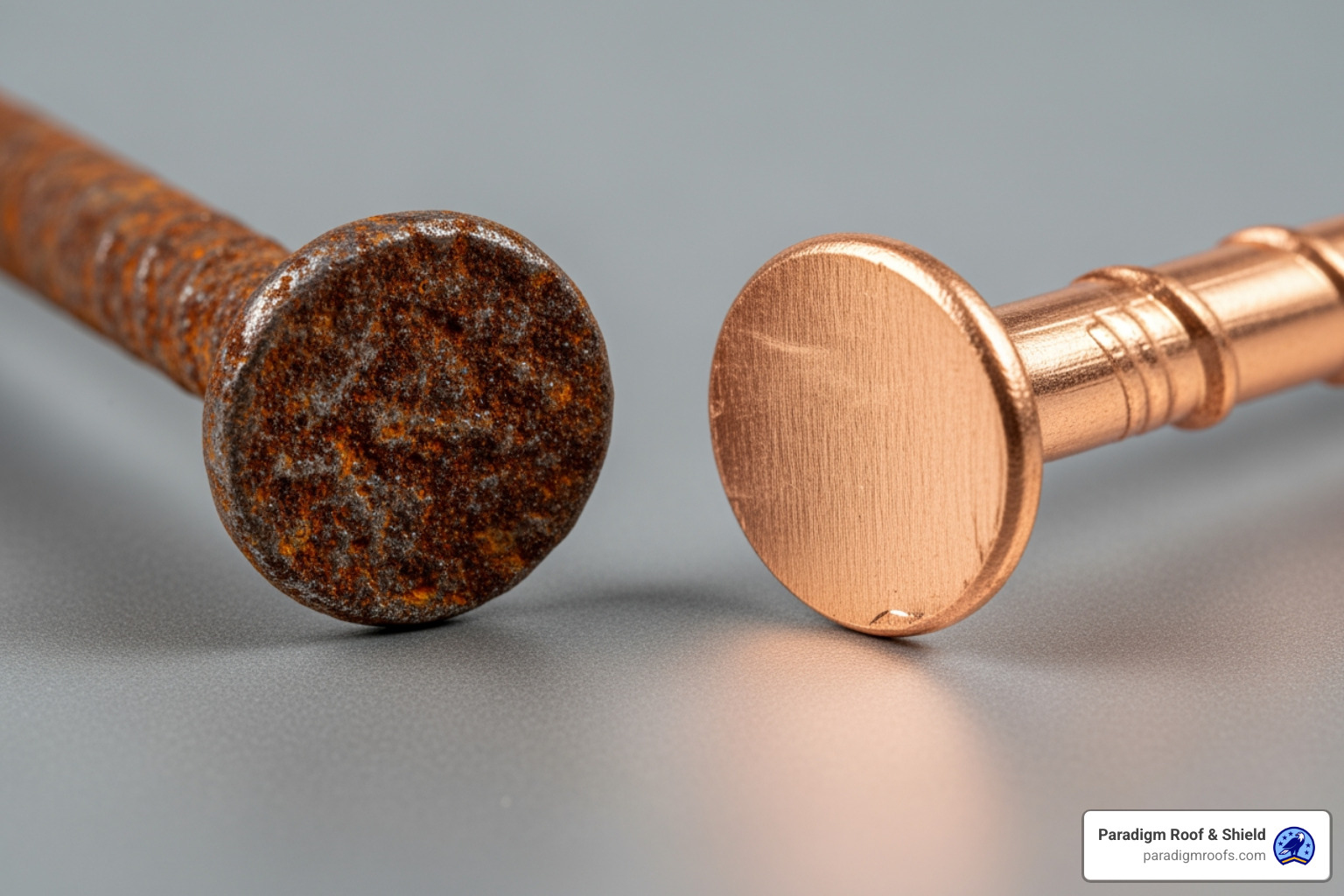
The most common cause of a slipped slate is not the tile itself but the metal fixing holding it. On older roofs, these original fasteners have often exceeded their lifespan, a condition known as “nail sickness.” A study on slate durability confirms that the integrity of slating nails is a key factor in assessing existing slate roofs. You can learn more about this in Mastering Roof Inspections: Slate Durability.
- Nail Corrosion: Older iron or steel nails corrode over decades of moisture exposure. As they rust and lose their grip, slates begin to slip.
- Fixing Fatigue: Over time, even non-corroded fixings can become brittle and weak, failing to hold heavy slates against wind and gravity.
- Improper Materials: Using galvanized steel instead of corrosion-resistant copper or stainless steel nails leads to premature failure. Galvanized coatings can be damaged during installation, exposing the steel to rust.
- Galvanic Corrosion: When dissimilar metals (like steel nails and copper flashing) are in contact, an electrochemical reaction can rapidly corrode the less noble metal.
Weather and Environmental Factors
While slate is exceptionally durable, continuous exposure to the elements can take its toll.
- Wind Uplift: Strong winds, common in coastal areas like Neptune Beach FL or during storms in Houston TX, can get under slates, creating a lever effect that dislodges them and their neighbors.
- Heavy Rain: Persistent rain accelerates the corrosion of metal fixings and can rot the underlying wood if it penetrates past the slate.
- Freeze-Thaw Cycles: Water that seeps behind slates can freeze, expand, and gradually push tiles out of place or weaken their fixings. Slate itself is resistant, but the system is vulnerable.
- Moss and Algae Growth: Moss acts like a sponge, trapping moisture against the roof. This constant dampness accelerates wood rot and worsens the effects of freeze-thaw cycles.
Poor Installation Practices
Even the highest quality slate can fail prematurely if not installed correctly.
- Improper Nailing: If nails are overdriven, they can crack the slate. If underdriven, they prevent the slate from lying flat, leaving it vulnerable to wind.
- Insufficient Headlap: This is the vertical overlap between slates. Too little headlap creates a direct path for water to penetrate the roof, rotting the deck and corroding nails.
- Inexperienced Installers: Slate roofing is a specialized trade. Untrained installers often make critical errors that lead to failure years later. Our veteran-led teams ensure technical excellence from the start.
- Faulty Underlayment: If the secondary water barrier (underlayment) is damaged or poorly installed, it won’t protect the roof deck, leading to faster decay of the entire system.
Structural Movement
Subtle movements in your home’s structure can loosen slates over time.
- Settlement and Shifting: All buildings settle. This movement, or more severe foundation issues, can stress the roof frame, causing slates to shift or crack.
Physical Impact
Direct physical impact can easily damage or dislodge slate.
- Falling Debris & Foot Traffic: Falling tree branches or hail can crack slates. Similarly, improper foot traffic is a major cause of damage, as slate is brittle. Only trained professionals should ever access a slate roof.
How to Spot Loose Slates on Your Roof: 7 Telltale Signs
Spotting loose slates on roof surfaces early is key to preventing minor issues from escalating into major, costly repairs. While a professional inspection is invaluable, homeowners can often spot these initial signs from the safety of the ground.
Exterior Signs of Slipped Slates
These are the most direct indicators you can observe during a visual inspection. For safety, always inspect your roof from the ground using binoculars.
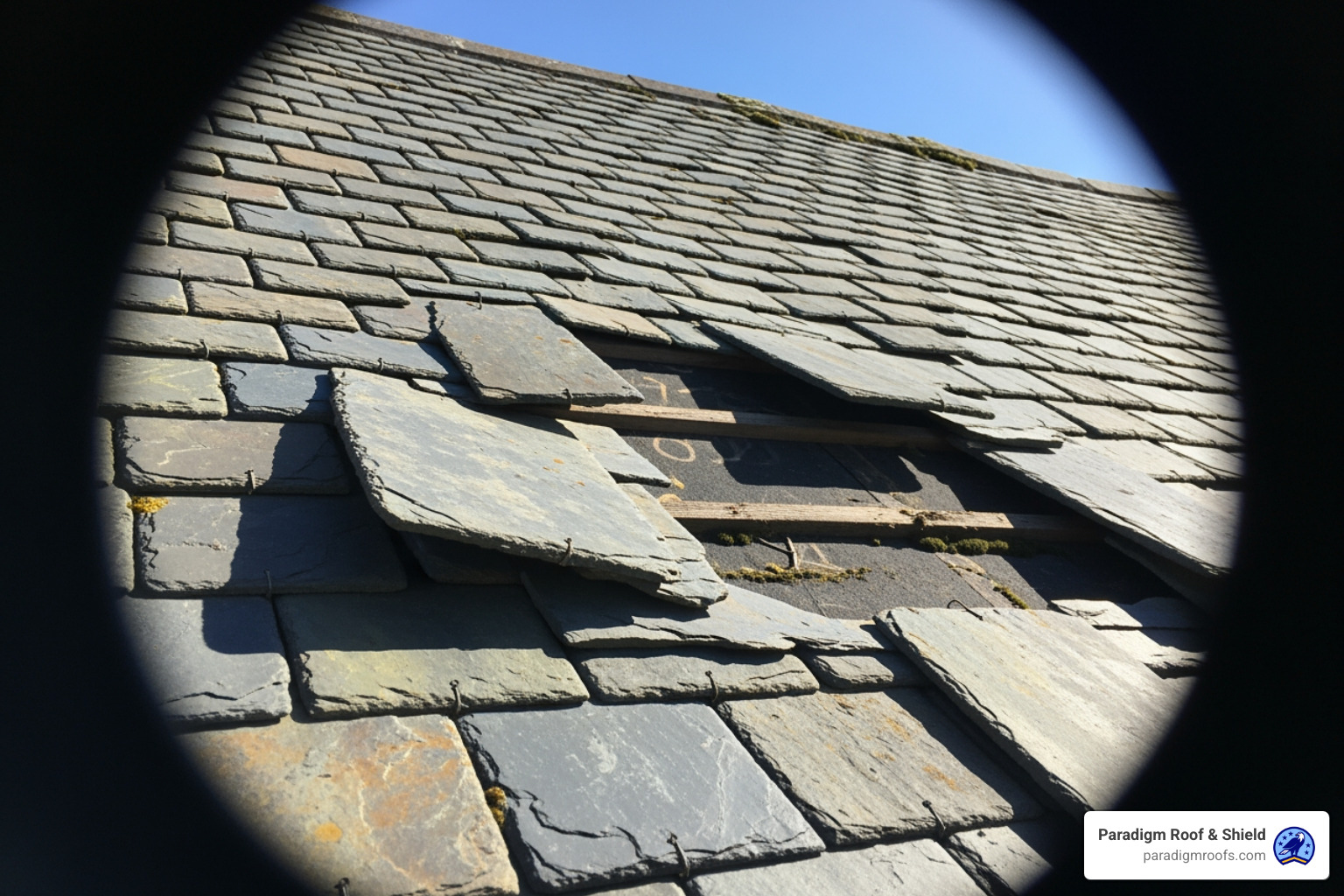
- Visible Gaps: Look for spaces between slates where there shouldn’t be any. These gaps allow water to penetrate beneath the surface.
- Uneven Slate Rows: Slate courses should run in straight, parallel lines. If you notice any rows that appear wavy, crooked, or misaligned, it’s a strong sign that slates have shifted.
- Sliding or Protruding Slates: A slate resting at an odd angle, sliding downward, or protruding further than its neighbors indicates that its fixings have failed.
- Slate Debris on Ground: Finding pieces of slate, or even whole slates, around your property is an undeniable sign of roof damage.
- Damaged Flashing: Flashing around chimneys, skylights, and valleys is critical. If you see bent, corroded, or missing flashing, it compromises the entire roof system.
Interior and Audible Warning Signs
Sometimes, your roof will tell you it has a problem from the inside out.
- Water Stains on Ceilings: This is the most obvious internal sign of a leak. Discoloration or peeling paint on ceilings or walls indicates water penetration.
- Damp Patches in Attic: If you have an accessible attic, check for damp spots, mold, or mildew on the underside of the roof deck or insulation. A musty smell is also an indicator.
- Musty Odors: Persistent musty smells in your home, especially after rain, can suggest hidden dampness from water ingress.
- Rattling Noises During Wind: If you hear rattling or flapping sounds from your roof during windy conditions, it’s a clear sign that slates are loose and moving.
A Step-by-Step Guide to Fixing Loose Slates on Your Roof
Addressing loose slates on roof systems is a delicate task that requires precision and specialized tools. While minor repairs might seem like a DIY project, we strongly emphasize that slate work is a specialized skill. Improper repairs can cause more damage, leading to higher costs down the line.
Safety First: Essential Precautions
Safety must be your absolute priority for any roof work. Roofing is inherently dangerous, and working with slate adds unique risks.
- Use a Sturdy Ladder: Place it on firm, level ground and ensure it extends at least three feet above the roofline.
- Wear Non-Slip Footwear: Shoes with excellent grip are essential to minimize the risk of slipping.
- Wear a Safety Harness: On steep or high roofs, a securely anchored safety harness is non-negotiable.
- Know When to Call a Pro: Avoid DIY repairs if you are uncomfortable with heights, lack proper tools, or the roof is steep (over a 6:12 pitch). Walking on slate requires training to avoid breaking more tiles, making professional help the safest and most effective option.
Tools and Materials You’ll Need
Having the right tools is critical for a successful and safe slate repair.
- Slate Ripper: This specialized tool slides under slates to hook and cut old nails without disturbing surrounding tiles.
- Slate Hammer: A hammer with a pointed end for punching nail holes and a broad face for driving nails.
- Copper or Stainless Steel Nails: These non-corrosive nails are crucial for longevity. Never use galvanized steel nails.
- Slate Hooks: A metal hook used to secure a replacement slate without visible nailing.
- Matching Replacement Slates: It’s essential to match the original slate’s size, shape, texture, and color.
The Permanent Repair Process for loose slates on your roof
This process is for replacing a single broken or missing slate. For multiple loose slates, professional intervention is recommended.
- Step 1: Access the Slate: Carefully and safely position your ladder to reach the damaged slate.
- Step 2: Remove Old Nails: Slide the slate ripper under the damaged slate to hook and cut the old nails. Once the nails are gone, the slate will slide out.
- Step 3: Position New Slate: Slide your new, matching slate into the empty space, ensuring it aligns with surrounding slates and maintains the correct headlap.
- Step 4: Secure the Replacement:
- Using a Slate Hook: A slate hook is a common method. It slides under the course above and hooks the bottom of the new slate. The top of the hook is then nailed into a vertical joint, hiding the nail.
- Using a Copper Bib: Alternatively, drive a copper nail through the vertical joint just above the new slate, so the nail head holds the slate’s top edge. Then, slide a small copper sheet (a “bib”) into the joint above the nail, covering it completely to make it waterproof.
Temporary Fixes vs. Permanent Solutions for loose slates on your roof
While a permanent repair is always the goal, a temporary fix may be needed to prevent immediate water damage.
- Tingles and Straps: Narrow strips of copper or lead can be used to temporarily hold a slipped slate in place. They are not a substitute for a proper repair.
- The Dangers of Mastic: Never use roofing cement, tar, or sealants for slate repair. These “quick fixes” trap moisture, damage the slate, make permanent repairs more difficult, and look unsightly.
- Permanent Solutions Address the Cause: A proper repair using nails or hooks is the only lasting solution. It restores the roof’s water-shedding function and addresses the root cause, such as failed fixings, preventing the problem from recurring.
- For more in-depth information on the various services we offer for tile and slate roofing, including comprehensive repair solutions, visit our dedicated page: More info about tile and slate roofing services.
The High Cost of Neglect: Why Prompt Repairs Are Crucial
Ignoring loose slates on roof systems is like ignoring a small crack in a dam—it will inevitably lead to a bigger, more catastrophic failure. The benefits of addressing loose slate issues promptly cannot be overstated, as the consequences of neglect can be severe and costly for homeowners in McKinney TX, Houston TX, and Neptune Beach FL.
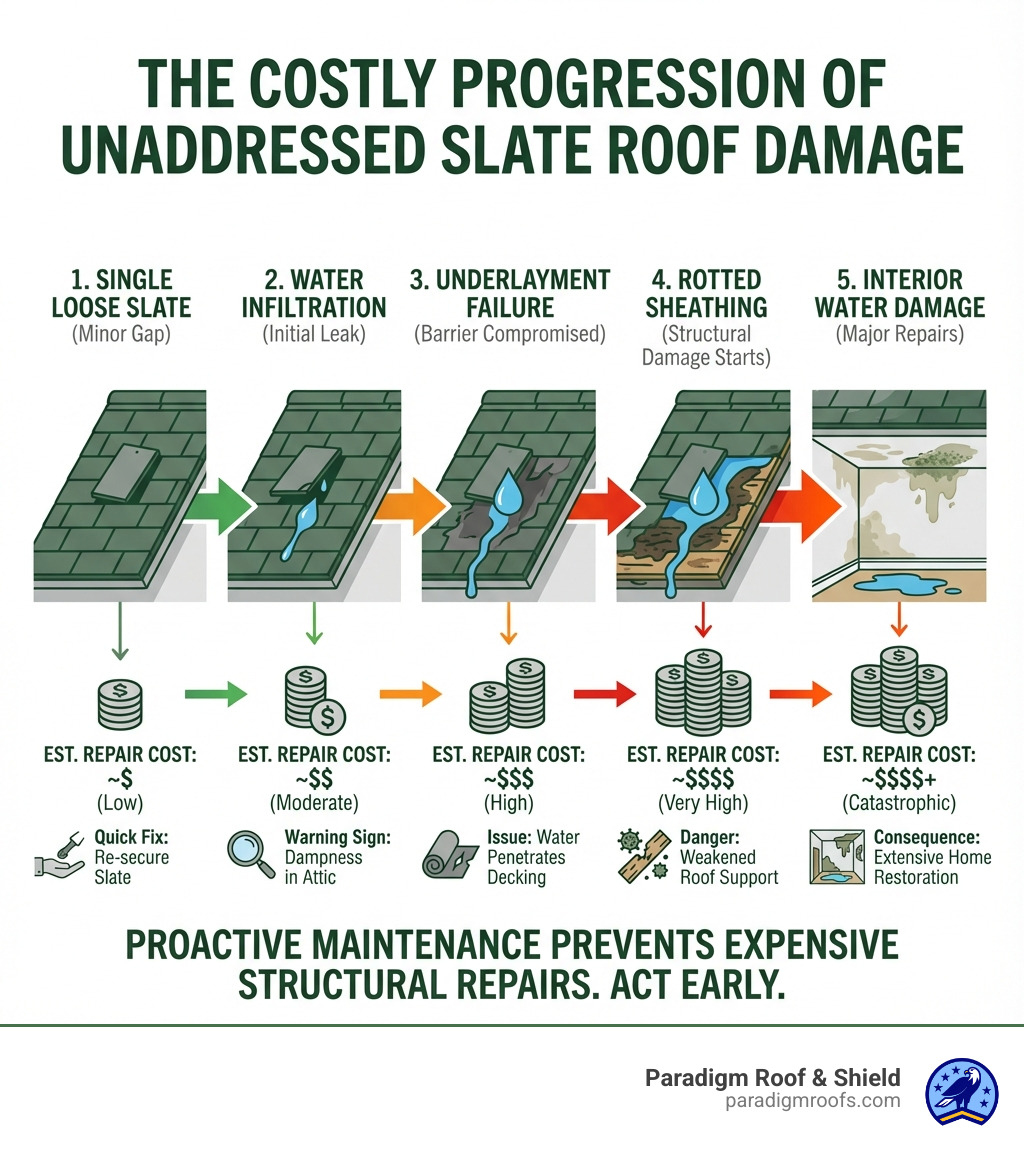
From a Small Leak to Major Structural Damage
A single loose or missing slate is an open invitation for water to invade your home’s protective envelope.
- Water Penetration: A single slipped slate breaks the roof’s water-shedding armor, allowing rain to get to the underlayment.
- Underlayment Failure: This secondary water barrier isn’t designed for constant water exposure and will quickly degrade, tear, and fail.
- Rotted Roof Deck: Water then soaks the wooden roof deck (sheathing), causing rot that weakens the entire roof structure.
- Structural Timber Rot: Eventually, water reaches the rafters and trusses. Rot in these critical supports can lead to a sagging roof or even collapse.
- Higher Energy Bills: Wet insulation is ineffective, forcing your HVAC system to work harder and driving up energy costs.
Repair vs. Replace: The 20% Rule
Deciding whether to repair individual loose slates on roof systems or opt for a full replacement is a critical decision. A general rule of thumb used by professionals helps guide this choice.
- The 20% Rule: If 20-25% or more of your slates are damaged, missing, or failing, a full roof replacement is typically more cost-effective than endless spot repairs.
- End of Serviceable Life: A roof with widespread issues is likely at the end of its serviceable life. While the slate may be sound, the fasteners and underlayment have failed, making replacement the only logical long-term solution.
- For homeowners with historic properties, the decision to repair or replace also carries significant architectural considerations. Guidance on historic slate roof repair emphasizes preserving original materials.
- For an example of how a comprehensive roof replacement project can revitalize a property, take a look at our Example of a full tile re-roof project.
Frequently Asked Questions about Loose Slate Roofs
How long does a slate roof last?
A slate roof’s lifespan is remarkable but varies by slate type. Soft slates last 50-125 years, while hard slates can last 75-200+ years. This longevity depends entirely on the quality of the original installation and ongoing maintenance. The slate’s geological source and mineral content are key factors, but even the best slate will fail prematurely if neglected or poorly installed. You can find more insights in A look at slate roof lifespans.
When should I call a professional for loose slates?
For safety and to ensure an effective repair, it’s crucial to know when to call a professional for loose slates on roof systems. Contact an expert if:
- Your roof is steep or tall: Working on a tall, steep roof is incredibly dangerous. Our teams have the safety gear and experience to work safely on any pitch.
- You see widespread damage: If you find more than a few isolated loose slates, a comprehensive professional assessment is needed.
- You find water stains inside: Internal water stains or musty smells indicate an active leak that requires immediate expert attention.
- You’re uncomfortable with heights: Never put your safety at risk. Roofing is a demanding skill that requires training and experience.
- You suspect structural issues: If you believe the problem stems from rotted timbers or compromised sheathing, a professional inspection is crucial.
- You can’t find matching slate: Sourcing the correct replacement slate can be difficult. We have the network to find the best match for your roof.
- The material is fragile and heavy: Individual slates are heavy and brittle. Handling them without training often leads to more damage or injury.
Our veteran-led teams at Paradigm Roof & Shield are committed to technical excellence and can provide thorough inspections and lasting repairs for your slate roof in McKinney TX, Houston TX, or Neptune Beach FL.
Can I walk on my slate roof?
No. It is strongly advised that you never walk on a slate roof.
Slate is brittle and can easily crack under concentrated weight. Walking on it, especially without proper technique, can lead to:
- Cracked Slates: You will likely crack or dislodge slates, creating new leaks.
- Fall Risk: Loose or cracked slates are unstable and create a serious fall hazard.
- Voided Warranties: Damage from foot traffic can void your roof’s warranty.
Professionals use specialized equipment, like roof ladders and scaffolding, to distribute weight and steer the roof safely. For any inspection or repair, leave it to the experts.
Conclusion: Protect Your Investment with Proactive Slate Roof Care
A well-maintained slate roof is more than just a covering for your home; it’s a testament to timeless beauty, exceptional durability, and a wise investment. Identifying and addressing loose slates on roof systems promptly is the single most important action you can take to prevent costly water damage and ensure your roof delivers its promised century-plus lifespan. From corroded nails to the unforgiving forces of nature, many factors can contribute to slippage, but with vigilance and timely intervention, these issues are manageable.
At Paradigm Roof & Shield, we believe in craftsmanship, innovation, and integrity. Our veteran-led team is committed to technical excellence, ensuring that every repair or installation meets the highest standards. We understand the unique challenges and specialized care that slate roofs demand, whether your property is in McKinney TX, Houston TX, or Neptune Beach FL. Don’t let a few loose slates compromise your home’s integrity.
If you suspect issues with your roof, or simply want the peace of mind that comes with a professional assessment, let our experts provide a thorough evaluation. See an example of our quality slate craftsmanship and request an evaluation for your San Antonio slate roof today.