

Why a Black Roof Coating for Metal Roof Delivers Both Protection and Style
A black roof coating for metal roof systems creates a seamless, waterproof barrier that extends your roof’s lifespan by 10 to 20 years while delivering a bold, modern appearance. While white and reflective coatings dominate discussions around energy efficiency, black coatings excel at corrosion protection, rust prevention, and aesthetic change—especially valuable in colder climates where heat absorption can reduce ice buildup and heating costs.
Top reasons property owners choose black roof coatings:
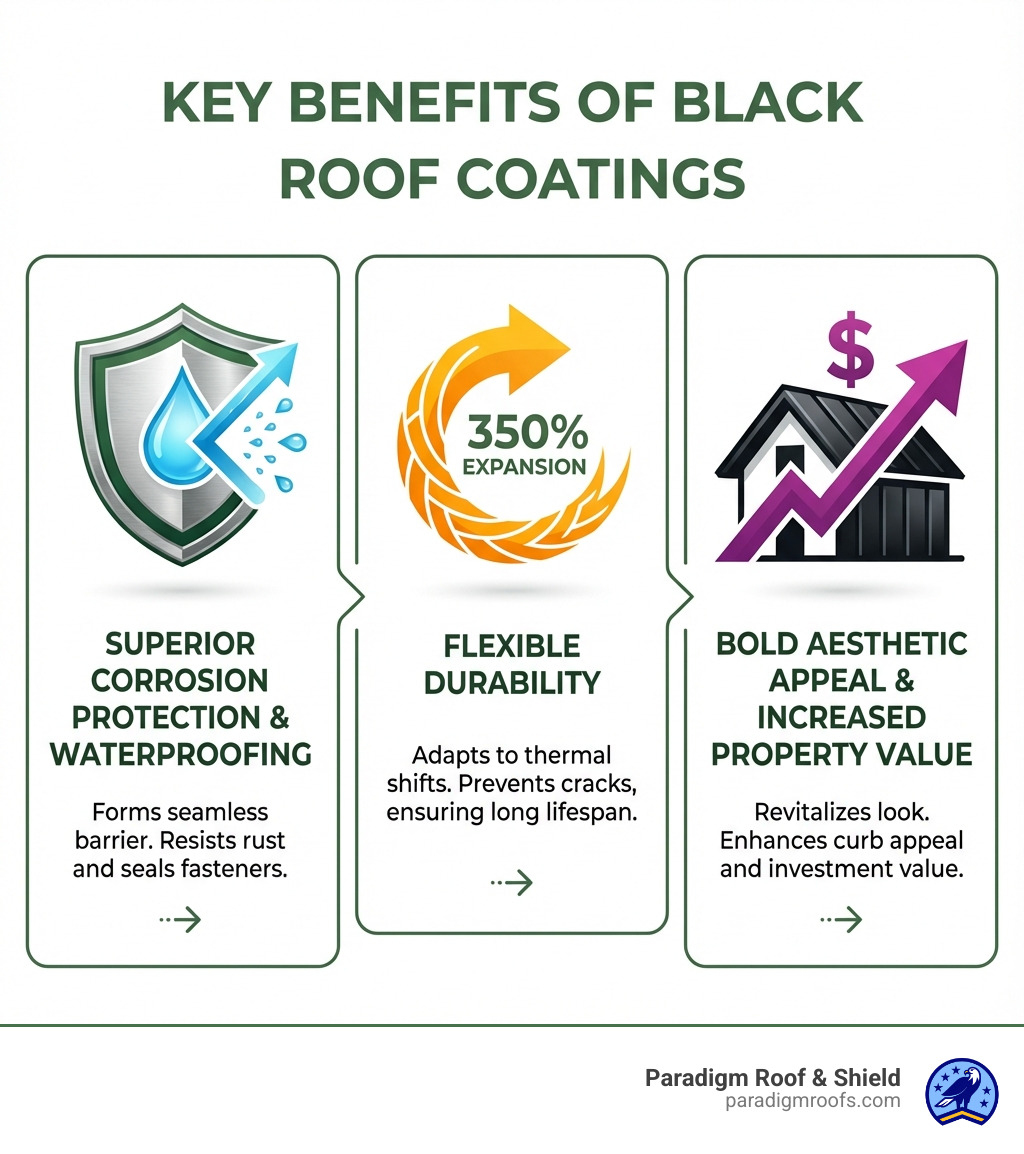
- Superior Waterproofing – Forms a monolithic, seamless membrane that seals seams, fasteners, and minor imperfections
- Maximum Corrosion Protection – Industry data shows properly applied coatings reduce corrosion rates by up to 80%
- Flexible Durability – Elastomeric formulations expand up to 350% with temperature changes, preventing cracks
- Bold Aesthetic Appeal – Revitalizes aging roofs with a uniform, modern finish that conceals stains and discoloration
- Extended Lifespan – Professional-grade coatings add 10-20 years to your metal roof’s service life
For comprehensive guidance on protecting your investment, explore our commercial metal roofing solutions that combine technical expertise with transparent communication.
As Greg Hiltz, CEO and co-owner of Paradigm Roof & Shield, I’ve guided countless property owners through complex roofing decisions, including selecting the ideal black roof coating for metal roof applications that balance protection, performance, and aesthetics. My background in construction operations and commitment to technical excellence ensures you receive honest, expert guidance for your long-term roofing investment.
The Core Benefits: Why Coat Your Metal Roof Black?
When we talk about a black roof coating for metal roof systems, we’re not just discussing a cosmetic upgrade; we’re investing in a robust protective layer. Metal roofs are inherently durable, but even the strongest can benefit significantly from a high-quality coating. This application isn’t merely about aesthetics; it’s about enhancing performance, extending life, and securing your property’s future. Let’s explore the primary benefits.
Superior Protection Against the Elements
The most crucial role of a black roof coating is to act as an impenetrable shield against the relentless forces of nature. We’re talking about everything from driving rain and harsh sunlight to corrosive industrial pollutants.
First and foremost, a black roof coating creates a monolithic, waterproof membrane. Think of it as a custom-fitted, seamless glove for your roof. This continuous layer seals off all the vulnerable points that metal roofs naturally have, such as seams where panels meet, fasteners that penetrate the surface, and even tiny imperfections or hairline cracks that can develop over time. This seamless barrier is absolutely critical because it prevents water from seeping into your building structure, which can lead to costly interior damage and mold growth.
Next up, corrosion and rust prevention. Metal roofs, especially those made from steel, are susceptible to rust when exposed to moisture and oxygen. A properly applied coating forms an airtight and watertight seal, effectively encapsulating the metal beneath. This cuts off the oxygen and moisture supply, stopping rust in its tracks and preventing new corrosion from forming. According to industry data, metal roof coatings can reduce corrosion rates by up to 80%, significantly preserving the structural integrity and longevity of your metal roof. This protective layer also guards against UV radiation, which can degrade metal over time and contribute to its breakdown. By blocking these elements, the coating acts as a sacrificial layer, taking the brunt of the weather so your actual metal roof doesn’t have to.
Durability and Extended Lifespan
Metal roofs are already celebrated for their long lifespan—often 30 to 50 years or more. But a professional-grade black roof coating for metal roof can push that even further, adding an impressive 10 to 20 years to your roof’s service life. That’s like getting a bonus decade or two out of your existing roof system!
How does it achieve this magic? It’s all about flexibility and resilience. Metal roofs naturally expand and contract with temperature fluctuations throughout the day and across seasons. This constant movement can stress the metal and lead to fatigue, loosening of fasteners, and even cracking. Modern coatings, especially elastomeric formulations, are engineered for incredible flexibility. Some can flex up to 350% their original size without cracking, effectively moving with your roof. This prevents the coating itself from cracking, peeling, or delaminating, ensuring it maintains its protective barrier year after year. This ability to stretch and recover is a game-changer for durability. We’ve seen how this flexibility maintains long-term adhesion, even in climates with extreme temperature swings like those we experience in McKinney, TX or Houston, TX.
This renewable layer of protection means you can often restore your existing roof rather than undertaking a costly and disruptive full replacement. It’s a proven investment in your property’s future, reducing capital expenses and minimizing operational downtime.
Best Aesthetic Appeal
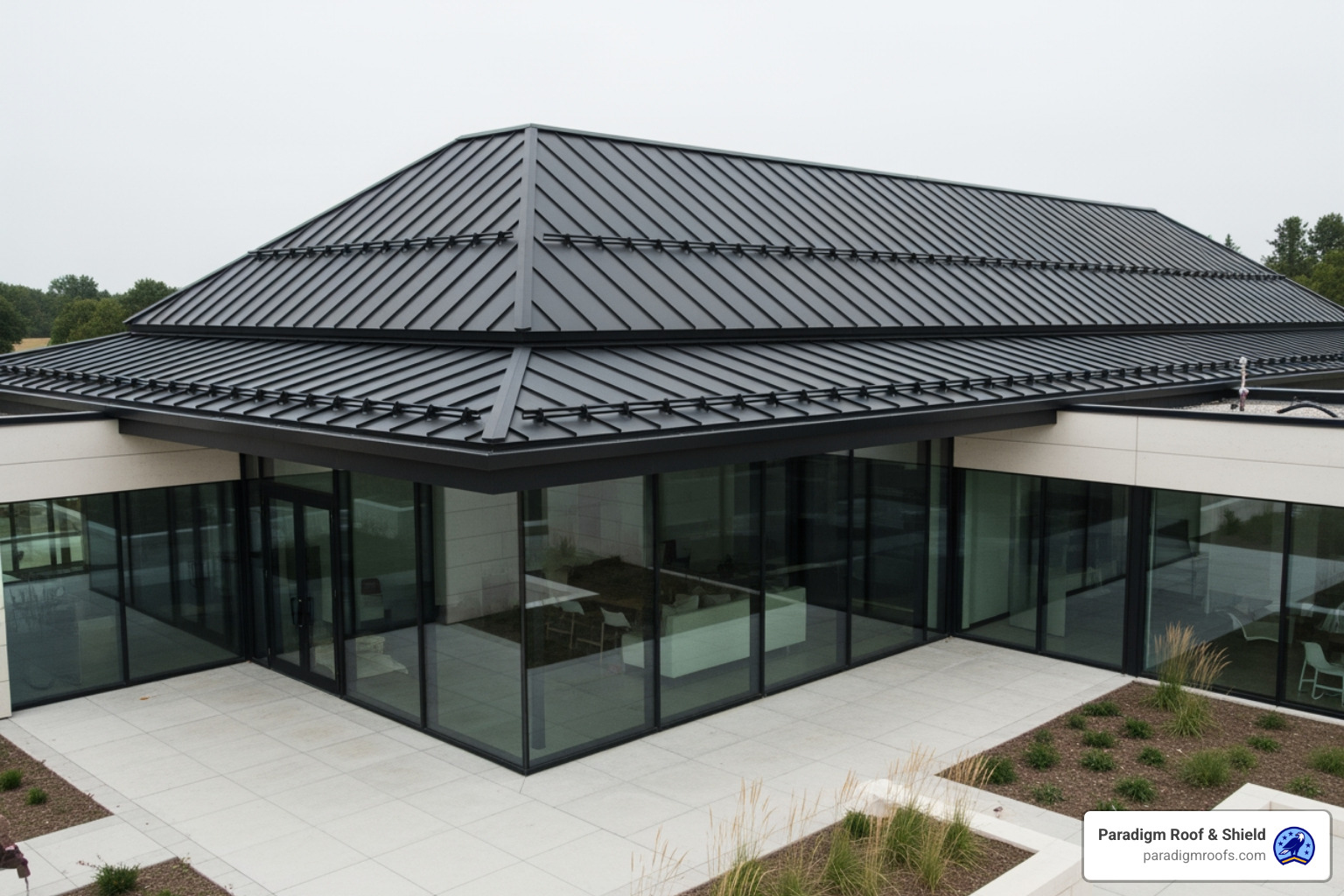
Beyond the practical benefits, let’s be honest: a black roof coating for metal roof simply looks fantastic. It delivers a bold, uniform, and sophisticated finish that can dramatically revitalize your building’s appearance. Imagine an aging, perhaps faded or stained, metal roof transformed into a sleek, modern statement.
A black coating effectively conceals existing stains, discoloration, and other signs of aging, providing a fresh, like-new look that instantly boosts curb appeal. The deep, rich color creates a strong visual anchor for your property, giving it a commanding presence. Whether it’s a commercial warehouse, an agricultural building, or a residential property, a black roof exudes a sense of strength, modernity, and high-end design. It’s a choice that stands out, making a powerful impression and potentially increasing your property’s value.
Types of Black Roof Coatings and How They Differ
Choosing the right black roof coating for metal roof applications can feel like navigating a maze, but understanding the fundamental differences between types will simplify your decision. Each material offers unique properties suited to different needs, climates, and roof conditions.
Here’s a quick overview to help you compare:
| Feature | Acrylic Coatings (Black) | Silicone Coatings (Black) | Elastomeric Coatings (Black) |
|---|---|---|---|
| Key Feature | Cost-effective, good UV protection | Superior waterproofing, ponding water resist. | High flexibility, crack resistance |
| Waterproofing | Good (not ideal for ponding water) | Excellent (especially for ponding water) | Very Good |
| UV Resistance | Good (prevents degradation of coating itself) | Excellent | Good |
| Flexibility | Good | Moderate | Excellent (up to 350% elongation) |
| Cost | Lower | Higher | Moderate to High |
This table will help you understand the fundamental differences and select the best material for your specific needs. Let’s dig deeper into each type.
Elastomeric Coatings: The Flexible All-Rounder
Elastomeric coatings are perhaps the most popular choice for metal roof restoration, and for good reason. The term “elastomeric” itself hints at their key characteristic: elasticity. These coatings are prized for their exceptional flexibility and durability, making them a fantastic choice for metal roofs that are constantly expanding and contracting.
These are typically water-based acrylic coatings that, once cured, form a thick, rubber-like membrane. This rubbery quality allows the coating to stretch and move with your metal roof during temperature changes, preventing the cracking and peeling that can plague less flexible materials. We’re talking about formulations that can flex up to 350% without damage, as seen in products like Black Jack® Ultra-Roof 1000. This flexibility is crucial for maintaining a watertight seal and extending the roof’s life.
Elastomeric coatings offer strong waterproofing capabilities and effective UV protection. While black elastomeric coatings will absorb more heat than their white counterparts, their inherent UV resistance helps protect the coating itself from degradation, ensuring its long-term performance. Brands like KOOL SEAL offer black elastomeric roof coatings, demonstrating their viability for those seeking a darker aesthetic with robust protection. They are a versatile choice, offering a balanced blend of protection, durability, and cost-effectiveness for various metal roof types.
Silicone Coatings: The Waterproofing Champion
When it comes to sheer waterproofing power, silicone coatings often take the crown. These solvent-based coatings are particularly effective against ponding water, making them an ideal solution for flat or low-slope metal roofs where water tends to collect after rain. Unlike some other coatings, silicone maintains its integrity even when submerged, providing a truly impermeable barrier.
Silicone coatings are also highly resistant to UV degradation. They don’t chalk or become brittle over time, meaning their protective qualities remain strong for many years. This durability translates into a long lifespan, often exceeding 15-20 years with proper application and maintenance. While silicone coatings are generally more expensive than acrylics, their superior performance in challenging conditions, particularly where ponding water is an issue, often justifies the investment. They also tend to be less flexible than elastomeric coatings, but their robust nature makes up for it in waterproofing.
One consideration for black silicone coatings is their tendency to attract dirt more than lighter colors, which might slightly dull their aesthetic over time. However, their long-term waterproofing and UV resistance are best, providing excellent protection for your metal roof. Products like CPR White Coating, while typically white, demonstrate the advanced, monolithic rubber-like membrane and high tensile strength common in quality silicone systems, which can be formulated in black for similar protective benefits.
Acrylic Coatings: The Cost-Effective UV Blocker
Acrylic coatings are another popular choice, particularly for their ease of application and cost-effectiveness. These are water-based coatings that are generally simple to apply with rollers or sprayers, making them a more DIY-friendly option for smaller projects, though professional application is always recommended for comprehensive coverage.
Black acrylic coatings offer good durability and flexibility for most sloped metal roof applications where water drains effectively. They are known for their strong UV resistance, which helps prevent the coating itself from breaking down under intense sunlight. While they might not offer the same ponding water resistance as silicone, they are a solid choice for protecting metal roofs from the elements and extending their life.
Their lower material cost makes them an attractive option for budget-conscious property owners who still want the significant benefits of a roof coating. However, for roofs with potential ponding water issues or extreme thermal cycling, an elastomeric or silicone coating might be a more suitable long-term investment.
The Big Question: Heat, Energy, and Your Black Roof Coating for Metal Roof
Choosing a black roof coating for metal roof involves a critical discussion about heat absorption and energy efficiency. While black offers undeniable aesthetic and protective benefits, its interaction with solar radiation is different from lighter colors. Let’s tackle this head-on.
Understanding Heat Absorption
It’s a fundamental principle of physics: black surfaces absorb more solar radiation (heat) than lighter-colored surfaces. A black-coated metal roof will inevitably reach higher surface temperatures under direct sunlight compared to a white or light-colored roof. This increased heat absorption means more heat can transfer into your building, potentially increasing the demand on your HVAC system and driving up cooling costs in warm, sunny climates.
For instance, highly reflective white “cool roof” coatings, like Rust-Oleum® 710 or NanoTech’s Cool Roof Coat, can reflect up to 80-90% of solar energy, significantly reducing HVAC expenses by keeping the roof surface much cooler. A black coating won’t offer this reflective cooling benefit; instead, it will absorb heat. This is the primary trade-off to consider when opting for a black finish.
When a Black Roof Coating Makes Sense
Despite the increased heat absorption, a black roof coating for metal roof is an excellent choice in several specific scenarios, and for many property owners, the benefits outweigh the thermal considerations.
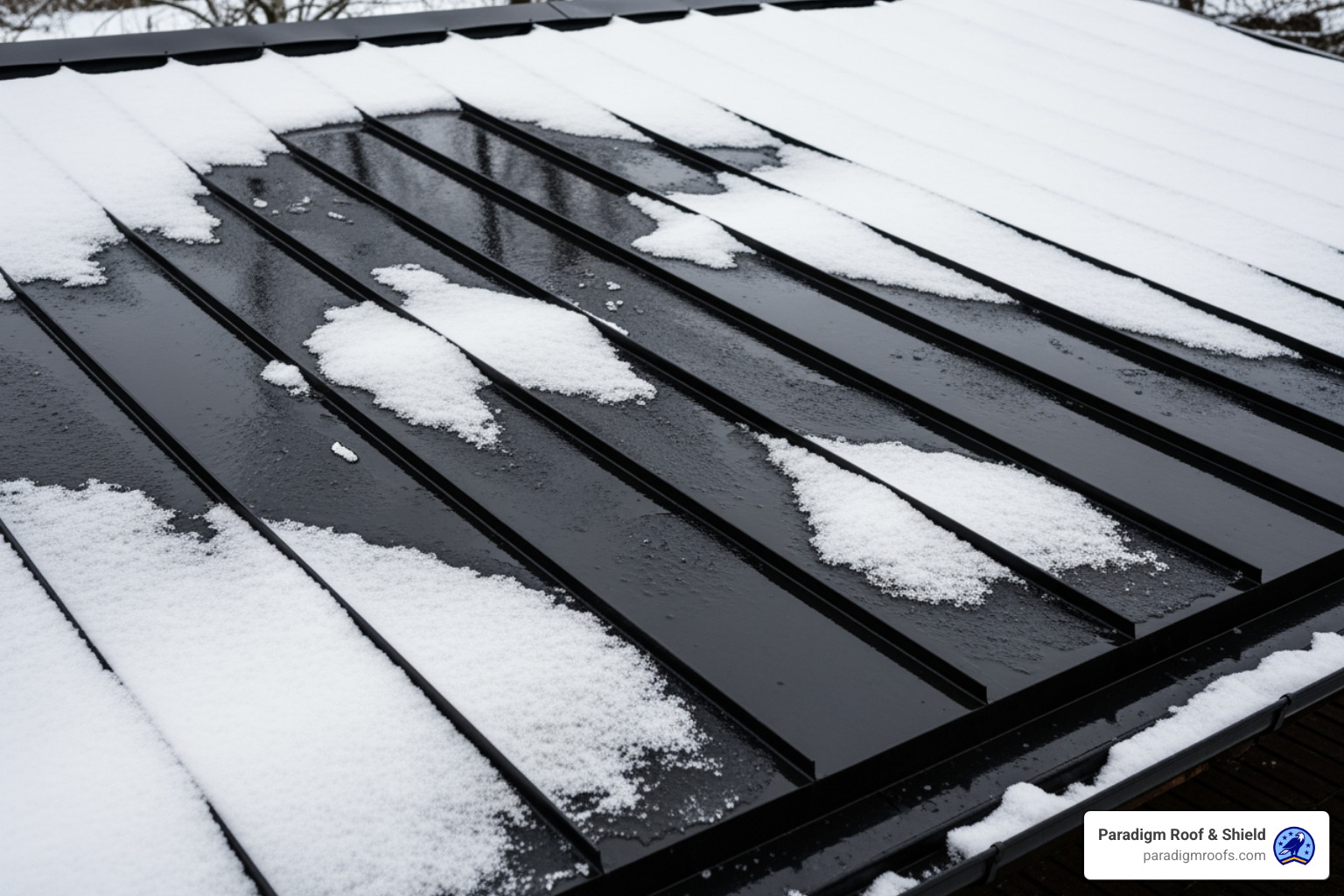
1. Colder Climates: In regions with long, cold winters, the heat-absorbing properties of a black roof can actually be an advantage. The absorbed solar energy can help melt snow and ice accumulation more quickly, reducing the structural load on your roof and minimizing the risk of ice dams. This natural snowmelt can also contribute to lower heating bills by subtly warming the building. For properties in areas that experience significant snowfall, like parts of the northern U.S. or even occasional heavy winters in states like Texas, this can be a practical benefit.
2. Focus on Protection and Durability: For many, the primary goal of a roof coating is maximum protection against corrosion, rust, and leaks, along with extending the roof’s lifespan. Black coatings, particularly elastomeric and silicone formulations, provide exceptional waterproofing and durability, creating a robust barrier that can add decades to your roof’s life. If your priority is long-term structural integrity and minimizing maintenance, a black coating delivers. The protection it offers against the elements can be more valuable than marginal cooling cost savings, especially if your building’s insulation is already excellent or if energy costs are not your top concern.
3. Aesthetic Preference: Let’s not underestimate the power of aesthetics. A black metal roof offers a bold, modern, and sophisticated look that many property owners desire. It can significantly improve curb appeal and create a distinctive architectural statement. If the visual impact is a high priority for your property, and you’re in a climate where cooling costs aren’t prohibitive, or you have effective internal cooling systems, then the aesthetic benefit of a black coating can certainly justify the choice.
4. Specific Building Types: For certain industrial or agricultural buildings, where internal temperature regulation isn’t as critical, or where some passive heat gain might even be desirable (e.g., to keep certain storage areas slightly warmer), a black coating can be a perfectly suitable and beneficial choice.
The decision balances the desire for a striking black aesthetic and superior long-term protection against the potential for increased heat absorption. We always recommend considering your specific climate, building insulation, HVAC system efficiency, and overall priorities.
Application and Maintenance: A Step-by-Step Guide
Applying a black roof coating for metal roof systems is a precise process that, when done correctly, ensures maximum longevity and performance. While some might consider it a DIY project, we strongly advocate for professional application, especially for larger or commercial roofs, to guarantee a flawless, watertight finish.

The Application Process: Preparation is Key
The success of any roof coating hinges on meticulous surface preparation. Skipping steps here can lead to premature failure, peeling, and wasted investment. Here’s how we approach it:
-
Thorough Cleaning: This is arguably the most critical step. We begin with a high-pressure wash, typically at least 2,000 psi, to blast away all dirt, debris, loose granules, chalking, mold, algae, and any existing loose paint or rust. If there are any grease or oily deposits, we use industrial-grade cleaners or degreasers to ensure the surface is pristine. An absolutely clean surface is essential for proper adhesion of the new coating.
-
Repairs and Priming: Once clean, we carefully inspect the entire roof for any damage.
- Rust Treatment: Any existing rust is treated and removed, and then a rust-inhibitive primer is applied to prevent future corrosion. For steel surfaces, rusty or corroded metal, specific primers like Rust-Oleum 115 Hybrid Epoxy 1K primer are crucial. Bare galvanized metal without rust may not require a primer, but assess.
- Seam and Fastener Reinforcement: Metal roofs have many seams and fasteners, which are common points of failure. We seal and waterproof these areas using specialized sealants and, where necessary, embed reinforcement fabric into the sealant to create a strong, flexible, and watertight bond. This also applies to flashing details around penetrations like pipes, vents, and HVAC units.
- Addressing Substrate-Specific Needs: Different metal types or existing roof conditions (e.g., weathered single-ply membranes, existing modified bitumen) may require specific adhesion primers. For instance, EPDM, PVC, PIB, TPO, and Hypalon often need a dedicated adhesion primer like Rust-Oleum 105 Single Ply Adhesion Primer to ensure proper bonding of the topcoat.
-
Coating Application: With the roof prepped and primed, we proceed with applying the black roof coating.
- Environmental Conditions: It’s vital to apply the coating only when air, material, and surface temperatures are within the manufacturer’s specified range (typically 50-100°F or 10-38°C) and relative humidity is below 85%. Applying in unsuitable conditions can compromise the cure and adhesion.
- Mixing: The coating is thoroughly mixed with a power-assisted mechanical mixer until it’s smooth and consistent.
- Layering: We typically apply two coats of the black roof coating. This ensures complete coverage and builds up the necessary film thickness for optimal protection and durability. Professional-grade sprayers are often used for large areas to achieve a uniform, pinhole-free finish, though rollers (e.g., 3/8” nap) and brushes are used for edges and details.
While small patches might be DIY-friendly, a full roof restoration using a black roof coating for metal roof is best handled by experienced professionals. We have the specialized equipment, knowledge of proper surface preparation, and expertise to ensure optimal adhesion and a truly watertight, long-lasting seal. For more details on avoiding common installation errors that can undermine your roof’s integrity, we encourage you to review our guide on metal roofing installation mistakes.
Lifespan and Maintenance for a Black Roof Coating for Metal Roof
The typical lifespan of a professionally applied black roof coating for metal roof can vary significantly, generally ranging from 7 to 20 years. This range depends on several factors, including the type of coating used (elastomeric, silicone, or acrylic), the quality of the application, the severity of the local climate (e.g., intense UV exposure in Neptune Beach, FL, versus temperature swings in Houston, TX), and the amount of ongoing maintenance. Some high-performance coatings, like certain silicone systems, can even extend beyond 20 years.
Fortunately, maintaining a metal roof with a black coating is relatively straightforward and contributes significantly to achieving its maximum lifespan:
-
Annual Inspections: We recommend at least annual visual inspections, and ideally semi-annual ones (spring and fall). Look for any signs of damage, such as peeling, blistering, cracking, or areas where the coating might be thinning. Pay close attention to seams, fasteners, and flashing details, as these are often the first areas to show wear. Addressing minor issues promptly can prevent them from escalating into major problems.
-
Regular Cleaning: While a black roof might not show dirt as readily as a white one, periodic cleaning is still beneficial for maintaining its appearance and ensuring the coating performs optimally. Washing the roof every few years with a gentle pressure wash (low pressure, using a broad spray pattern) can remove accumulated dirt, pollen, and environmental pollutants that can dull the finish. Avoid harsh chemicals or abrasive cleaning methods that could damage the coating.
-
Prompt Repairs: If you do notice any small areas of damage during your inspections—a minor tear, a lifted edge, or a small crack—address them immediately. Most coating manufacturers offer repair kits or specific procedures for patching these areas. Timely repairs prevent water intrusion and stop the damage from spreading, effectively extending the coating’s life.
By following these simple maintenance steps, you can ensure your black-coated metal roof continues to provide superior protection and maintain its bold aesthetic for many years to come.
Conclusion: Make a Bold, Protective Choice for Your Roof
Choosing a black roof coating for a metal roof is a strategic decision that prioritizes long-term protection, durability, and striking aesthetics. While it naturally absorbs more heat than lighter colors, its ability to create a seamless, waterproof barrier against rust and corrosion is invaluable—especially in colder climates where it can aid in snowmelt and even slightly reduce heating demands. By selecting the right type of coating—whether it’s a highly flexible elastomeric, a superior waterproofing silicone, or a cost-effective acrylic—and ensuring professional application, you can add decades to your roof’s life and boost your property’s curb appeal.
We understand that every property has unique needs, and navigating the options for metal roof coatings can be complex. That’s where we come in. For expert advice, professional application, and comprehensive commercial metal roofing solutions that stand the test of time, trust the veteran-led team at Paradigm Roof & Shield. We’re committed to craftsmanship, innovation, and integrity, serving our communities in McKinney, TX, Houston, TX, and Neptune Beach, FL.
Contact us today at (844) 772-7234 for a consultation and let us help you make a bold, protective choice for your roof.