

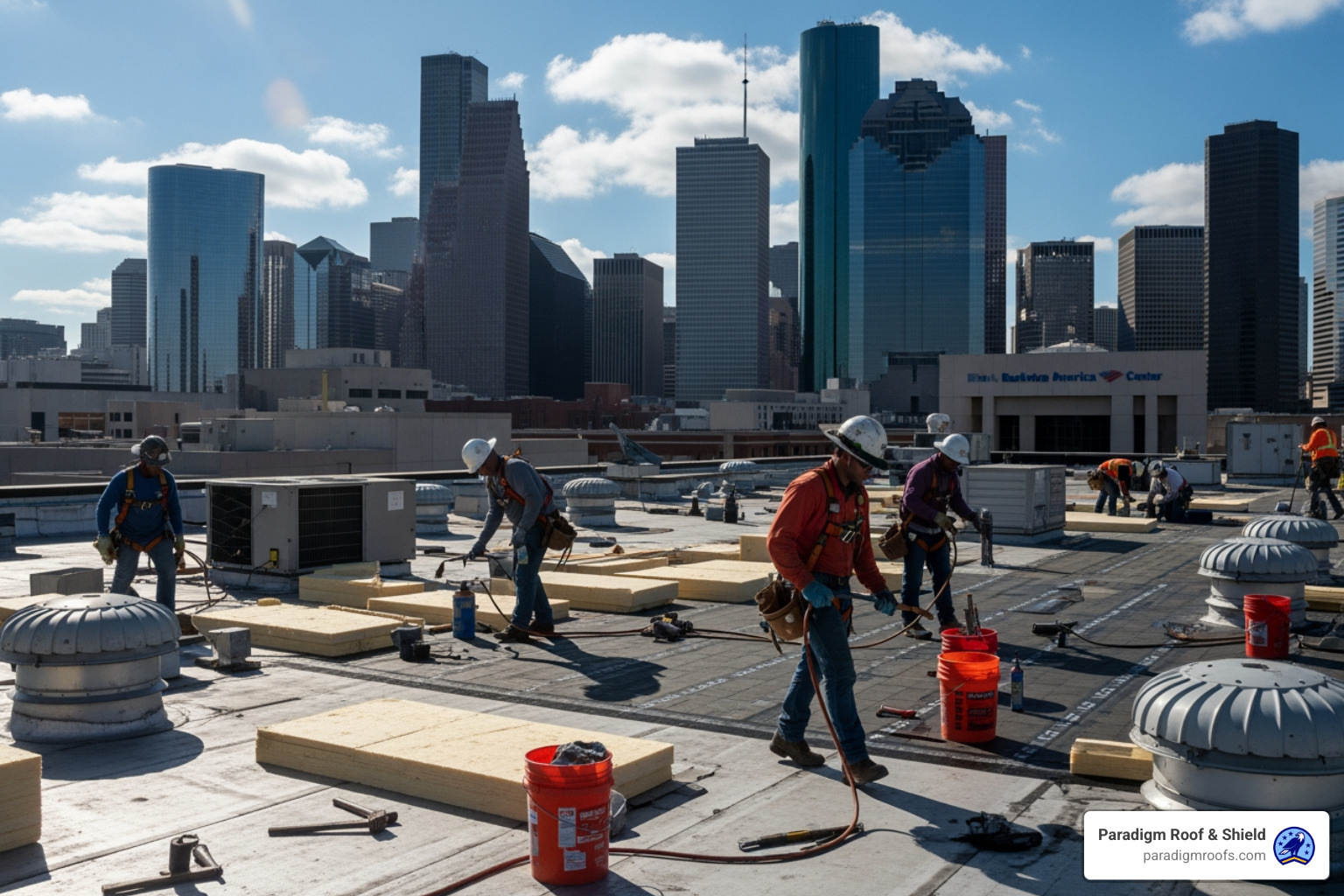
Why Commercial Roof Repair Houston Matters for Your Business
Commercial roof repair Houston is a critical investment for protecting your business from the city’s extreme weather. Intense heat, high humidity, and frequent storms can turn minor roof issues into major disasters that disrupt operations and damage property. As a leading provider of expert residential and commercial roofing services, Paradigm Roof & Shield understands that a well-maintained roof is your first line of defense. This guide offers data-driven insights to help Houston business owners make informed decisions without unnecessary expenses.
Quick Answer: Finding Commercial Roof Repair in Houston
- Identify damage early: Look for water stains, ponding water, membrane damage, or rising energy costs.
- Choose certified contractors: Verify insurance, manufacturer certifications (GAF, Johns Manville), and RCAT membership.
- Get multiple estimates: Request detailed, written quotes that explain repair vs. replacement options.
- Check local experience: Partner with contractors who understand Houston’s unique climate challenges.
- Verify warranties: Ensure both material and workmanship coverage before signing.
Houston’s climate is particularly brutal on commercial roofs. With humidity levels averaging over 75% year-round and temperatures regularly exceeding 90°F, even small roof problems escalate quickly. Industry data shows that up to 80% of commercial roof replacements are premature—proper repair and maintenance can extend your roof’s life by decades, saving substantial capital. The right contractor makes all the difference, especially since Texas doesn’t require roofing licenses. Our veteran-led team specializes in helping Houston businesses steer commercial roof repair Houston decisions with honest assessments and technical excellence.
For comprehensive commercial roofing solutions custom to Houston’s climate, visit our commercial TPO roofing services page.
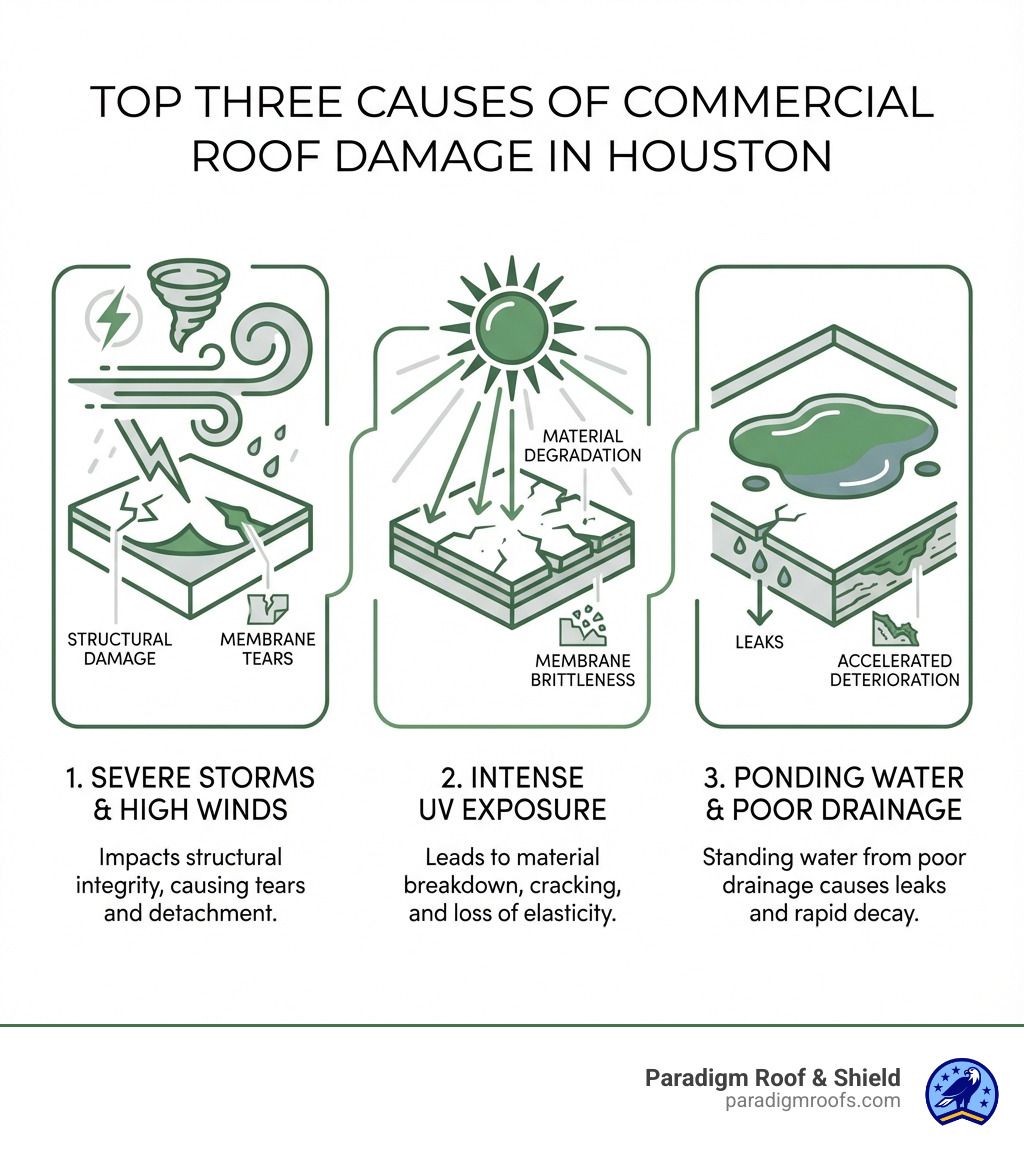
Houston’s Climate: The Ultimate Test for Commercial Roofs
Houston’s weather ranks among the most challenging in the U.S. for commercial roofing, with high humidity, extreme heat, and frequent storms causing unique types of damage. Early detection is critical to avoid expensive repairs and business interruptions. Our team understands that a well-maintained roof is crucial for the safety, security, and longevity of your commercial property, especially in such a demanding environment.
Key Signs of Commercial Roof Damage
Spotting commercial roof damage early can save you significant time and money. As business owners, you should regularly look for these common indicators:
- Water stains on ceilings or walls: These are often the most obvious signs of a roof leak, indicating water has penetrated the roofing system and reached the interior.
- Bubbling or blistering of roofing material: This suggests moisture trapped beneath the membrane, often due to high humidity and heat, which can lead to further degradation.
- Cracked seams or membrane splits: These are direct pathways for water intrusion, often caused by thermal expansion and contraction, or UV degradation.
- Ponding water after rainfall: If water remains on your roof for more than 48 hours, it can accelerate membrane deterioration, lead to structural issues, and create a breeding ground for mold.
- Damaged or missing flashing: Flashing around vents, skylights, and edges is critical for waterproofing. If it’s compromised, water will find its way in.
- Clogged roof drains or gutters: Blocked drainage systems prevent water from properly evacuating the roof, leading to ponding and potential overflow.
- Unexplained increases in energy bills: A compromised roof can lose its insulating properties, leading to higher heating and cooling costs as your HVAC system works harder.
- Visible punctures or tears: Debris, foot traffic, or even animal activity can cause physical damage to the roof membrane.
How Houston’s Weather Impacts Your Roof
Houston’s unique climate—marked by scorching summer temperatures exceeding 90°F, humidity levels over 75% throughout the year, and strong winds up to 70 mph during serious weather events—puts immense stress on commercial roofs. This combination creates a perfect storm for various types of damage:
- UV degradation and membrane breakdown: Constant exposure to intense sunlight causes roofing materials to break down, become brittle, and lose their elasticity. This is particularly true for single-ply membranes like TPO, EPDM, and PVC, which can become susceptible to damage from UV exposure over time.
- Thermal shock from rapid temperature swings: The significant temperature fluctuations from day to night, or between seasons, cause materials to expand and contract. This constant movement stresses seams and fasteners, leading to cracks and splits.
- Wind uplift and storm-related damage: Houston experiences numerous high-impact weather events annually. Strong winds can lift roof edges, tear membranes, and dislodge flashing. During serious weather events, winds can reach up to 70 mph, causing significant damage.
- Hail impact and surface granule loss: Hailstorms, though less frequent than wind, can cause immediate and severe damage, impacting the surface granules of asphalt-based roofs and potentially creating punctures in single-ply systems.
- Moisture intrusion and mold risk: High humidity and heavy rainfall create an environment ripe for moisture intrusion. If water gets trapped within the roofing system, it can lead to mold growth, rot, and structural damage, necessitating prompt commercial roof repair Houston.
- Salt spray and corrosion: For properties near the Gulf Coast, salt spray can accelerate corrosion of metal components and degrade certain roofing materials.
Understanding these challenges is key to proactively protecting your investment. To learn more about safeguarding your property, we recommend you learn how to prepare your roof for Houston storms.
The Value of Preventative Maintenance
Preventative maintenance is not just a good idea; it’s a necessity for commercial roofs in Houston. Many roofing manufacturers even recommend, and sometimes require, a preventative maintenance program to maintain warranty coverage. Our proactive approach helps extend your roof’s lifespan and prevents minor issues from escalating into costly repairs.
- Scheduled professional inspections: Regular, thorough inspections by experienced professionals can identify potential problems before they become critical. We often use advanced tools like thermal drone inspections to pinpoint issues accurately.
- Routine debris and gutter cleaning: Keeping your roof free of debris and ensuring gutters and drains are clear prevents water from ponding and causing accelerated deterioration.
- Minor sealant and flashing repairs: Addressing small issues like deteriorating sealants or loose flashing immediately can prevent significant water intrusion.
- Extending roof lifespan and maintaining warranty compliance: Regular maintenance can significantly extend the life of your roof, sometimes by decades, and is crucial for keeping your manufacturer’s warranty valid.
Repair or Replace? Making the Smart Choice for Your Houston Business
Industry research shows that up to 80% of commercial roof replacements are performed before they are truly necessary. Knowing when to repair versus replace can save your business significant capital and minimize operational downtime. Our veteran-led team believes in honest assessments, even if it means recommending repairs over full replacements when it’s the right solution for your budget and long-term needs.
When to Opt for Commercial Roof Repair
Repairing your commercial roof is often the most cost-effective and least disruptive solution. We always aim to provide an affordable and enduring roof repair solution custom to your specific needs. You should consider repair when:
- Isolated leaks or punctures: If the damage is confined to a small area, a targeted repair can effectively seal the breach and prevent further water intrusion.
- Minor membrane or flashing damage: Small cracks, tears, or localized flashing issues can often be patched or resealed without affecting the overall integrity of the roof.
- Localized storm or wind impact: If only a section of your roof has sustained damage from a storm, repairing that specific area is usually sufficient.
- Budget limitations: When a full replacement isn’t financially feasible, timely repairs can buy you valuable time and extend the roof’s functional life.
For a deeper dive into these critical decisions, explore our insights on more on repair vs. replacement decisions.
When Full Replacement Is Necessary
While we prioritize repairs, there are times when a full commercial roof replacement is the only viable option to ensure the long-term protection and stability of your building. This is typically necessary when:
- Widespread or recurring leaks: If your roof experiences constant leaks in multiple areas, it often indicates systemic failure beyond simple spot repairs.
- Roof age exceeds manufacturer’s lifespan: Even with meticulous maintenance, every roof has a finite lifespan. For example, TPO and PVC roofs generally last 20-30 years, EPDM 25-30 years, and metal roofs 40-70 years. If your roof is nearing or past its expected life, replacement might be more economical than continuous repairs.
- Extensive wet insulation or structural issues: Wet insulation significantly reduces your roof’s thermal performance and can lead to structural rot. If a large portion of the insulation is compromised, replacement is usually required.
- Multiple previous repairs with ongoing problems: A roof that has undergone numerous repairs but continues to fail suggests underlying issues that only a complete overhaul can address.
Understanding Costs and Financing
The cost of commercial roof repair Houston can vary significantly. Getting accurate estimates and understanding financing options are crucial steps for any business owner.
- Factors influencing cost:
- Roof size: Larger roofs naturally require more materials and labor.
- Material type: Different roofing systems have varying material costs (e.g., TPO, metal, modified bitumen).
- Extent of damage: A minor patch is far less expensive than extensive membrane replacement.
- Accessibility: Roofs that are difficult to access may incur higher labor costs.
- Permits and regulations: Local building codes and permits can add to the overall cost.
- How to get accurate, written estimates: Always request a detailed, written estimate from any contractor. This should clearly outline the scope of work, materials to be used, timeline, and total cost. Be wary of estimates that seem too low, as they may indicate hidden costs or subpar materials. We provide transparent, on-time, and accurate proposals based on plans and specifications.
- Navigating insurance claims and available financing options: For damage caused by storms or other covered events, we can assist you with comprehensive insurance claim assistance. Additionally, we understand that unexpected repairs can strain budgets, which is why we offer financing solutions to help make the process easier.
Houston’s Most Common Commercial Roofing Systems & Their Repairs
Houston’s commercial buildings feature a range of roofing systems, each with specific characteristics and repair needs. Our team is licensed to install all major roofing systems, ensuring we have the expertise to handle your specific roof type. Identifying your roof type is the first step to effective, lasting repairs.
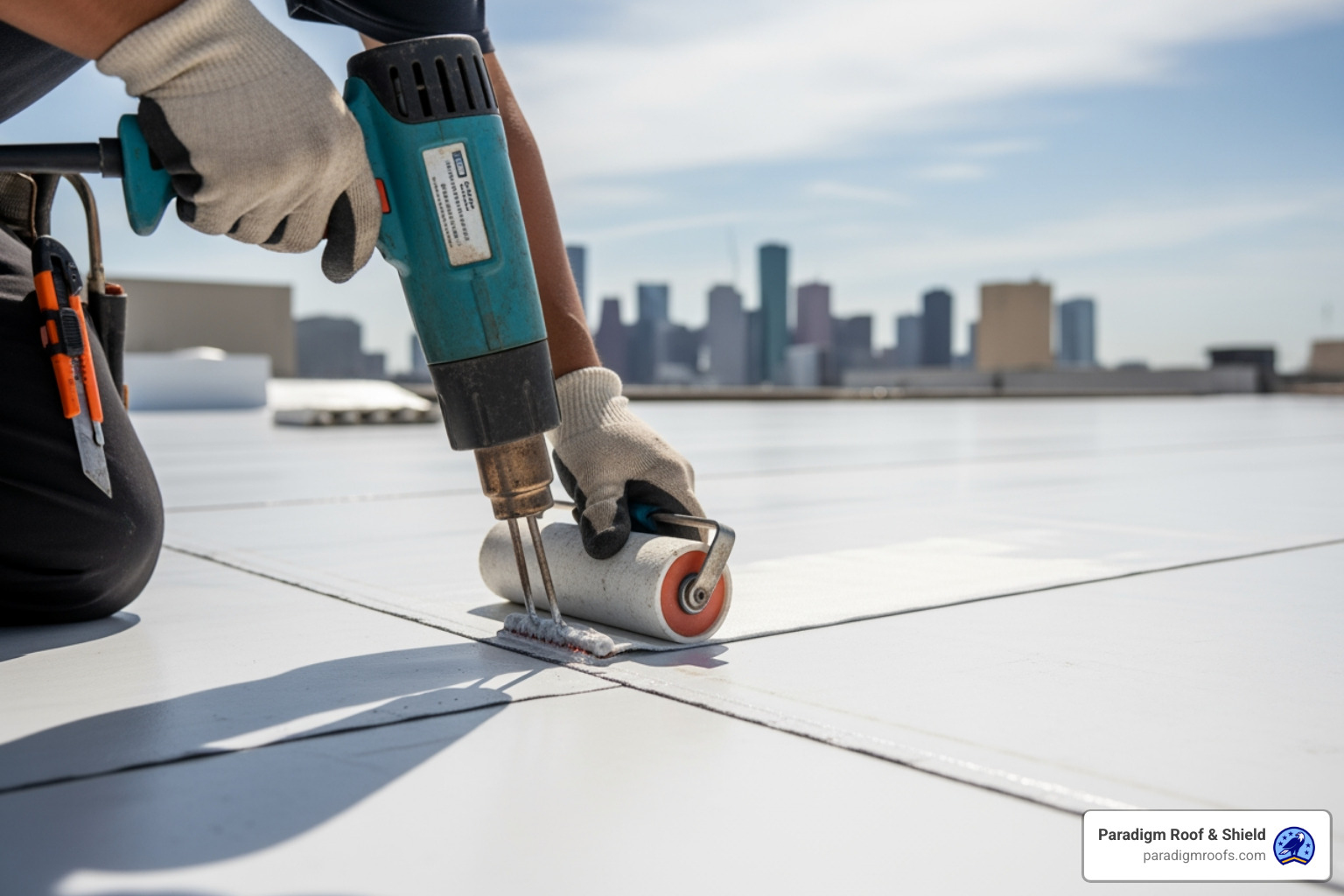
TPO & PVC Roofing
Thermoplastic Polyolefin (TPO) and Polyvinyl Chloride (PVC) are popular single-ply roofing membranes known for their durability and energy efficiency, particularly in Houston’s hot climate. They are resistant to UV rays and chemical exposure.
- Heat-welded seam repairs: The most common repairs involve re-welding compromised seams. These systems are designed to have strong, heat-welded seams, but over time, these can weaken or separate, leading to leaks.
- Puncture patching: Accidental punctures from foot traffic, falling debris, or equipment can be easily patched with compatible TPO or PVC material, heat-welded into place.
- Flashing and edge detail restoration: Flashing around penetrations and at the roof’s edge can degrade or detach. Repair involves re-securing or replacing these elements and ensuring watertight seals.
For more information on these versatile systems, explore our dedicated page on commercial TPO roofing solutions.
Metal Roofing
Metal roofing systems are increasingly popular for commercial properties in Houston due to their exceptional longevity (40-70 years), resistance to high winds, and energy efficiency. They come in various materials like galvanized metal or r-panel (24 or 26 gauge).
- Panel replacement and fastener resealing: Damaged or corroded metal panels can be individually replaced. Fasteners, which secure the panels, can loosen or corrode, requiring resealing or replacement to prevent leaks.
- Rust treatment and protective coatings: Rust is a primary concern for metal roofs. We can treat rusted areas and apply protective coatings to prevent further corrosion and extend the roof’s life.
- Leak detection and repair: Leaks often occur at seams, penetrations, or where panels overlap. Our experts use precise leak detection methods to identify the source and apply appropriate sealants or patches.
We also offer specialized services for commercial metal roofing systems.
Modified Bitumen & Built-Up Roofing (BUR)
Modified Bitumen (Mod-Bit) and Built-Up Roofing (BUR) are multi-ply systems, often found on flat roofs in Houston. They are robust but require specific repair techniques.
- Blister and split repairs: Blisters, caused by trapped moisture or gases, and splits, often from thermal stress, are common issues. Repair involves cutting out the damaged section, drying the substrate, and applying new layers with compatible materials.
- Seam adhesion and granule restoration: Mod-Bit roofs have seams that can lose adhesion. We re-adhere these seams and, for granulated surfaces, apply new granules to protect against UV damage.
- Flashing and penetration patching: Similar to other systems, flashing around roof penetrations and at parapet walls needs regular inspection and repair to maintain watertight integrity.
While less common for new installations in some commercial sectors, we also provide services for commercial shingle roofing and commercial tile roofing where applicable to Houston’s commercial properties.
Roof Coatings & Modern Repair Technologies
Modern advancements offer innovative solutions for commercial roof repair Houston, often extending the life of existing roofs and enhancing their performance.
- Silicone and acrylic roof coatings for extended lifespan: Roof coatings provide a seamless, reflective layer that can significantly extend the life of an existing roof, improve energy efficiency, and provide an additional layer of waterproofing. We are experts in various coatings, which can be applied to TPO, metal, modified bitumen, and other systems, offering significant benefits for roof longevity and performance.
- Drone inspections and thermal imaging for leak detection: We use advanced technologies like inferred drones and thermal imaging to conduct precise roof inspections. These tools allow us to identify subtle temperature differences that indicate trapped moisture or hidden leaks, often before they become visible, ensuring accurate diagnosis and targeted repairs.
How to Choose the Right Houston Commercial Roofing Contractor: 7 Essential Criteria
Texas does not require roofing licenses, so it’s up to business owners to thoroughly vet their contractor. The right professional is as important as the repair itself. Our veteran-led team understands the importance of integrity, technical excellence, and transparent communication. Here are seven essential criteria to consider when selecting a partner for your commercial roof repair Houston needs:
1. Insurance and Certifications
A reputable contractor will always be fully insured and properly certified. This protects both your business and the roofing crew.
- General liability and workers’ compensation coverage: General liability insurance protects your property from damage during the repair process, while workers’ compensation covers injuries sustained by roofing personnel on your site. Never work with a contractor who cannot provide proof of both.
- Manufacturer certifications (e.g., GAF, Johns Manville): Certifications from major manufacturers like GAF, Johns Manville, Carlisle, or Firestone indicate that the contractor has undergone specific training and meets stringent quality standards. These certifications are often required to offer the best manufacturer warranties.
- RCAT (Roofing Contractors Association of Texas) membership: While not a state license, an RCAT license is a voluntary certification that demonstrates a contractor’s commitment to professionalism, ethical practices, and technical competence, often exceeding minimum industry standards.
2. Local Experience and Reputation
Choosing a contractor with deep roots in the Houston area ensures they understand the specific challenges of our local climate and building codes.
- Years serving Houston businesses: Look for companies with a long-standing presence and a proven track record of successful projects in the Houston metropolitan area. Our team has extensive experience specifically serving Houston’s commercial community.
- Verified customer reviews and testimonials: Online reviews on platforms like Google, Yelp, and the Better Business Bureau (BBB) provide valuable insights into a contractor’s reliability, quality of work, and customer service.
- Strong BBB rating: An A+ rating from the BBB indicates a commitment to resolving customer complaints and maintaining high ethical standards.
3. Warranty Clarity
Warranties protect your investment. A transparent contractor will clearly explain all warranty options.
- Understanding manufacturer vs. workmanship warranties: Manufacturer warranties cover defects in the roofing materials themselves, while workmanship warranties cover the quality of the installation or repair. Both are crucial.
- NDL (No Dollar Limit) warranty options: NDL warranties are comprehensive, covering both materials and labor without a dollar limit, and are often transferable. These provide the highest level of protection. Ensure any work complies with the terms of your existing roof warranty, and that new work comes with clear warranty terms.
4. Safety and Site Protocols
A professional roofing company prioritizes safety for both its crew and your business operations.
- OSHA compliance and documented safety plans: Confirm that the contractor adheres to OSHA safety regulations and has clear, documented safety protocols for all job sites.
- Minimizing disruption to business operations: Ask about their plan to minimize noise, debris, and access restrictions to ensure your business can continue operating with minimal interruption during the repair process. Our non-disruptive repair process is designed to keep your operations running smoothly.
5. Transparent Communication
Clear and consistent communication is the hallmark of a reliable contractor.
- Detailed written estimates and timelines: Expect comprehensive estimates that break down costs, materials, and labor. A clear timeline for project completion is also essential.
- Clear explanation of repair or replacement options: A trustworthy contractor will present all viable options, explaining the pros and cons of each (repair, restoration, or replacement) to help you make an informed decision.
6. Use of Modern Technology
Innovative tools can lead to more efficient, accurate, and cost-effective repairs.
- Digital inspection reports: Digital reports, often including photos and thermal images, provide a clear, objective assessment of your roof’s condition.
- Advanced leak detection methods: Technologies like infrared thermography and drone inspections allow for precise identification of hidden water intrusion, preventing unnecessary exploratory damage.
7. Commitment to Integrity
Beyond technical skills, a contractor’s core values profoundly impact your experience.
- Veteran-led teams and community involvement: Our veteran-led team brings discipline, integrity, and a commitment to excellence to every project. We are deeply invested in our community and strive to deliver honest, high-quality, service-driven solutions.
- Proven track record of honest, reliable service: Look for a contractor with a reputation for integrity, delivering on promises, and standing behind their work. Our commitment is to provide honest assessments, ensuring you always know the true condition of your roof.
Frequently Asked Questions: Commercial Roof Repair in Houston
We’ve compiled answers to some of the most common questions business owners have about commercial roof repair Houston.
How long does a typical commercial roof repair in Houston take?
Most minor commercial roof repair Houston jobs, such as patching a small leak or resealing flashing, can be completed in a few hours. More extensive work, like replacing several damaged panels or addressing widespread membrane issues, may require 1-2 days. Complex repairs involving structural elements or large sections of the roof could take longer. A reputable contractor will provide a clear timeline based on the specific scope of work after a thorough inspection.
What is the average lifespan of a commercial roof in Houston?
The lifespan of a commercial roof largely depends on the material type, quality of installation, and the consistency of preventative maintenance. In Houston’s challenging climate, these factors are even more critical.
- TPO and PVC roofs: 20-30 years
- EPDM roofs: 25-30 years
- Metal roofs: 40-70 years
- Modified Bitumen & Built-Up Roofing (BUR): 15-30 years
Houston’s climate—with its intense UV exposure, high humidity, and severe weather events—can reduce these lifespans without diligent, regular maintenance. Proactive maintenance can significantly extend the life of your roof.
How much does commercial roof repair in Houston cost?
The cost of commercial roof repair Houston can range from a few hundred dollars for small, isolated patches to several thousand for more complex or extensive repairs. Key factors that influence the final cost include:
- Roof size and accessibility: Larger roofs or those with difficult access will incur higher labor and material costs.
- Material type: The specific roofing material (e.g., TPO, metal, modified bitumen) and its associated repair components have different price points.
- Extent and type of damage: A simple puncture repair is far less costly than addressing widespread membrane deterioration or structural damage.
- Labor rates: These can vary between contractors, reflecting their experience, certifications, and service quality.
- Permits and inspections: Depending on the scope of work, permits and follow-up inspections may be required, adding to the cost.
Always request a detailed, written estimate that clearly breaks down all costs before any work begins to avoid unexpected expenses.
How do I schedule a free inspection in Houston?
Scheduling a free, no-obligation inspection is the best first step. You can get in touch with our expert team for a comprehensive assessment and a transparent, written estimate. For immediate assistance with your Houston commercial property, call our team at 832-626-7153.
Take the Next Step: Secure Your Houston Commercial Roof Today
Selecting the right partner for your commercial roof repair in Houston is vital for protecting your property and ensuring business continuity. By choosing a contractor with proven local expertise, a strong safety record, and a commitment to integrity, you can avoid costly mistakes and secure a lasting solution. Paradigm Roof & Shield, a veteran-led team, exemplifies these values—delivering technical excellence and transparent communication. Don’t let a minor issue become a major disruption. For a comprehensive inspection and an honest assessment, contact our experts in Houston, TX or learn more about our commercial TPO roofing services.