

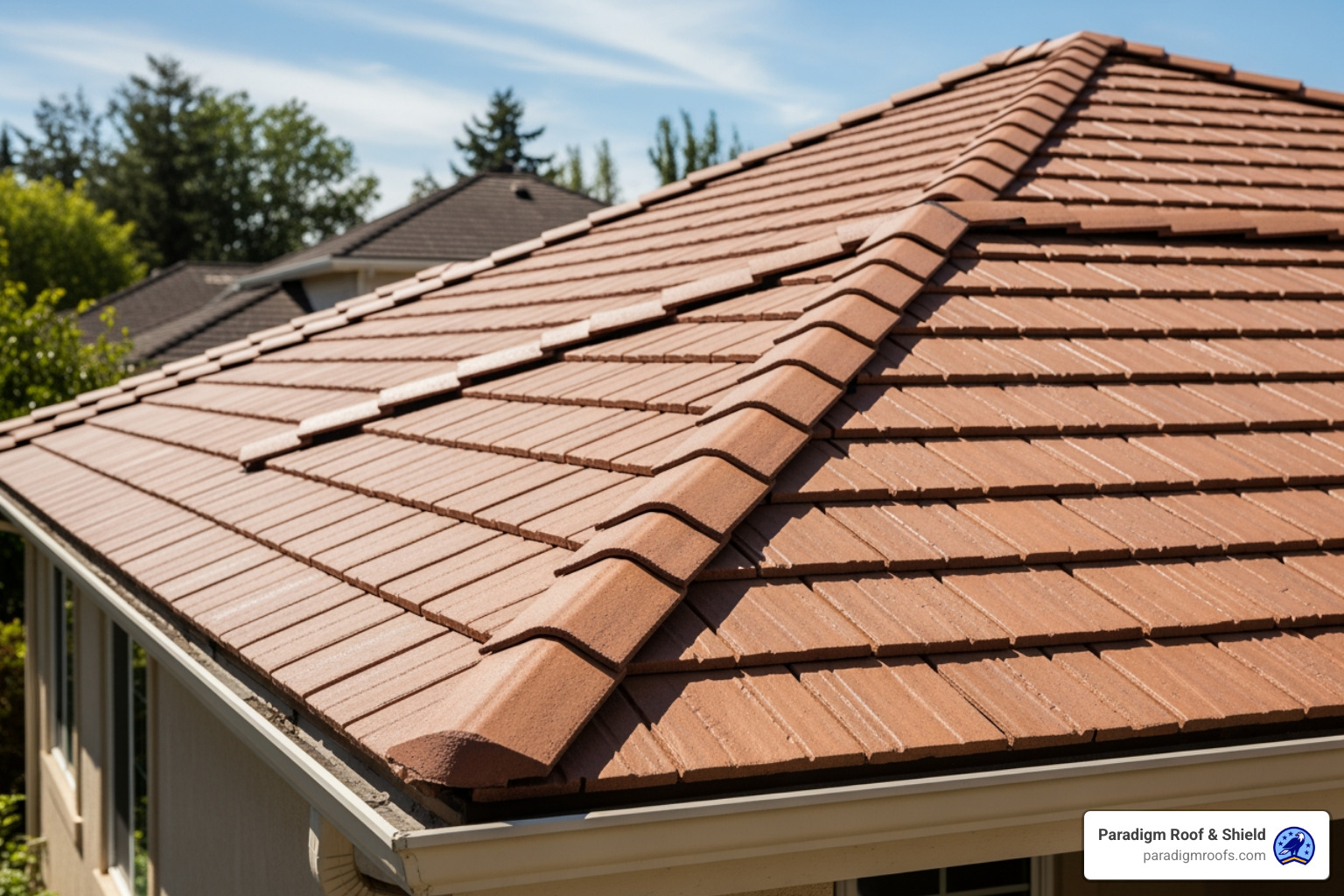
Why Homeowners Are Switching to Synthetic Roof Tiles
Faux clay roof tiles are synthetic roofing materials designed to replicate the classic appearance of traditional clay while delivering superior performance and durability. Made from advanced composites and recycled plastics, these modern tiles offer the timeless Mediterranean aesthetic without the weight, breakage, or maintenance of authentic clay. For homeowners seeking top-tier building materials, this innovation represents a significant leap forward, a core principle of the expert residential and commercial roofing services we provide.
Key Benefits of Faux Clay Roof Tiles:
- 67% lighter than traditional clay or concrete tiles
- 50-year warranties with Class 4 impact resistance
- Virtually no breakage during shipping or installation
- No structural reinforcement required for most homes
- Zero maintenance — no sealing or repairs needed
- Wind-tested to withstand speeds up to 211 MPH
- Eco-friendly — made from recycled and recyclable materials
Traditional clay tiles weigh 44-50 kg/m², requiring costly structural support. In contrast, synthetic alternatives like Brava, Quarrix, and Roofeco weigh just 6.5 kg/m² — seven times lighter — and are engineered to resist hail, wind, and extreme temperatures without cracking. They deliver an best combination of curb appeal and long-term value.
I’m Greg Hiltz, CEO of Paradigm Roof + Shield. My experience has shown me that faux clay roof tiles are one of the smartest investments a property owner can make, combining beauty, resilience, and peace of mind for decades.
What Are Faux Clay Roof Tiles? A Modern Marvel
Faux clay roof tiles are an engineered roofing material designed to capture the classic aesthetic of traditional clay while eliminating its inherent drawbacks. They offer the iconic Mediterranean or Spanish roofline—rich, earthy tones and gentle curves—with cutting-edge durability, minimal weight, and virtually no maintenance. These modern marvels are engineered solutions that provide a timeless look without the structural challenges, fragility, and upkeep of their natural counterparts, adding curb appeal and long-term value in areas like McKinney, TX, and Houston, TX.
The Materials Behind the Magic
The superior performance of faux clay roof tiles lies in their advanced material composition. Unlike fired earth, synthetic tiles are manufactured from robust, often eco-friendly, materials.
- Composite Polymers: High-tech plastics blended with other materials to improve strength and flexibility, molded to perfectly mimic the shape and texture of barrel or Spanish tiles.
- Recycled Plastics: Many faux clay tiles are made from recycled materials, making them an excellent choice for environmentally conscious homeowners. Some are crafted from 100% recycled and recyclable materials, diverting plastic from landfills.
- High-Density Polyethylene (HDPE): Brands like Quarrix use virgin resin HDPE formulations to ensure a consistent appearance and long-term performance, making the tiles naturally resistant to mold and algae.
- Advanced Resin Formulations: These specialized resins contribute to the tiles’ strength, UV resistance, and overall longevity, ensuring they maintain their color and integrity even under the intense Texas sun.
The Main Appeal: Beauty Without the Burden
The primary draw of faux clay roof tiles is their ability to deliver authentic beauty without the traditional burdens. Homeowners are consistently impressed by how closely these synthetic options resemble genuine clay.
- Authentic Aesthetic: Whether you desire the classic Mediterranean, Spanish, or Roman tile look, these synthetic alternatives offer a “natural and neat surface” that is often indistinguishable from the real thing. Proprietary color blending creates an exquisite roofline that adds distinctive architectural appeal.
- Lightweight Nature: This is a significant advantage. Traditional clay tiles are notoriously heavy, often requiring costly structural support. Synthetic tiles are up to 67% lighter (weighing just 6.5 kg/m² compared to 44-50 kg/m² for clay), eliminating this need.
- Reduced Structural Load: A lighter roof means less stress on your home’s structure. This is particularly beneficial for remodels, where adding the weight of traditional clay might require expensive retrofitting. With faux clay roof tiles, such modifications are often unnecessary.
- Versatility in Design: The manufacturing process allows for incredible versatility. From traditional terra cotta to multi-colored blends, synthetic tiles can be customized to suit any design vision and can adapt to various surfaces, including curved ones.
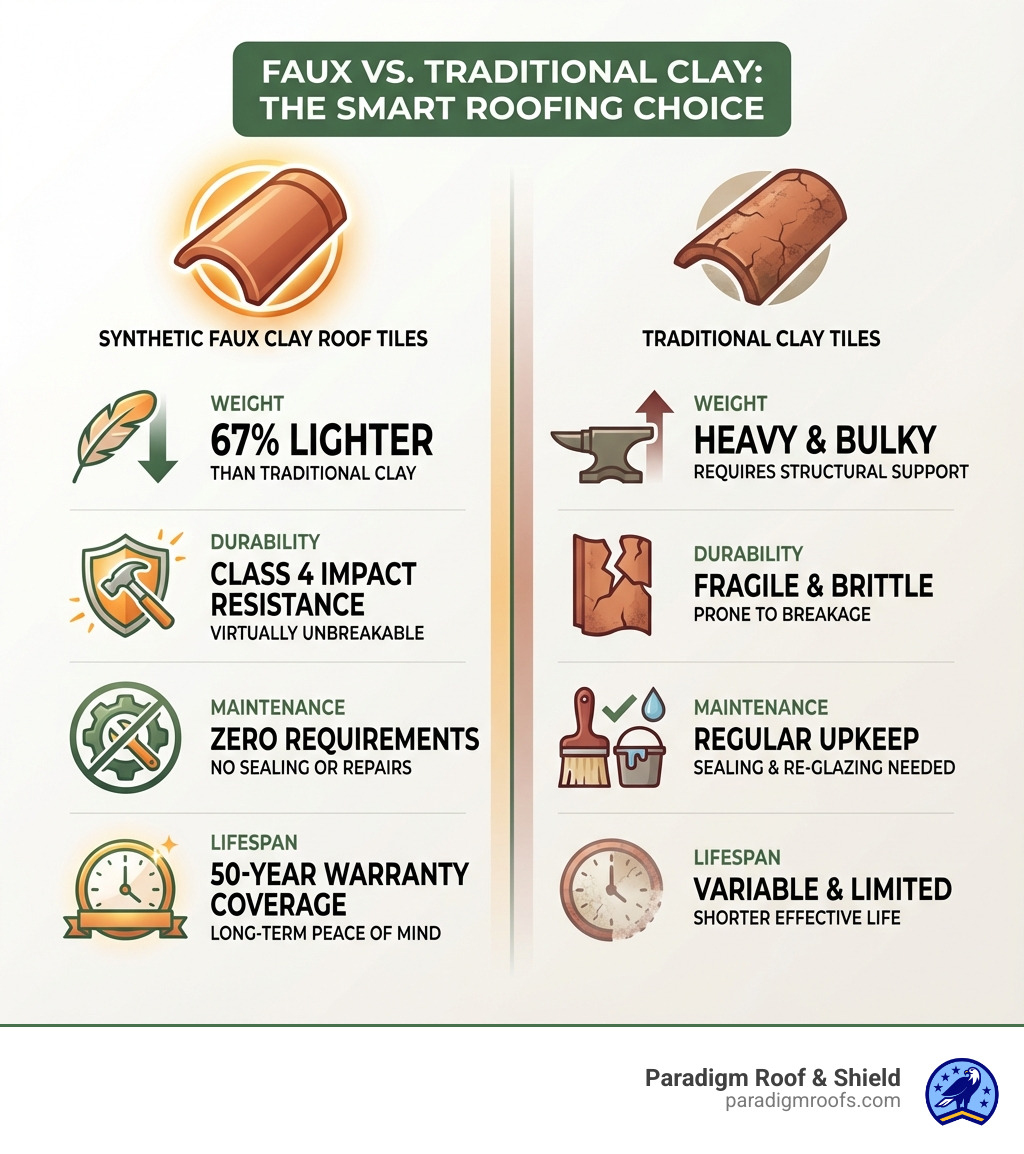
Synthetic vs. Traditional Clay: A Head-to-Head Comparison
When choosing a roof, the decision between traditional and modern materials can be tough. But when we compare faux clay roof tiles to their natural predecessors, the advantages of the synthetic option become remarkably clear. While traditional clay has a storied history, synthetic alternatives are engineered to surmount its biggest challenges, offering a compelling case for homeowners looking for both beauty and performance.
Here’s a breakdown of how they stack up:
| Feature | Faux Clay Roof Tiles | Traditional Clay Tiles |
|---|---|---|
| Weight | Significantly lighter (e.g., 6.5 kg/m², up to 67% less than traditional) | Extremely heavy (e.g., 44-50 kg/m²), often requires structural reinforcement |
| Durability | Class 4 impact resistance (highest), virtually no breakage, withstands 188-211 MPH winds, extreme temp range (-60°C to +80°C), impervious to moisture, mold, and wildlife | Fragile, prone to cracking/breakage from impact (hail, falling debris, foot traffic), absorbs moisture, susceptible to moss/algae growth |
| Installation | Easier and faster due to lightweight nature, no special structural support needed, can be installed over existing roofs (e.g., asphalt shingles) | Labor-intensive, slow, requires skilled masons, often needs costly structural upgrades, high breakage rate during installation |
| Maintenance | Virtually zero maintenance, no sealing, re-glazing, or repairs; naturally resistant to mold, moss, and algae; color-fast | Requires periodic cleaning, sealing, and repairs; prone to efflorescence, moss, and algae growth; can fade or discolor over time |
| Lifespan/Warranty | 50-year limited transferable warranties are common (some 20 years); long-lasting performance and color retention | Typically 50+ years, but often requires significant repairs/replacement of broken tiles over its lifetime; warranties vary |
| Cost | Comparable to traditional clay initially, but significant long-term savings from reduced installation labor, no structural upgrades, and minimal maintenance | High initial material and installation costs, ongoing maintenance and repair expenses, potential for structural upgrade costs |
The Overwhelming Advantages of Synthetic Tiles
The comparison table clearly illustrates why we advocate for faux clay roof tiles. The advantages represent a fundamental shift in roofing technology.
- Lighter and Stronger: Being up to 67% lighter eliminates the need for costly structural reinforcement, a game-changer for both new and existing homes. This lightweight nature does not compromise strength; with a Class 4 impact rating, these tiles offer the industry’s highest resistance to hail and debris.
- Efficient and Waste-Free Installation: Traditional clay is fragile, and breakage during shipping and installation is common. Synthetic tiles are virtually unbreakable, which speeds up installation, reduces labor costs, and minimizes material waste.
- Zero Maintenance: Unlike clay, which can absorb moisture and grow moss, faux clay roof tiles are maintenance-free. They won’t fade, crack, or need constant attention, letting you enjoy a beautiful roof without the upkeep. For more details, explore our three reasons to consider synthetic roof tiles.
Key Considerations for Faux Clay Roof Tiles
While the benefits are compelling, it’s important to consider a few nuances.
- Higher Initial Material Cost: The upfront material cost can be comparable to or slightly higher than traditional clay. However, these costs are often offset by savings in installation labor, structural modifications, and long-term maintenance.
- Color Consistency vs. Natural Patina: Synthetic tiles offer incredible color consistency and fade resistance. While some purists may miss the natural patina clay develops, manufacturers offer aged and multi-colored blends to mimic this weathered look from day one.
- Finding Qualified Installers: Proper installation is key to performance. While easier to install than clay, it still requires expertise. Our veteran-led team at Paradigm Roof + Shield possesses the technical excellence for a flawless installation.
- Brand Quality Variation: Quality can vary between manufacturers. It’s crucial to choose reputable brands like Brava and Quarrix that offer robust warranties and third-party testing.
How Faux Clay Stacks Up Against Other Roofing Materials
While the primary comparison for faux clay roof tiles is with traditional clay, it’s also crucial to understand how they perform against other popular roofing choices. For homeowners prioritizing long-term value, curb appeal, and resilience, synthetic tiles frequently emerge as a superior investment compared to asphalt shingles or even metal roofing.
Faux Clay vs. Asphalt Shingles
Asphalt shingles are a common roofing material, but they fall short in several key areas when compared to faux clay roof tiles.
- Superior Lifespan: Asphalt shingles typically last 15-25 years. In contrast, faux clay roof tiles boast 50-year limited warranties, offering more than double the lifespan and fewer replacements over the life of your home.
- Improved Curb Appeal: Asphalt shingles rarely achieve the sophisticated, architectural elegance of a tile roof. Faux clay roof tiles provide a classic Mediterranean or Spanish aesthetic that significantly improves a home’s curb appeal and resale value.
- Higher Weather Resistance: Many faux clay roof tiles are tested to withstand wind speeds up to 211 MPH and achieve a Class 4 impact rating, offering superior protection against severe weather compared to standard asphalt shingles.
- Better Energy Efficiency: The design of tile roofs allows for air circulation beneath the tiles, which can reduce heat transfer into the attic. This “cool roof” effect can lead to lower energy bills.
Faux Clay vs. Metal Roofing
Metal roofing is known for its durability, but faux clay roof tiles offer distinct advantages, particularly for those seeking a specific aesthetic.
- Comparable Durability: Both materials are long-lasting and weather-resistant. However, the Class 4 impact resistance of many faux clay roof tiles makes them exceptionally resilient against hail.
- Quieter During Rainfall: A common complaint about metal roofing is the noise during heavy rain. The composite nature of faux clay roof tiles provides better sound dampening for a quieter indoor environment.
- More Authentic Tile Appearance: While some metal roofs mimic tile profiles, they often lack the depth and texture of faux clay roof tiles. If a true Mediterranean or Spanish aesthetic is your goal, synthetic tiles deliver a more convincing result.
- Less Prone to Denting: Metal roofs can be susceptible to denting from hail. The robust composition of faux clay roof tiles makes them highly resistant to such impact damage.
Design & Installation: Bringing Your Vision to Life
One of the most exciting aspects of faux clay roof tiles is the vast array of design possibilities they open up. Modern manufacturing allows for a spectrum of colors, profiles, and textures, from traditional terra cotta to unique, multi-colored blends that create an exquisite, custom look for your home.

Styles and Colors of Faux Clay Roof Tiles
The aesthetic versatility of faux clay roof tiles is remarkable, allowing for a personalized touch that improves your home’s unique character.
- Spanish Barrel Style: This quintessential look, with its distinctive half-barrel shape, is perfectly replicated in a durable, lightweight material.
- Roman and Slate Profiles: Beyond barrel tiles, some manufacturers offer Roman tile profiles (a flatter pan with a raised roll) and even slate-look composites, broadening the aesthetic possibilities.
- Rich Color Palette: For those who love classic charm, traditional Terra Cotta hues are available. To achieve a more weathered appearance, manufacturers provide aged and mission blends, where each multi-colored tile has a unique look. The extensive palette includes shades like Tuscan Clay, Onyx, and Antique Clay, ensuring you can find the perfect match for your home’s exterior. You can even see how lighting changes throughout the day to understand how these colors will appear on your roof, as seen in our stunning Trophy Club Spanish Tile project.

Installation and Maintenance Insights
While the aesthetic appeal is undeniable, the practicalities of installation and maintenance are where faux clay roof tiles truly shine.
- Professional Installation is Crucial: The longevity and performance of your roof depend on proper installation. While some manufacturers provide resources like a step-by-step field tile installation video for contractors, this is not a typical DIY project. Our veteran-led team ensures every installation is executed with precision.
- Simplified Process: The lightweight nature of faux clay roof tiles simplifies installation. It reduces strain on installers, speeds up the job, and eliminates the need for the heavy equipment or special structural bracing often required for traditional clay.
- Minimal to Zero Maintenance: Faux clay roof tiles are designed to be virtually maintenance-free. They do not absorb humidity, grow mold, or fade, meaning no need for costly sealing or re-glazing. The only requirement is routine cleaning to remove leaves and other debris that can accumulate on any roof.
Performance Under Pressure: Durability, Safety, and Efficiency
A roof’s primary job is to protect your home, and this is where faux clay roof tiles truly excel. Engineered to withstand the harshest conditions, they offer superior ratings for impact, wind, and fire resistance, contributing to a safer, more efficient home in weather-prone areas like Houston, TX, and Neptune Beach, FL.
Lifespan, Warranty, and Weather Resistance
Investing in a roof is a long-term commitment, and faux clay roof tiles deliver on that promise with exceptional longevity and resilience.
- 50-Year Limited Warranties: Leading manufacturers like Brava and Quarrix offer impressive 50-year limited transferable warranties, demonstrating confidence in the product’s durability and protecting your investment for decades.
- Extreme Wind Resistance: This is a critical factor in high-wind zones. Brava tiles are tested to withstand wind speeds up to 188 MPH with nails and up to 211 MPH with high-wind screw installation, offering vital protection during severe storms.
- Class 4 Impact Rating: This is the highest rating available, signifying superior resistance to hail and falling debris. This not only protects your home but can also lead to insurance premium discounts.
- Best Durability: The robust composition of these tiles makes them virtually unbreakable. They are designed to withstand extreme temperatures (from -60°C to +80°C), foot traffic, and are impervious to moisture, preventing mold and algae growth.
Safety, Sustainability, and Energy Savings
Beyond durability, faux clay roof tiles offer significant advantages in home safety, environmental responsibility, and energy efficiency.
- High Fire Ratings: Fire resistance is a crucial safety feature. Many faux clay roof tiles achieve a Class C fire rating, and some can achieve a Class A rating with an approved underlayment, offering superior protection against external fire hazards.
- Eco-Friendly Composition: A strong commitment to sustainability is a hallmark of the industry. Brava’s Spanish Barrel Tile, for example, is made from 100% recycled and recyclable materials, turning plastic destined for landfills into beautiful, durable roofs.
- Energy Efficiency: Lighter colored faux clay roof tiles can act as “cool roofs,” reflecting solar radiation to keep your attic and home cooler. This, combined with the air circulation beneath the tiles, reduces heat transfer and can lead to lower energy bills.
Make the Right Choice for Your Home
Choosing a new roof is a major decision, but the evidence is clear: faux clay roof tiles offer the perfect blend of timeless beauty and modern, high-performance engineering. They solve the weight, fragility, and maintenance issues of traditional clay while providing superior protection against the elements. With a vast range of styles and a 50-year lifespan, they represent a sound, long-term investment in your home’s value, safety, and curb appeal.
If you’re ready to explore the benefits of a synthetic tile roof, the expert team at Paradigm Roof & Shield is here to help. Our veteran-led company is committed to technical excellence and integrity, ensuring your roofing project is completed to the highest standards. We serve homeowners and businesses across McKinney, TX, Houston, TX, and Neptune Beach, FL. For a consultation or to learn more, explore our premium tile options and see how we provide expert roofing services in Houston, TX and beyond.