

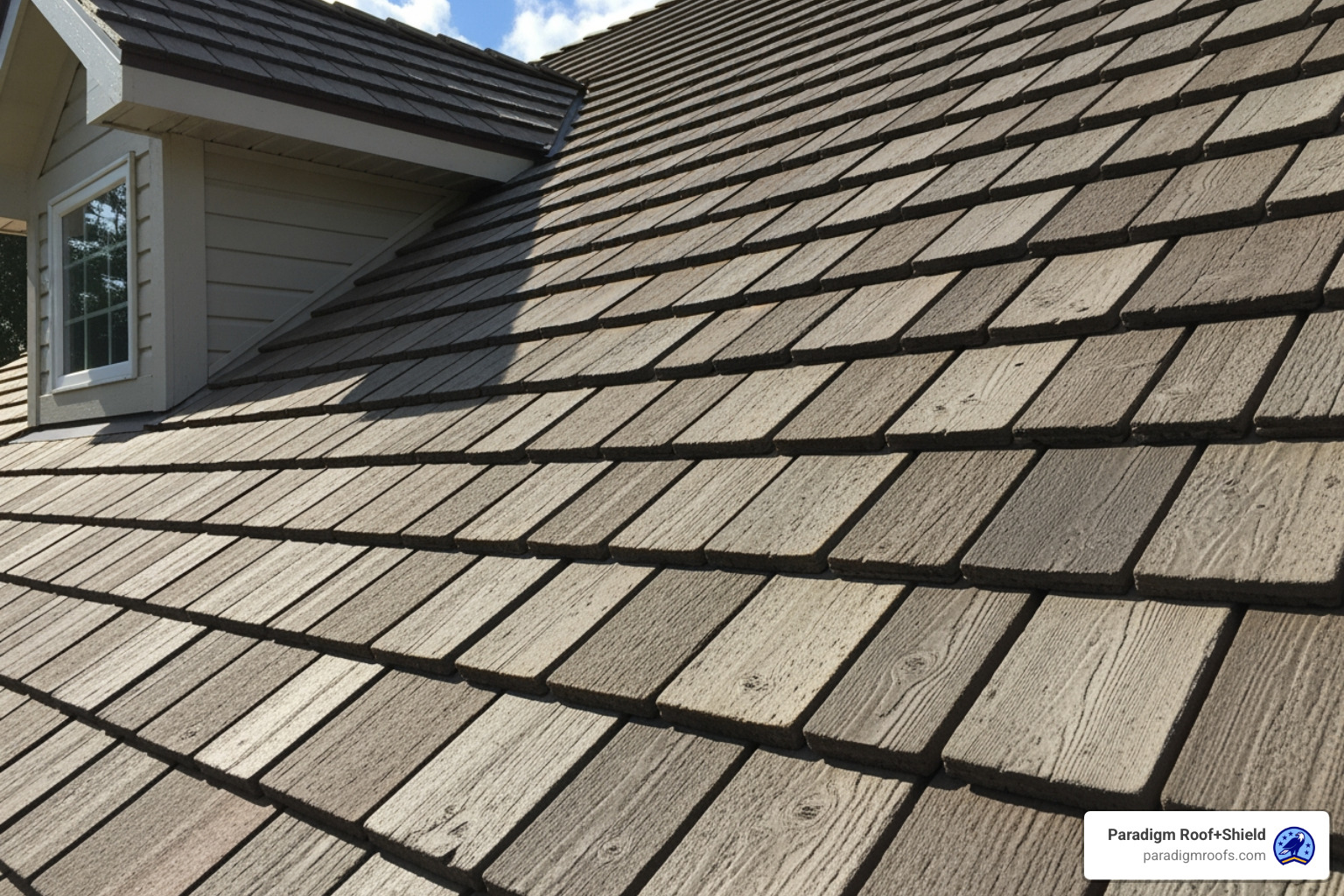
Understanding Brava Cedar Shake Roof Tiles Installation Compatibility
Understanding brava cedar shake roof tiles installation compatibility is the first step toward a successful, long-lasting roof. For homeowners considering this premium upgrade, ensuring your property meets the specific requirements for structure, slope, and climate is essential for performance and warranty protection. At Paradigm Roof+Shield, our expertise in high-performance roofing systems confirms that compatibility hinges on the following key factors:
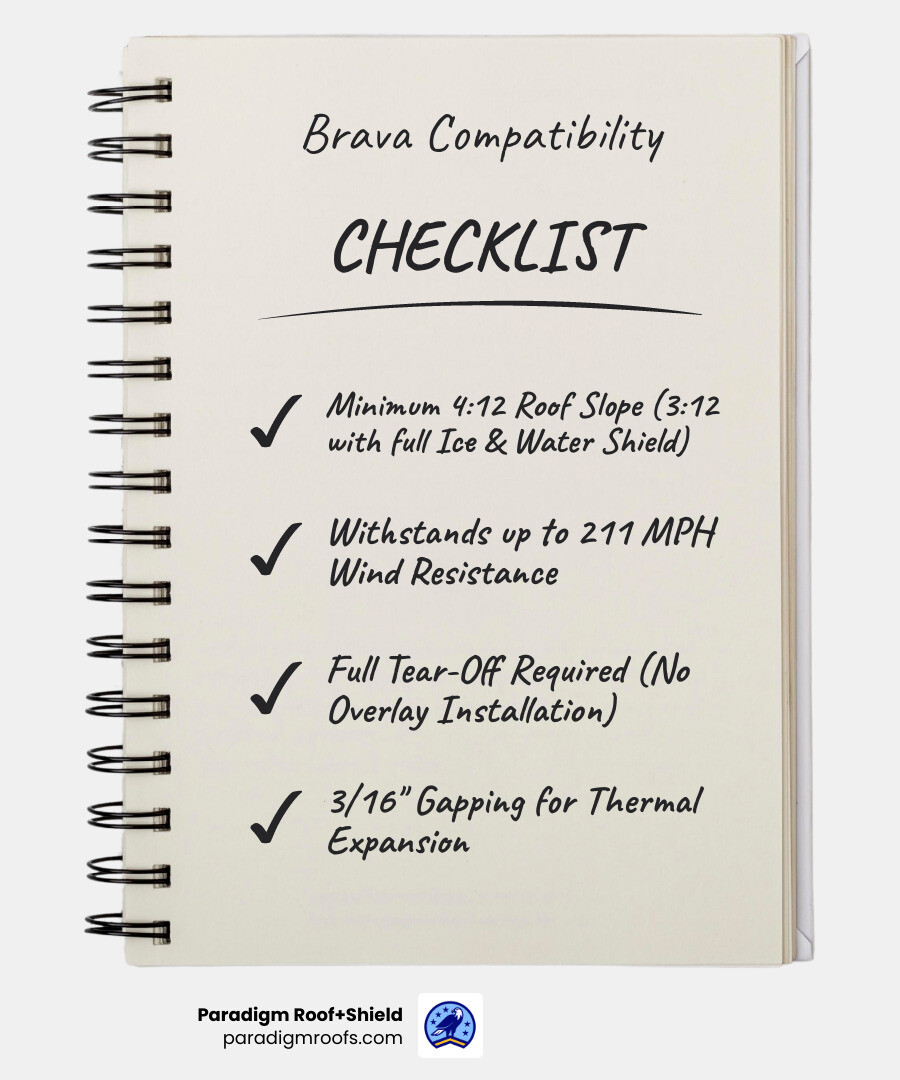
| Compatibility Factor | Requirements |
|---|---|
| Minimum Roof Slope | 4:12 (3:12 with full ice and water shield) |
| Roof Shapes | Standard, curved, turrets, eyebrows, and complex geometries |
| Climate Range | All climates—extreme heat to freeze/thaw cycles |
| Wind Resistance | Up to 188 MPH (nails) or 211 MPH (screws) |
| Underlayment | Synthetic or 30 lb. felt minimum; ice and water shield in valleys |
| Fasteners | Corrosion-resistant ring shank nails or screws, 3/4″ penetration |
| Gapping | Minimum 3/16″ between tiles for thermal expansion |
| Installation Temperature | Material must be above 32°F (0°C) |
| Existing Roof | Full tear-off required—no overlay installation |
Whether you’re upgrading a traditional home or designing a complex architectural masterpiece, Brava tiles adapt to your needs while delivering the authentic look of natural cedar without the maintenance headaches. These composite tiles achieve a Class 4 impact rating and Class A fire rating, making them one of the most durable roofing options available.
Understanding brava cedar shake roof tiles installation compatibility ensures your roof performs as designed and your warranty stays intact. The tiles work on virtually any roof shape—from standard gables to curved turrets—and they’re engineered to handle extreme weather, from scorching Texas summers to northern freeze/thaw cycles. However, success depends on proper deck preparation, correct fastener selection, adequate spacing for thermal movement, and the right underlayment for your specific roof slope and climate.
I’m Greg Hiltz, CEO of Paradigm Roof+Shield, and I’ve guided dozens of homeowners through complex roofing projects, including advanced composite systems like Brava. My experience with brava cedar shake roof tiles installation compatibility comes from overseeing installations across Texas, where roof structures and climate extremes demand precise technical execution.
Why Choose Brava Cedar Shake? Benefits & Comparisons
Brava Cedar Shake tiles are engineered to outperform both traditional wood and other composite materials, offering a unique combination of beauty, strength, and sustainability. With a Class 4 impact rating—the highest available—and a Class A fire rating, they provide superior protection. When considering a roofing material, we often look for solutions that combine aesthetic appeal with long-term performance. Brava Cedar Shake tiles deliver on both fronts, presenting a compelling alternative to traditional cedar and even many other composite options.
Compared to traditional cedar shakes, Brava tiles offer several primary benefits. Real cedar shakes, while beautiful, are prone to issues like rotting, warping, splitting, and fading over time. They require regular maintenance and can be susceptible to fire and impact damage. Brava Cedar Shake, on the other hand, is designed to mimic the rustic split textures and natural beauty of real cedar but without these drawbacks. Their polymer shingles provide the incredible benefits of a composite roofing material, meaning they are virtually maintenance-free. This translates to significant long-term savings and peace of mind for homeowners. For more insights on why synthetic options might be right for you, explore our article on Three Reasons to Consider Synthetic Roof Tiles.
When we compare Brava Cedar Shake to other composite roofing materials, its durability, aesthetics, and performance often stand out. Brava tiles are third-party tested and Miami-Dade County certified, boasting a Class 4 impact rating (the highest possible) and a Class A fire rating. This robust performance is a testament to their engineering. Many other composite options might offer some benefits, but Brava’s patented multi-coloring process and inherent UV protection provide an authenticity and longevity of color that we believe is unparalleled in the market. You can learn more about the unique advantages of Brava by reading Why Brava Tile Might Work For You.
Best Aesthetics and UV Resistance
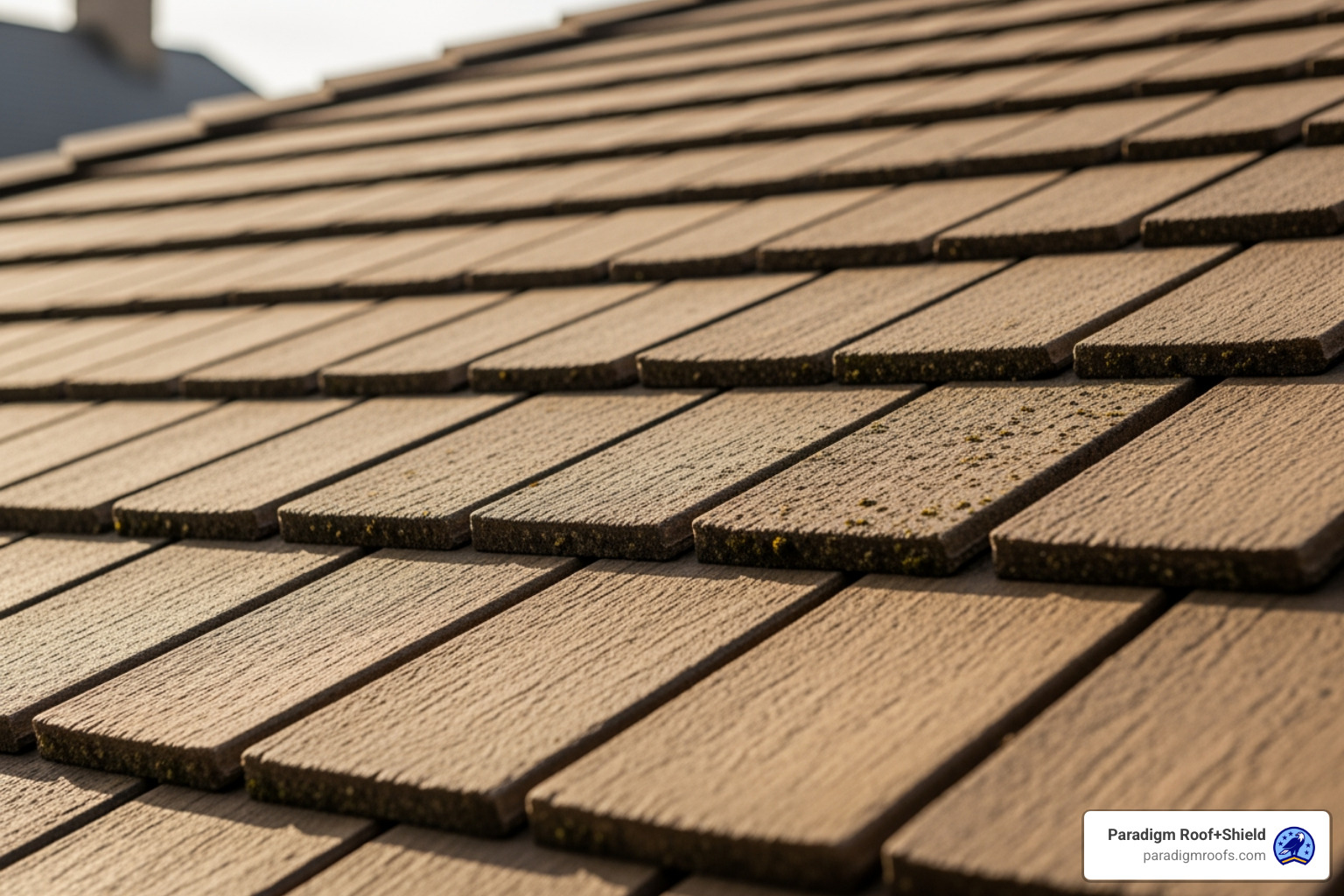
Unlike natural wood that fades and weathers unevenly, Brava tiles feature a patented multi-coloring process with mineral-infused color that runs through the entire tile. This “fingerprint effect” ensures no two tiles are identical, creating authentic color variation that resists fading from UV exposure and is backed by a 50-year warranty.
The longevity of color in Brava tiles is truly remarkable. They use a patented mineral-infusion process called Colorcast, which ensures colors are infused throughout the tile, not just on the surface. This is a significant advantage over many traditional and even some composite materials where chemical or dye-based colors can break down due to sun exposure over the years, leading to an uneven, faded appearance. Brava’s commitment to color steadfastness is so strong that it’s backed by an extended, transferable 50-year warranty for color. This inherent UV protection means your roof will maintain its vibrant, natural look for decades, resisting the harsh sun, whether it’s beating down on a home in Houston or reflecting off snow in colder climates.
Furthermore, Brava’s closed-cell technology plays a crucial role in preventing moisture absorption. This not only mitigates freeze/thaw effects but also significantly limits the growth of algae and mold. Traditional roofing materials, especially wood shingles, often provide a damp environment where algae and mold can thrive, leading to unsightly stains and potential deterioration. With Brava Cedar Shake, we see exceptional resistance to these common issues, ensuring the roof’s aesthetic appeal is preserved with minimal maintenance.
Sustainability and Eco-Friendly Composition
Brava tiles are a green building choice, composed of up to 95% post-consumer recycled plastics. These materials are fully recyclable at the end of their long service life. Furthermore, Brava products are manufactured without PFAs or other harmful chemical additives for fire resistance, relying instead on safe mineral fillers.
We are increasingly aware of the environmental impact of building materials, and Brava Cedar Shake stands out as an eco-conscious option. By utilizing up to 95% recycled plastic, Brava significantly reduces landfill waste, turning what would otherwise be discarded materials into durable, high-performance roofing. This commitment extends to their recyclability; at the end of their lifespan, Brava tiles can be recycled again, completing a sustainable lifecycle. We even encourage returning clean, fastener-free scraps and offcuts to the Brava plant for responsible recycling.
It’s also important to us, and to many homeowners, that the products we install are safe. Brava does not add PFAs (per- and polyfluoroalkyl substances) or brominated compounds to their products for fire resistance. Instead, they achieve their Class A fire rating using mineral fillers and, in some cases, specialized underlayments. This approach ensures that your home is protected without introducing potentially harmful chemicals into the environment or your living space. For more information on sustainable roofing options, you can learn more about sustainable roofing options.
Understanding Brava Cedar Shake Roof Tiles Installation Compatibility
The success of a Brava roof hinges on its compatibility with your home’s structure and local climate. Following the manufacturer’s specifications is crucial for ensuring performance, longevity, and warranty coverage. When we undertake a roofing project, especially with a premium material like Brava Cedar Shake, understanding these foundational compatibility aspects is paramount. It’s not just about getting the tiles on the roof; it’s about ensuring they perform optimally for decades.

Roof Structure and Slope Requirements
Brava Cedar Shake tiles are remarkably versatile and can be installed on a wide variety of roof shapes. For complex designs, Brava offers solid accessory tiles to ensure a clean, authentic look on cut edges.
-
Compatible Roof Shapes: One of the great advantages of Brava Cedar Shake and Brava Slate tiles is their adaptability. They are compatible with standard roofs, gables, hips, and even complex, non-standard roof shapes like curved roofs, turrets, and eyebrows. This flexibility allows us to achieve stunning architectural details that might be challenging or impossible with other materials. Depending on the radius of the curve and the specifics of your roof, Brava’s solid accessory tiles may be recommended or required to ensure a seamless, finished look, especially in valleys and along gables and rakes. This solid tile accessory is particularly useful for achieving an authentic look of slate or shake without concerns about structural ribbing showing on cut edges.
-
Minimum Slope: For optimal performance and drainage, Brava recommends a minimum roof slope of 4:12 for their products. This steep-slope application ensures water sheds efficiently from the roof surface.
-
Low Slope Requirements: If your roof has a lower pitch, specific measures must be taken to maintain water tightness and warranty validity. For slopes between 3:12 and 4:12, a self-adhered waterproof underlayment, such as Ice & Water Shield, must be applied to the entire roof deck. This creates a secondary, impermeable barrier against moisture. For very low slope or flat roofs (2:12 or lower), Brava tiles are generally not suitable. In such cases, a dedicated flat roof system (like PVC, TPO, EPDM, or ModBit) should be installed, with a transition to Brava tiles only on sections with a slope of 3:12 or greater. Our team in Houston, TX, often encounters diverse roof pitches, and we always ensure these slope requirements are met for every Brava installation.
Climate and Weather Compatibility
Brava tiles are engineered and tested to withstand the most extreme weather conditions across all climates, from the intense heat of the south to the freeze/thaw cycles of the north. This makes them an excellent choice for our clients in both Texas and Florida, where weather can be notoriously challenging.
-
Cold Weather Installation: While Brava tiles are incredibly durable in cold weather once installed, there are specific considerations for installation during colder months. Installation can meet warranty requirements as long as the material temperature remains above 32°F (0°C). This allows for proper handling and adhesion of underlayments and ensures the tiles can be installed correctly without becoming brittle or difficult to work with. Our crews are trained to monitor material temperatures and adjust schedules as needed to ensure optimal installation conditions.
-
Extreme Weather Performance: The tiles’ closed-cell structure is a game-changer. It actively prevents water absorption, which is critical for mitigating damage from freeze/thaw cycles. Unlike porous materials that can crack and deteriorate when absorbed water freezes and expands, Brava tiles maintain their integrity. This closed-cell technology also means there are no concerns about water absorption or mold growth, which can be prevalent in humid climates. Brava’s products are designed to endure various climates, from intense heat to freeze/thaw cycles, ensuring consistent performance.
-
Wind Resistance: When it comes to extreme weather, wind resistance is paramount, especially in hurricane-prone regions like Florida or areas susceptible to severe thunderstorms in Texas. Brava tiles are rigorously tested and approved to withstand impressive wind speeds. They can resist winds up to 188 MPH when installed with corrosion-resistant ring shank nails and an even more formidable 211 MPH with a high-wind screw installation. This performance is backed by Miami-Dade County Certification, which is one of the highest standards in the roofing industry, specifically designed for High-Velocity Hurricane Zones (HVHZ). This certification includes stringent Wind Uplift, Wind, and Wind-Driven Rain testing, providing exceptional peace of mind for homeowners.
Key Installation Components and Procedures
A proper Brava Cedar Shake installation involves more than just the tiles. Using the correct underlayment, fasteners, and flashing is essential for creating a complete, watertight roofing system that lasts. This comprehensive approach is what ensures the long-term performance and durability of your roof, protecting your home from the elements. Our expertise in roof installation means we pay meticulous attention to each of these critical components.
Deck Preparation and Underlayment
To ensure warranty compliance and optimal performance, a clean and properly prepared roof deck is mandatory. This is the foundation upon which your new Brava roof will be built, and cutting corners here can lead to significant issues down the line.
-
Tear-Off Required: One of the most frequently asked questions we encounter is whether Brava tiles can be installed over existing roofing materials. The answer is clear: to maintain warranty standards and promote optimal performance and lifespan, Brava requires the removal of previous roofing materials. A full tear-off is always required. This ensures we are installing on a solid, clean, and properly inspected roof deck.
-
Recommended Underlayment: For the primary underlayment, we recommend using a high-quality synthetic underlayment that matches the durability and limited lifetime warranty of Brava’s Roof Systems. These synthetic options offer superior tear strength, UV resistance, and water shedding capabilities compared to traditional felt. At a minimum, an underlayment of not less than 30 lb. felt (ASTM D226 Type II) should be used. It’s crucial to comply with applicable codes and regional industry best practices, as some regions may require fully adhered underlayment (ASTM D1970) on the entire roof.
-
Special Areas: Certain areas of the roof are more vulnerable to water intrusion and require improved protection. A self-adhering waterproof underlayment (ASTM D1970), commonly known as an ice and water shield, is required in all valleys. We also recommend its use at eaves, rakes, and around all roof penetrations such as skylights, chimneys, and vent pipes. This self-adhering membrane forms an impervious bond, offering superior waterproofing in critical areas.
Fasteners, Gapping, and Tile Placement for Brava Cedar Shake Roof Tiles Installation Compatibility
The specific fasteners and spacing used are critical for accommodating the natural thermal movement of the composite material and securing the tiles against uplift. Ignoring these details can compromise the integrity and appearance of the entire roof.
-
Fastener Type: To ensure maximum holding power and corrosion resistance, only specific fasteners are recommended. We use corrosion-resistant ring shank roofing nails or screws (#8, #9, or #10). It is imperative that smooth shank nails are NOT used, as they do not provide sufficient grip and can lead to tile dislodgement, especially in high winds. Corrosion-resistant screws are generally recommended for the highest wind performance and warranty coverage. Fasteners should be made of durable materials such as stainless steel, hot-dipped zinc coated, or copper.
-
Fastener Specifications: The length and placement of fasteners are crucial. Fasteners must have a 3/8” diameter head and be long enough to penetrate at least 3/4″ into the roof deck or completely through the deck. While Brava tiles are designed with specific fastening areas for optimal performance, fastening outside these areas is permissible as long as the fastener penetrates through the fastener pad on the back side of the tile. This ensures secure attachment and maintains the integrity of the installation. We always verify code requirements for the specific product and application to ensure compliance.
-
Gapping Requirement: Because composite materials, like all building materials, experience thermal expansion and contraction with temperature changes, proper gapping is essential. Brava requires a minimum gap of 3/16″ between all Shake and Slate field tiles, Solid, and Starters. This spacing allows the tiles to expand and contract naturally without buckling or causing stress on adjacent tiles. Installation without this minimum spacing can negatively affect the appearance and will void warranty coverage. Using a recommended 3/8″ keyway spacing helps ensure compliance with this standard and provides an aesthetically pleasing, natural look.
Flashing, Sealants, and Ventilation
Properly installed flashing and adequate ventilation are the finishing touches that protect your roof’s most vulnerable areas and extend the life of the entire system. These elements are critical for preventing leaks and managing moisture, which are common culprits behind roof deterioration.
-
Flashing Materials: Flashing should be installed by a licensed professional using industry best practices and meeting all applicable codes. We use durable, corrosion-resistant metals for all flashing applications. Proven materials include copper, tin, lead, galvanized or painted steel, and stainless steel. These are used in common areas such as where the roof surface meets a wall (sidewall/headwall), in valleys, around penetrations, and at eaves and rakes. Proper flashing is crucial for directing water away from vulnerable points and preventing leaks.
-
Recommended Sealants: To complement flashing and ensure watertight seals around penetrations and complex details, we use high-quality, flexible sealants. Brava recommends the use of OSI Quad, Geocel 3500, and Masterseal NP-1 adhesive/sealant with all Brava Roof Systems. These sealants are chosen for their durability, flexibility, and ability to withstand various weather conditions without cracking or deteriorating.
-
Ventilation: Proper roof and attic ventilation is not just a recommendation; it’s a critical component for the health and longevity of your entire roofing system and home. A balanced ventilation system, which involves matching intake ventilation (typically from soffit vents) with exhaust ventilation (often from a ridge vent), is crucial to prevent heat and moisture buildup in the attic. Inadequate ventilation can lead to a host of problems, including premature aging of roofing materials, condensation issues, mold growth, and increased energy costs. Brava recommends specific products like 8″ or 9″ COBRA Ridge vents for Shake and Slate profiles. Proper ventilation also helps prevent roof deck failure. For comprehensive guidance on ventilation, you can Learn more from the Florida Building Code installation guide.
Frequently Asked Questions about Brava Cedar Shake Installation
Can Brava Cedar Shake tiles be installed on a curved roof?
Yes, Brava Cedar Shake and Slate profiles are remarkably flexible and can be installed on curved roofs, turrets, and other non-standard shapes. This versatility is a significant advantage for custom architectural designs. The ability of the tiles to conform to various radii allows for a seamless and aesthetically pleasing finish on complex rooflines. Depending on the specific radius of the curve and the overall roof design, Brava’s solid accessory tiles may be recommended or required. These solid pieces can be cut and shaped to ensure a clean, authentic look on edges and transitions, preventing any structural ribbing from showing and maintaining the roof’s integrity and visual appeal.
What is the walkability of a Brava Cedar Shake roof?
While Brava roofs are durable and can technically be walked on, it should always be done with caution and only when absolutely necessary for maintenance or inspection. The surface of the tiles can be slippery, especially when wet, dusty, or frosty. We advise homeowners to limit foot traffic as much as possible. Excessive or careless roof traffic may cause damage, such as scuffing or dislodging tiles, which could potentially impact the roof’s appearance or performance over time. When access is required, experienced professionals know how to distribute their weight and use appropriate safety measures to minimize any potential impact.
Are certified installers required for the Brava warranty?
Brava does not mandate that installers be certified by them to maintain the warranty. However, they do endorse a network of “Preferred Contractors” who have demonstrated experience and expertise with their products. The 50-year limited warranty for Brava Cedar Shake tiles is valid as long as the installation is performed strictly according to Brava’s official written guidelines and industry best practices. While certification isn’t a requirement, choosing an experienced and reputable roofing contractor—like our team at Paradigm Roof+Shield—is highly recommended. Our team undergoes continuous training to ensure every Brava installation meets the highest standards, safeguarding your investment for decades to come.
Your Partner for a Flawless Brava Roof Installation
Brava Cedar Shake tiles offer an unparalleled combination of authentic beauty, long-term durability, and installation flexibility. By adhering to the correct compatibility guidelines for your roof’s structure, climate, and supporting components, you ensure a roofing system that not only improves your home’s curb appeal but also provides decades of worry-free protection. The meticulous attention to detail in material selection, deck preparation, fastening, gapping, flashing, and ventilation is what transforms a collection of tiles into a resilient, high-performance roof.
For a professional installation that guarantees peace of mind and opens up the full potential of your investment, trust the expert craftsmen at Paradigm Roof+Shield. Our veteran-led team is committed to technical excellence and integrity, ensuring every Brava Cedar Shake roof we install in McKinney, TX, Houston, TX, or Neptune Beach, FL, stands as a testament to superior craftsmanship. To learn more or to get a quote for your project, call us at (972) 542-7774.
Ready to explore the possibilities? Find more about Brava Roof Tiles and see how they can transform your home.