

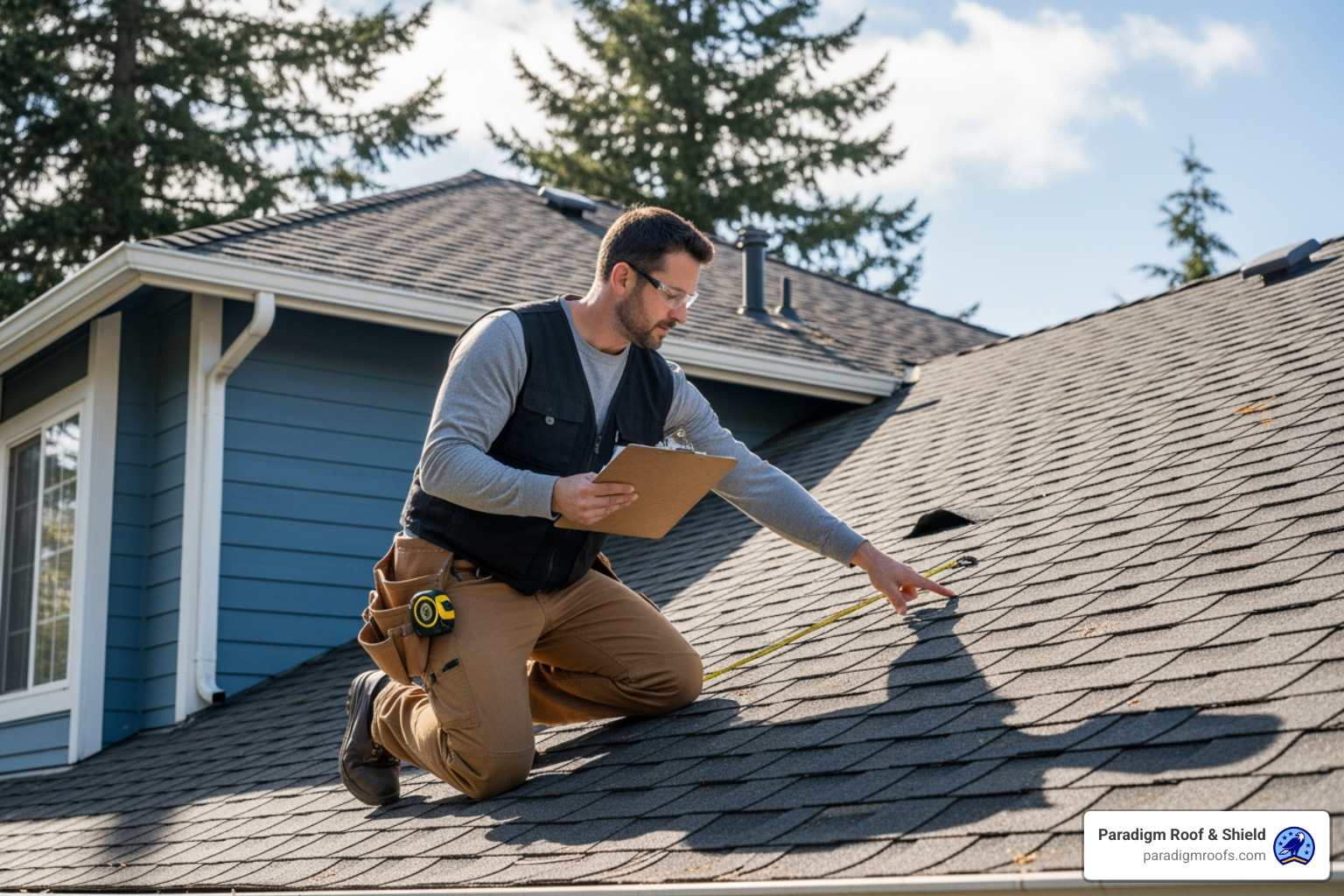
Roof Cost Estimate in 2025: What Most Homeowners Really Pay
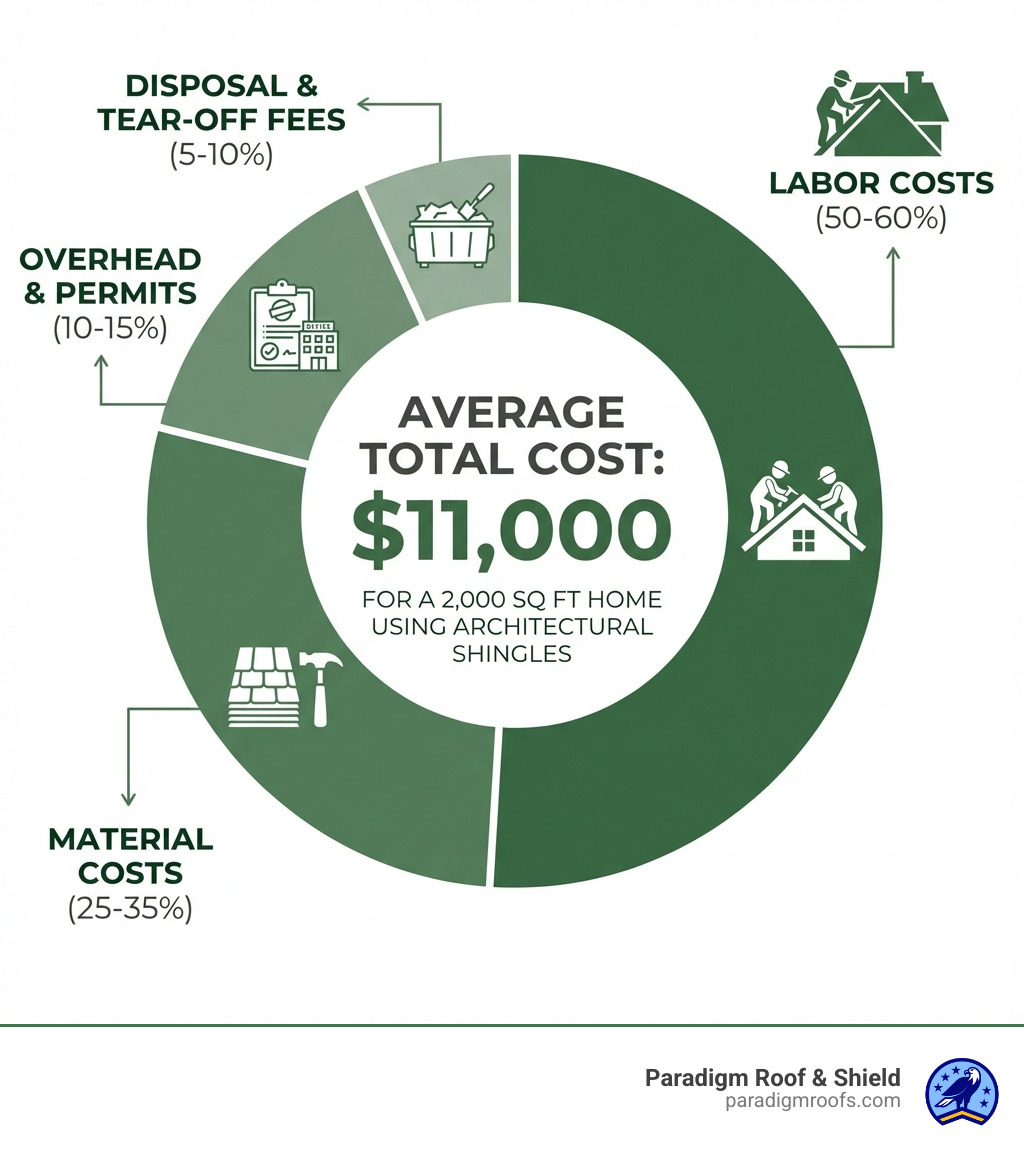
A roof cost estimate for most American homes in 2025 typically ranges from $7,000 to $14,500, with national project tracking data putting the median full replacement cost at about $11,000. That range is driven primarily by roof size, material choice, and local labor markets, but the real problem for homeowners is clarity. You call three contractors and get three wildly different numbers, with no clear explanation of where your money goes. That lack of transparency is exactly why many property owners search for all‑in, transparent roofing replacement pricing from trusted pros rather than generic ballpark figures—something we emphasize throughout our main roofing services for full roof replacement so homeowners know exactly what they’re buying.
Here’s what drives your costs:
- Materials: Asphalt shingles ($3.50-$5/sq ft) vs. metal ($6-$16/sq ft) vs. premium options like slate ($20-$35/sq ft)
- Labor: Represents 50-60% of your total project cost
- Roof Size: Measured in “squares” (100 sq ft each); average home = 17-20 squares
- Complexity: Steep pitches, multiple valleys, and dormers add 15-25% to base costs
- Location: Regional labor rates and local building codes significantly impact pricing
In 2025, the average roof replacement costs about $11,000, according to industry data compiled from thousands of projects nationwide. But that national average means little if you’re standing in your driveway in Dallas, looking up at a complex roof with multiple dormers and a steep pitch. Your actual cost could easily swing $5,000 in either direction based on factors most homeowners don’t even know to ask about.
This guide breaks down exactly how professionals calculate your estimate for a full roof replacementfrom the obvious (materials and labor) to the hidden costs that surprise homeowners after they’ve already signed a contract. You’ll learn how to spot inflated quotes, understand when repair makes more financial sense than replacement, and what questions to ask before writing a check.
As Greg Hiltz, CEO of Paradigm Roof + Shield, I’ve guided hundreds of Texas homeowners through the roof cost estimate process, combining my finance background from Harvard Business School with hands-on construction experience to ensure clients understand exactly what they’re paying for. My approach emphasizes transparent communication about costs, helping homeowners make informed decisions rather than feeling pressured into premature replacements.
National Roof Replacement Price Benchmarks for 2025
Let’s cut right to it. For most homeowners in the U.S., a full roof replacement in 2025 will typically fall within a range of $7,000 to $14,500. This wide range is precisely why getting a precise roof cost estimate is crucial. While smaller, simpler roofs might start around $5,000, complex projects with high-end materials can easily exceed $25,000, or even $60,000+.
When we talk about average costs, we often refer to the price per square foot. For typical materials and conditions, you can expect to spend between $4.00 and $11.00 per square foot. However, luxury or specialty roofing options can push this figure much higher, sometimes up to $40 per square foot or more.
A key term you’ll encounter in roofing is the “square.” A roofing square is a unit of measurement equal to 100 square feet of roof area. So, if your home has a 2,000 square foot roof, that’s 20 squares. Contractors often quote prices per square, which can sometimes be confusing if you’re not familiar with the terminology.
To give you a clearer picture, here’s a table comparing average roof replacement costs based on the square footage of your home, assuming typical materials like asphalt shingles:
| Home Square Footage | Estimated Roof Size (Sq Ft) | Average Roof Cost Estimate (Asphalt Shingles) |
|---|---|---|
| 1,500 | 1,650 | $6,600 – $18,150 |
| 2,000 | 2,200 | $8,800 – $24,200 |
| 2,500 | 2,750 | $11,000 – $30,250 |
| 3,000 | 3,300 | $13,200 – $36,300 |
Note: Estimated roof size is typically 1.1 to 1.2 times the home’s living area. Costs provided are general averages and can vary significantly based on material choice, complexity, and location.
These figures represent the overall investment. For more specific details about our comprehensive roofing services, we invite you to explore our dedicated page: More info about our roofing services.
Decoding Your Roof Cost Estimate: Material & Labor Cost Structure
When we provide a roof cost estimate, we’re not just pulling numbers out of a hat. We’re carefully calculating the costs of materials, the labor required, and factoring in several other variables. It’s a bit like baking a cake every ingredient and every step in the process contributes to the final product and its price tag.
One of the largest components of your roof replacement bill is labor. In fact, labor costs typically account for 50-60% of the total price. This isn’t just about the time roofers spend on your roof; it includes preparation, safety measures, skill, and cleanup. Professional roofers in our service areas of McKinney, Houston, and Neptune Beach generally charge around $40 to $90 per hour per worker, though specialized tasks or highly experienced crew leaders might command more. For instance, some sources suggest roofers can be paid around $130 per hour, while general laborers might be around $35 per hour. The installation process itself varies greatly depending on the material, which directly impacts labor time and, consequently, cost.
How Different Roofing Materials Impact Your Final Price
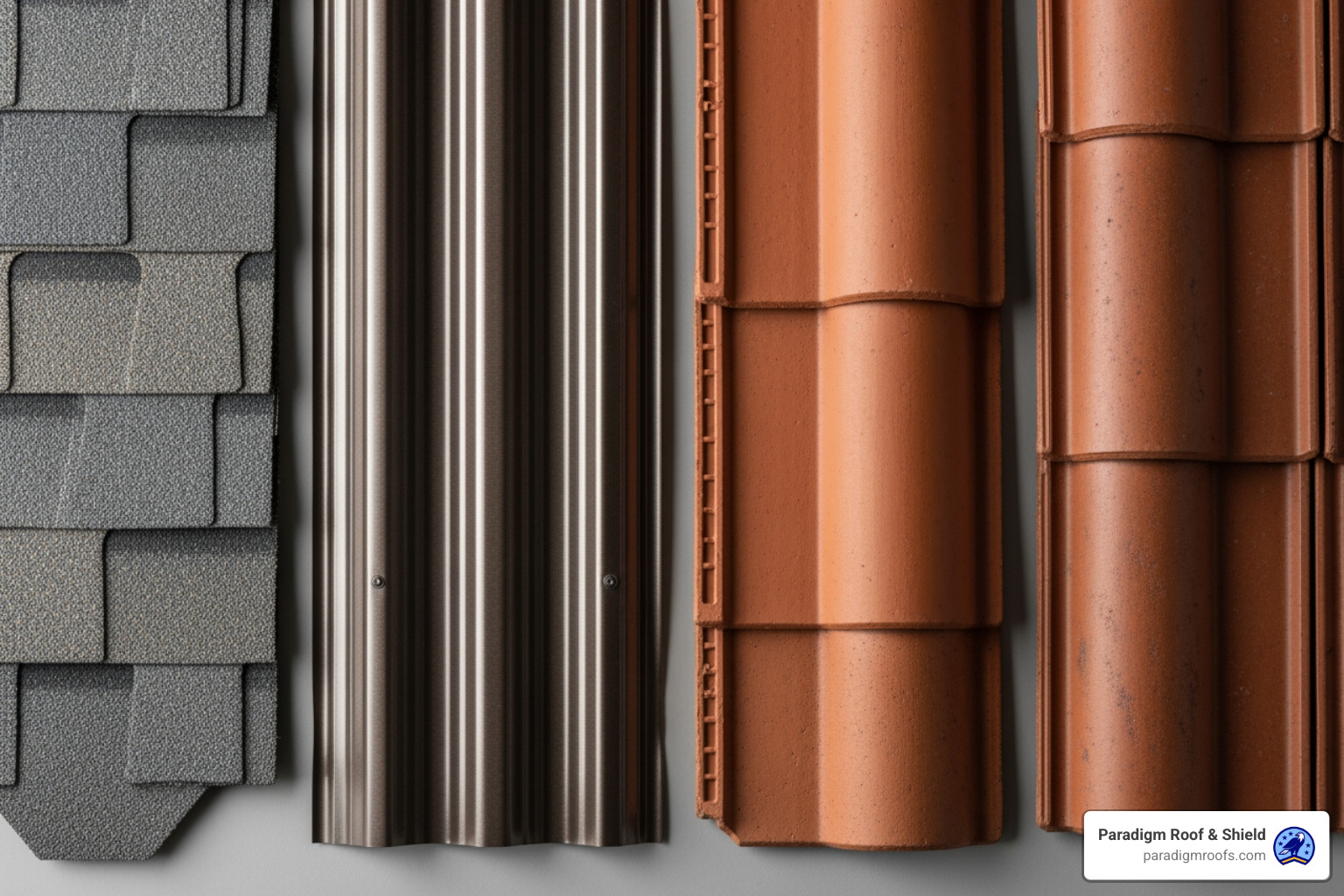
The material you choose for your roof is arguably the most significant factor influencing your overall roof cost estimate. Each material comes with its own price point, lifespan, and installation requirements.
-
Asphalt Shingles: These are the most common and cost-effective roofing material in the U.S., offering a great balance of affordability and durability. Asphalt shingles typically cost between $3.50 and $16.00 per square foot installed, depending on the type (3-tab, architectural, or premium). They generally last 20-35 years. Architectural shingles, for example, offer a more dimensional look and better wind resistance than 3-tab, and they fall in the mid-range of asphalt costs. We offer a variety of asphalt shingles to suit different budgets and aesthetic preferences.
-
Metal Roofing: Known for its exceptional durability and energy efficiency, metal roofing is a higher upfront investment but offers a longer lifespan and lower maintenance. Metal roofs can cost anywhere from $4.00 to $40.00 per square foot installed and can last 30-75 years or more. Standing seam metal roofs, which are popular for their sleek look and superior weather protection, typically fall on the higher end of this range. In areas like Houston, TX, where severe weather can be a concern, metal roofing is an excellent choice for its resilience.
-
Tile Roofing: Whether ceramic, clay, or concrete, tile roofs offer remarkable longevity and a distinctive aesthetic appeal. They are a premium option, costing between $6.30 and $27.50 per square foot installed, and can last 50-100 years. However, their significant weight often requires additional structural support for your roof frame, which can add to the overall cost. Our team is experienced with various tile options, including Brava Roof Tiles, which offer the beauty of natural tile without the weight.
-
Wood Shakes & Shingles: For a classic, natural look, wood shakes and shingles are a beautiful choice, typically costing $6.00 to $16.00 per square foot installed with a lifespan of 30-50 years. They require more maintenance than other materials and are best suited for drier climates, as humidity can affect their longevity. While not as common in our humid Florida locations, they can be a striking option for certain aesthetics in Texas.
-
Slate Roofing: The pinnacle of roofing materials, natural slate offers best longevity and curb appeal. It’s a premium product, costing between $20.00 and $35.00 per square foot installed, but can last an astonishing 125-200 years. Synthetic slate offers a similar look at a lower cost, ranging from $8.00 to $15.00 per square foot and lasting 25-50 years. Both require expert installation and robust roof framing due to their weight.
Beyond Materials: 7 Price Drivers That Shape Any Roof Estimate
Beyond the choice of materials and the cost of labor, several other factors can significantly sway your final roof cost estimate. Ignoring these can lead to unexpected expenses and budget overruns.
-
Roof Size & Complexity: It’s not just about the total square footage. Features like dormers, valleys, skylights, and chimneys add complexity, requiring more intricate cuts, flashing, and labor. A simple gable roof will always be less expensive to replace than a multi-faceted roof with numerous angles and penetrations. This complexity also impacts the waste factor, the amount of material that needs to be cut and discarded. While an average roof has a 10% waste factor, some more complex roofs can have upwards of 25%, meaning you’ll need to budget for extra material. Tools like EagleView help us accurately measure these complexities and estimate waste.
-
Roof Pitch & Height: The steepness (pitch) and height of your roof play a major role in labor costs. A low-slope roof (up to 4/12 pitch) is easier and safer to work on, requiring less specialized equipment. As the pitch increases (e.g., 5/12 to 8/12, or even 9/12 and steeper), the work becomes more challenging, requiring additional safety gear, ropes, harnesses, and more time for installation. For roofs steeper than an 8/12 slope, you might see additional labor fees in the range of $10-$15 per square, or an overall increase of $1,000 to $3,000 for the project. Similarly, multi-story homes demand more safety precautions and ladder work, adding anywhere from $10-$20 per square in labor costs. Understanding how your roof’s pitch affects costs is crucial, especially in areas like Texas where diverse architectural styles are common. We’ve discussed this in detail here: How Roof Pitch Affects Your Texas Home
-
Geographic Location: Where you live fundamentally impacts your roof replacement cost. Regional labor rates, material availability, and local building codes vary significantly. Urban areas like Houston and Dallas, TX, often have higher labor costs due to a higher cost of living. Areas prone to extreme weather, such as Neptune Beach, FL, might require specialized, more expensive materials or improved installation techniques to meet hurricane resistance codes. Additionally, local permits and inspection fees differ from one municipality to another. For instance, costs in Dallas TX might differ from those in McKinney, TX, or Neptune Beach, FL, due to these localized factors.
Uncovering “Hidden” Costs in Your Roof Cost Estimate
Even with a detailed quote, some costs might not be immediately obvious, or they can arise unexpectedly during the project. We believe in full transparency, which is why we always discuss these potential “hidden” costs upfront.
-
Old Roof Removal: Before we install your new roof, the old one often needs to come off. This tear-off process involves labor for removal and fees for disposal. If your roof has multiple layers of old shingles (some homes in our service areas might have two or even three layers), the removal costs will increase. You can expect removal and disposal costs to range from $1 to $5 per square foot, or roughly $60 per square for a single layer, with an additional $30 per square for each subsequent layer. For an average 2,000 sq ft roof, this can add $2,000 to $10,000 to your total.
-
Decking & Underlayment: Once the old roof is removed, we inspect the roof decking (the plywood or OSB that forms the base of your roof). If we find rotten, water-damaged, or otherwise compromised wood, it needs to be replaced. Repairing damaged decking can add $2.20 to $3.00 per square foot to your cost. Similarly, the underlayment, which provides an extra layer of protection beneath your shingles, is crucial. Standard synthetic underlayment costs around $1.50 to $2.10 per square foot. In hot and humid climates like Florida, we often recommend high-temperature underlayment, especially in valleys, for improved protection.
-
Flashing, Vents & Gutters: These components are vital for your roof’s performance and often need to be replaced during a re-roof. Flashing around chimneys, vents, and skylights prevents water intrusion, and reusing old flashing is a common mistake that leads to leaks. Replacing these is highly recommended. Adequate ventilation is also key for roof longevity and energy efficiency. While these are often integrated into the overall material and labor costs, separate gutter replacement can add around $1,200 to the project.
-
Permits & Inspections: Almost all municipalities in our service areas (McKinney, Houston, Neptune Beach) require a permit for roof replacement to ensure the work meets local building codes. The cost for these permits and associated inspections can range from $100 to $1,400, depending on your specific location and the scope of the project. These fees cover the necessary oversight to ensure your new roof is safe and up to code.
Roof Repair vs. Full Replacement: Cost-Optimal Decision Rules
Deciding whether to repair or completely replace your roof can feel like a gamble. It’s a significant financial decision, and we want to help you make the smartest choice for your home and your wallet.

Signs You Need a Full Roof Replacement
Sometimes, a repair is just a band-aid on a much larger problem. We generally recommend considering a full roof replacement if you observe any of the following:
- Age over 20 years: Most roofing materials, especially asphalt shingles, have a lifespan of around 20 years. If your roof is nearing or exceeding this age, even small issues can indicate widespread deterioration.
- Widespread granule loss: For asphalt shingles, granules protect the asphalt from UV rays. If you see large patches of missing granules or excessive granules in your gutters, it’s a sign your shingles are degrading.
- Curling or cracked shingles: Shingles that are curling, buckling, or cracked are losing their ability to shed water effectively, making your roof vulnerable to leaks.
- Multiple leaks: If you’re experiencing leaks in several areas, or frequent leaks that seem to pop up after every storm, it’s a strong indicator that the entire roof system is failing.
- Structural issues: Sagging sections of your roof, or visible damage to the roof deck from water intrusion, point to deeper structural problems that only a full replacement can address.
When a Roof Repair Makes More Sense
On the other hand, a targeted repair can be a perfectly viable and cost-effective solution in certain situations:
- Localized damage: If the damage is confined to a small areaperhaps a few missing shingles after a windstorm, or a minor leak around a venta repair can effectively restore your roof’s integrity.
- Newer roof (under 15 years): For roofs that are still relatively young, isolated damage is less likely to signify systemic failure. A repair can extend its life significantly.
- No structural issues: If the underlying roof decking and structure are sound, and the damage is superficial, a repair is often sufficient.
We understand this decision can be tough. That’s why we’ve put together a detailed guide to help you weigh your options: Should You Repair or Replace Your Roof?
It’s also worth noting the Return on Investment (ROI). A new roof can significantly increase your home’s value and curb appeal. According to the 2024 Journal of Light Construction Cost Vs. Value report, a new asphalt shingle roof provides a healthy return on investment of 59%, while a new metal roof offers an ROI of 48%. This means a substantial portion of your investment could be recouped when you sell your home.
Funding Strategies and Insurance for a New Roof in 2025
A new roof is a significant investment, but it’s one that protects your home and its value. Fortunately, there are smart strategies you can employ to manage the cost.
How to Save Money on Your Roof Replacement
We’re always looking for ways to help our clients get the best value without compromising on quality or safety. Here are a few tips:
- Get multiple quotes: This is perhaps the most crucial step. We recommend getting at least three detailed, itemized quotes from reputable contractors in your area. This allows you to compare not just the bottom line, but also the materials, scope of work, and warranties offered.
- Schedule during the off-season: Roofing contractors often have peak seasons (typically spring and summer) when demand is high. Scheduling your replacement during the late fall or winter, when demand is lower, might give you more leverage for competitive pricing and faster scheduling.
- Choose cost-effective materials: As we discussed, asphalt shingles are the most budget-friendly option. While premium materials offer longer lifespans, asphalt provides excellent protection at a lower initial roof cost estimate.
Will Insurance Cover Your Roof Replacement?
This is a common question, and the answer is: it depends! Homeowners insurance typically covers roof replacement costs if the damage is due to sudden, unexpected events, such as:
- Storm damage: This includes damage from hail, high winds, or falling trees.
- Fire: Damage caused by fire is usually covered.
- Vandalism: Intentional damage to your roof.
However, insurance policies almost never cover damage resulting from:
- Age: Normal wear and tear over time.
- Lack of maintenance: Neglecting necessary repairs can void coverage.
The claims process involves documenting the damage (photos, dates), contacting your insurance provider, and working with an adjuster. We have extensive experience assisting homeowners in McKinney, Houston, and Neptune Beach with navigating insurance claims to ensure you receive the coverage you’re entitled to.
Financing Your Project
If paying for a roof replacement out-of-pocket isn’t feasible, you have several financing options:
- Personal loans: These are unsecured loans from banks or credit unions that can offer quick access to funds, though interest rates might be higher than other options.
- Contractor financing: Many roofing companies, including Paradigm Roof & Shield, offer financing plans through third-party lenders. These can sometimes come with competitive interest rates or special promotional periods.
- Home Equity Loans (HELOCs): A home equity line of credit (HELOC) allows you to borrow against the equity in your home. These often have lower interest rates than personal loans, but they use your home as collateral, meaning you risk losing your home if you default. It’s a significant decision, and we encourage you to understand all the implications. For more information on home equity loans, you can refer to resources like this: Information on home equity loans
Getting a Precise Roof Cost Estimate and Choosing the Right Contractor
Getting an accurate roof cost estimate is the first step towards a successful roof replacement. But how do you ensure that estimate is truly reliable?
-
Online Roof Cost Calculators: These tools can be incredibly useful for getting a ballpark figure and understanding the general cost expectations. They’re great for initial budgeting and exploring how different materials might impact your price. However, their limitations are important to acknowledge. They can’t account for hidden damage, complex roof features, or precise local labor rates. They provide a general idea, not a definitive quote. You can try a general calculator like this one: Roofing Calculator
-
Professional Inspection: This is the gold standard for an accurate estimate. A professional roofing contractor will perform a thorough, on-site inspection of your entire roof system. This includes identifying hidden damage (like rotten decking), taking accurate measurements of all roof facets, assessing complexity, and recommending the most suitable materials for your home and local climate. This personalized approach ensures your roof cost estimate is as precise as possible.
Vetting Your Roofing Contractor
Choosing the right contractor is as important as choosing the right materials. A cheap quote from an unreliable contractor can lead to costly problems down the line. Heres how we recommend vetting your options:
- Check license and insurance: Always confirm that the contractor is properly licensed and carries both liability insurance and workers’ compensation insurance. This protects you from potential lawsuits and ensures quality work.
- Read reviews and ask for references: Look for contractors with a strong track record of positive customer experiences. Check online reviews on platforms like Google, Yelp, and the Better Business Bureau. Don’t hesitate to ask for references from past clients.
- Request a detailed, itemized quote: A reputable contractor will provide a comprehensive quote that breaks down costs for materials, labor, permits, disposal, and any other potential expenses. Be wary of vague or overly simple estimates.
- Understand the warranty: Inquire about both material warranties (from the manufacturer) and labor warranties (from the contractor). Understand what they cover, for how long, and if they are transferable.
- Check industry affiliations: Membership in professional organizations like the National Roofing Contractors Association (NRCA) can indicate a contractor’s commitment to industry standards and best practices.
Conclusion: Turn a Confusing Roof Quote into a Data-Driven Investment
Navigating roof cost estimates can seem daunting, but by understanding the key factors at play—materials, labor, roof complexity, location, and potential hidden costs—you empower yourself to make informed decisions. We’ve seen how a comprehensive understanding of these elements can transform a homeowner’s experience from stressful to seamless.
The cheapest quote isn’t always the best investment. While cost is undoubtedly a significant factor, prioritizing quality materials, expert craftsmanship, and a transparent, reliable contractor will save you money and headaches in the long run. A well-installed roof protects your home, improves its value, and provides peace of mind for decades to come.
At Paradigm Roof & Shield, we are a veteran-led team committed to integrity, technical excellence, and supporting our community. We pride ourselves on transparent communication and delivering superior roofing solutions.
Ready for an accurate, no-obligation quote custom to your home in the Dallas TX area, McKinney, Houston, or Neptune Beach? Contact our experts today for a data-backed roof cost estimate custom to your property.