

Roof Leak Detection Near Me
Fixing Leaky Roofs in Texas & Florida
Find the Leak. Fix the Problem. Protect Your Home.
When it comes to roof leaks, small issues can lead to big damage — fast.
At Paradigm Roof+Shield, we specialize in advanced roof leak detection services that identify hidden leaks before they spread and cause costly water damage to your home.
Whether you’ve noticed a water stain on your ceiling or suspect a slow leak after a storm, our certified roof inspectors use state-of-the-art technology and proven diagnostic methods to locate and resolve the problem — accurately and efficiently.
Why Fast Roof Leak Detection Matters
When your roof starts leaking, every second counts. Paradigm Roof+Shield delivers fast, reliable, and lasting protection for your home.
Catching leaks early is usually less expensive than repairing combined roof and interior damage later. For more tips on spotting issues before they become roof emergencies, you can review guidance from the National Roofing Contractors Association and our roofing blog.
200+ 5 Star Reviews
Signs You May Have a Roof Leak
Some roof leaks are obvious. Others are intermittent and only show up under certain wind and rain conditions. Common warning signs include:
- Water stains on ceilings or upper walls
- Peeling paint or bubbling drywall at corners and seams
- Musty or mildew type odors in certain rooms
- Drips during wind driven rain but not light showers
- Light visible from the attic through the roof deck
- Wet insulation or dark streaks on rafters or trusses
- Rusted or separated flashing around chimneys, walls, or skylights
If you see one or more of these issues, a focused roof inspection or leak detection visit can confirm whether the roof is the source and where the water is actually entering.

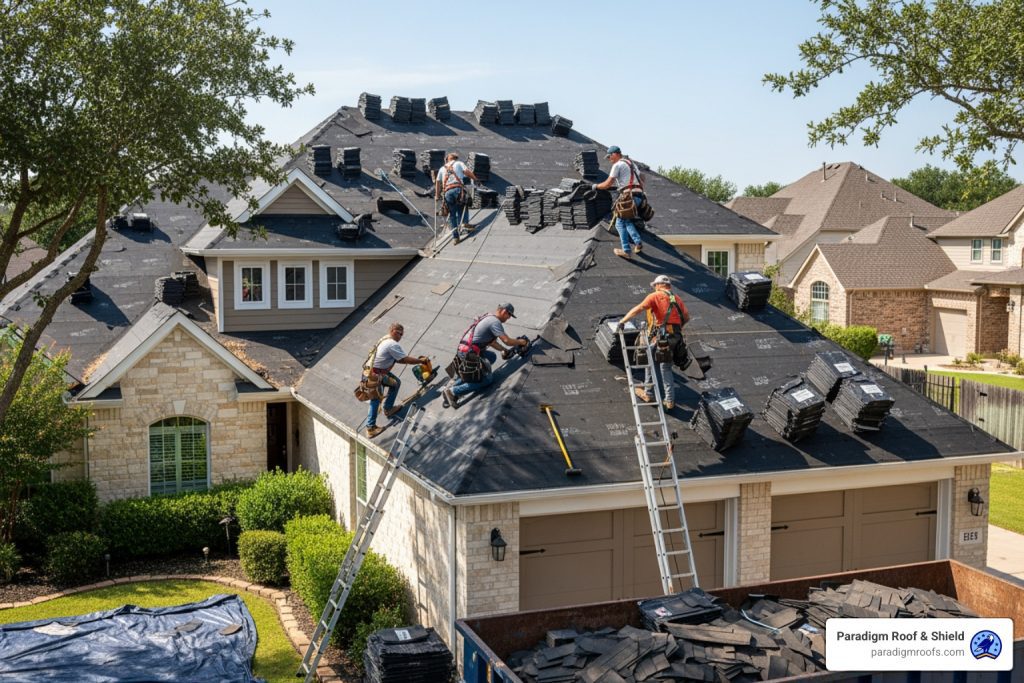
Tools And Methods We Use To Find Roof Leaks
Different leaks call for different methods. Depending on your home and the conditions, a roof leak inspection may involve:
- Attic inspection to locate water trails, stains, and wet insulation
- Surface inspection of shingles, metal roofing, flashings, vents, and skylights
- Moisture meters to confirm damp areas in wood, drywall, or insulation
- Infrared or thermal tools when appropriate, to highlight temperature differences caused by moisture
- Targeted water testing with a hose on suspect slopes or details while someone watches inside
- Drainage checks to see how water is moving across the roof, into gutters, and away from the home
We combine what we see in the attic, on the roof, and inside the home, whether your house has asphalt shingles, metal roofing, or tile roofing, so the repair plan targets the true cause of the leak.
Common Roof Leak Sources
Most leaks happen at details, not in the middle of a shingle field. Some of the most common sources we find include:
Pipe boots and vents
Rubber collars around plumbing vents can crack, shrink, or pull away over time. Fasteners may back out, leaving small gaps where water enters. Repairs usually involve replacing the boot, sealing the flange, and correcting the fastener pattern.
Sidewall and headwall flashing
Where the roof meets vertical walls, step flashing and headwall flashing should overlap correctly and be covered by siding or counter flashing. Short, reversed, or missing flashing can let water track behind the surface and show up as interior stains.
Roof valleys
Valleys concentrate large amounts of water. If underlayment laps are reversed, valley metal is damaged, or shingles are cut too tight, water can work under the surface and leak into the decking below.
Chimneys and skylights
Chimneys and skylights require layered flashing systems and sound sealant work. Improperly lapped base flashing, missing counter flashing, or failed sealant at the curb can all lead to leaks that may appear several feet away on the ceiling.
Nail pops and deck movement
When decking flexes or fasteners back out, nails can push up shingles and break the sealant bond. Even small openings can admit water during wind driven rain.
Low slope transitions and porch tie ins
Areas where a low slope roof connects to a steeper main roof often leak at the transition. Membrane choices, laps, and terminations at walls or saddles need special attention.
Gutter and drainage problems
Clogged or undersized gutters can cause water to back up under the first row of shingles, especially at eaves and inside corners. Over time this can damage fascia, soffit, and the lower edge of the roof deck.
During an inspection we identify which of these conditions are present, how severe they are, and whether they are isolated or spread across multiple roof areas so you can plan future residential roofing decisions with better information.
Repair Options After Leak Detection
Once we have traced the leak source and confirmed the moisture path, we walk you through repair options. Depending on what we find, this may include:
- Replacing damaged shingles and correcting fastener patterns through targeted roof repair work
- Reworking or extending flashing at walls, chimneys, skylights, and valleys
- Replacing cracked pipe boots and resealing penetrations
- Repairing or replacing sections of damaged roof decking
- Correcting small ventilation issues that contribute to recurring problems
- Cleaning and adjusting gutters and downspouts where overflow is part of the leak pattern
If we find that leaks are limited to a few specific details on an otherwise sound roof, a targeted repair is often appropriate. If multiple slopes show aging, granule loss, and repeated leaks, we will explain when it may be more practical to plan for roof replacement instead of ongoing patchwork.

Same Day And Emergency Leak Situations
Some leaks can be scheduled for standard repair windows. Others need faster attention. We treat situations as urgent when:
- Water is actively dripping during a storm
- Ceilings are sagging, soft, or visibly damaged
- There is visible daylight through the roof deck in the attic
- A tree limb or debris has pierced the roof surface
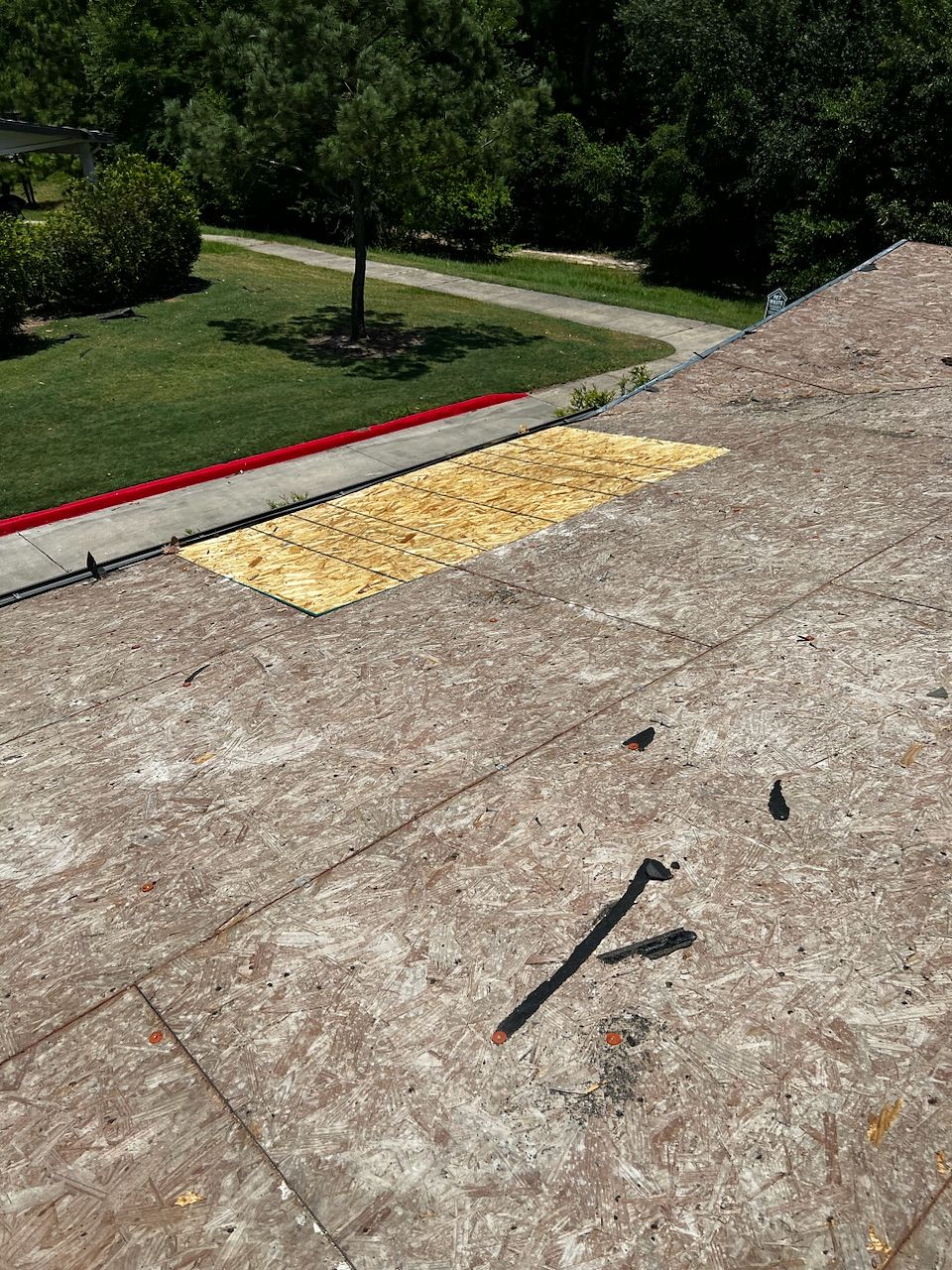
In urgent cases, the first goal is to stabilize the roof and limit interior damage. That may mean temporary tarping, sealing, or securing loose materials, followed by permanent repairs once the weather allows for safe work. For larger emergencies, our dedicated emergency roof repair service can step in to handle stabilization and planning.
How Our Roof Leak Detection Process Works?
Effective leak detection is about tracing the path of water from the inside out and confirming the actual entry point. Paradigm Roof+Shield follows a clear, repeatable process for roof leak inspections.
- Discussion and history: We start by asking where you have seen stains, drips, or odors and when they occur. We also ask about past repairs, major storms, and the approximate age of the roof.
- Interior and attic review: When it is safe to access, we look at the attic side first. We check rafters, trusses, insulation, and sheathing for moisture patterns, discoloration, and signs of long term leaks. This view often shows where water is traveling before it reaches the ceiling.
- Exterior roof inspection: We inspect shingles, flashing, valleys, penetrations, and roof edges directly above the affected interior areas. We look for missing or creased shingles, nail pops, cracked sealant, and gaps at metal transitions.
- Detail checks at likely leak points: Common locations include chimney and wall step flashing, plumbing vent boots, skylights, roof valleys, and low slope transitions. We verify that flashing is properly lapped, sealed, and extended.
- Moisture and test methods when needed: For difficult leaks, we may recommend targeted testing, such as controlled water testing on specific roof sections while someone observes the attic or interior for moisture. In some cases, moisture meters or infrared tools help confirm saturated areas.
- Findings and photo documentation: You receive clear explanations and photos that show what we found, where water is entering, and how it is moving through the roof and attic.
- Repair plan and next steps: We outline recommended repairs, materials involved, and whether the issue appears localized or part of a broader wear pattern that might justify planning for replacement.
This approach helps avoid guesswork and repeated return trips to chase the same leak.
Roof Leak Detection At A Glance
Aspect | Details |
Typical problems found | Pipe boot cracks, flashing gaps, valley issues, nail pops, gutter backup, skylight leaks |
When leaks often appear | After wind driven rain, hailstorms, or long periods of heavy rain |
Common interior warning signs | Ceiling stains, bubbling paint, musty odors, damp insulation, rusted fasteners in the attic |
Best time to schedule an exam | As soon as you notice new stains, drips, or odors, or after a major storm. |
Main homeowner benefit | Smaller, targeted repairs instead of surprise structural and interior damage |
Recommended next step | Schedule a documented leak inspection and keep photos and notes with your home records |
Why Homeowners Trust Paradigm Roof+Shield
🔍 Precision Leak Detection: We use thermal imaging, moisture mapping, and drone inspections to pinpoint leaks invisible to the naked eye.
🧰 Certified Roofing Specialists: Our experienced team understands every roofing system — from asphalt shingles to metal and flat roofs.
🚫 Preventative Solutions: We don’t just patch leaks — we identify the source and prevent future damage.
🌧️ Storm & Wind Damage Experts: Quick, insurance-friendly inspections after severe weather.
🏡 Serving Florida & Texas Homes: Trusted by thousands of homeowners across Jacksonville, DFW, and Houston.
When your roof starts leaking, every second counts. Paradigm Roof+Shield delivers fast, reliable, and lasting protection for your home.
Contact Our Nearest Location to Stop Roof Leaks Now
Related pages: Roof inspections • Roof repair • Emergency roof repair • Roof replacement • Roof installation • Shingles • Metal roofing • Tile roofing
Our Texas Locations
Paradigm Roof+Shield – McKinney, TX
901 N. McDonald Street, Ste 1003
McKinney, TX 75069
(972) 542‑7774 | McKinney TX
Paradigm Roof+Shield – Dallas, TX
10440 North Central Expressway, Suite 279
Dallas, TX 75231
(972) 542‑7774 | Dallas TX
Paradigm Roof+Shield – Fort Worth, TX
9500 Ray White Rd., Suite 200
Fort Worth, TX 76244
(972) 542‑7774 | Fort Worth TX
Paradigm Roof+Shield – Houston, TX
1400 Broadfield Blvd Ste 200, Houston, TX 77084
(346) 355–4550 | Houston TX
Paradigm Roof+Shield – Austin, TX
601 Quail Valley Dr.
Georgetown, Texas 78626
972-542-7774 | Austin TX
Our Florida Locations
Paradigm Roof+Shield – Jacksonville FL
2300 Marsh Point Road, Suite 200
Neptune Beach, Florida 32266
(904) 257-1827 | Jacksonville FL
Paradigm Roof+Shield – Jacksonville FL
2300 Marsh Point Road, Suite 200
Neptune Beach, Florida 32266
(904) 257-1827 | Jacksonville FL
Frequently Asked Questions
Location and patterns help. Roof leaks often show up on upper ceilings and may appear or grow after heavy rain or wind driven storms. Plumbing leaks may be closer to bathrooms or kitchens and can occur even in dry weather. During an inspection we check both the attic and nearby systems before deciding.
Yes, many roof leaks are intermittent. We use what you tell us about wind direction and storm intensity, combined with attic and roof surface inspection, to focus on the most likely entry points. In difficult cases, controlled water testing can help confirm the source.
If the leak source is clear and the repair is straightforward, we often can complete the work during the same visit. For larger or more complex repairs, we outline the scope and schedule a follow up.
Inspection policies can vary based on the type of visit and distance. When you call, we will explain current inspection options, any fees if they apply, and what is included in the visit.
If we see widespread wear, multiple active leaks, or storm damage across several slopes, we will explain why repair alone might not be the best long term plan. In those cases we can also provide a separate roof installation estimate so you can compare options.
Detailed documentation of roof conditions, including photos and written findings, can be helpful when you speak with your insurance carrier. We provide that information so you can make informed decisions with your adjuster. You and your carrier decide how to handle any claim.