


Why Roof Replacement Matters for Your Home
A roof replacement is a significant investment, with national costs averaging $5,855 to $13,116. In Texas, homeowners often pay between $7,000 and $18,000. Whether you’ve noticed leaks, storm damage, or your roof is simply old, understanding the process is crucial. A new roof is a complete system that protects your home for decades, and getting it right requires a team of trusted roofing professionals. This guide covers everything you need to make an informed decision.
Quick Answer: When Do You Need Roof Replacement?
- Age: Most asphalt roofs need replacement after 20–25 years.
- Visible Damage: Look for curling, cracked, or missing shingles.
- Leaks: Persistent water stains or active leaks are a clear sign.
- Granule Loss: Check for bald spots on shingles or granules in gutters.
- Sagging: Any visible dips in the roof deck require immediate attention.
- Cost: National average is $5,855–$13,116; Texas costs are typically $7,000–$18,000.
Deciding between repair and replacement can be difficult. Industry data shows asphalt shingle roofs last 20 to 25 years, while metal can last 40 to 75 years. The choice often depends on the extent of damage, roof age, and whether underlying deck issues exist that can only be found through a full tear-off.
Choosing the right roofing contractor and materials impacts your home’s energy efficiency, insurance premiums, and resale value. Professional installation is non-negotiable, as it ensures code compliance, proper ventilation, and warranty protection that DIY projects cannot offer.
As the CEO of Paradigm Roof + Shield, I bring over 15 years of construction and roof replacement experience. My veteran-led team has guided hundreds of homeowners through this process, ensuring every project meets our high standards from inspection to completion.
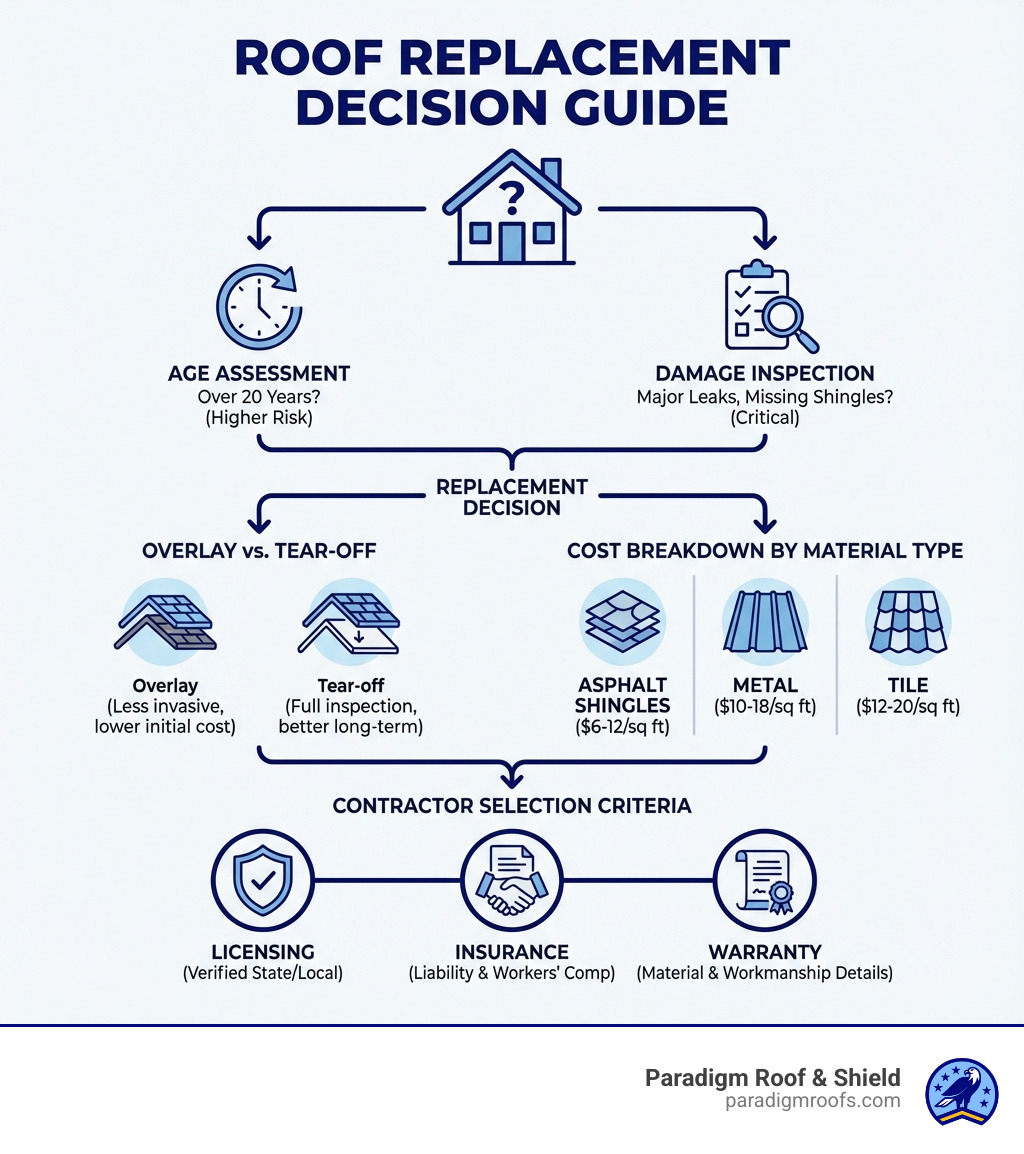
7 Clear Signs It’s Time for a Roof Replacement
Recognizing when your roof needs replacing can prevent extensive and costly damage. Delaying a roof replacement can lead to structural issues, mold, and interior damage. Here are seven definitive signs it’s time for a new roof:
- Roof Age: 20–25+ Years
Most asphalt shingle roofs last 20-25 years. If your roof is in this age range, its protective qualities are likely diminished, even if it looks fine from the ground. A professional inspection is recommended. - Curling or Cupping Shingles
Shingles with curling edges or cupped centers are a clear sign of age and weather exposure. This condition makes them vulnerable to wind uplift and allows water to seep underneath. - Cracked or Broken Shingles
Cracked shingles fail to divert rainwater, allowing moisture to penetrate the roof deck. This accelerates wear and significantly increases the risk of leaks. - Bald Spots and Granule Loss
The protective granules on asphalt shingles wear off with age. If you see dark, exposed areas on your shingles or find excessive granules in your gutters, your roof’s primary defense is failing. - Persistent Leaks or Water Stains
Any sign of water intrusion, from a visible leak to stains on your ceiling, is a critical indicator. While a single leak may be repairable, multiple or recurring leaks often point to widespread roof failure. - Sagging Roof Deck
A sagging or bouncy roof deck, visible from the ground or attic, signals a structural problem. This is often caused by water damage and demands immediate attention. - Visible Daylight Through Roof Boards
If you can see daylight through your attic roof boards, there are gaps in your roof system. This is a clear sign that a full roof replacement is necessary to prevent water and pest intrusion.
If you notice these signs, a professional assessment is crucial. While some issues can be repaired, these indicators often mean a full roof replacement is the wisest choice. To help weigh your options, check out our detailed guide: Should You Repair or Replace Your Roof?
Roof Replacement Costs: What Homeowners Need to Know
The cost of a roof replacement is a primary concern for homeowners. Nationally, the average cost is $5,855 to $13,116. In Texas markets like McKinney and Houston, costs typically range from $7,000 to $18,000, varying with project scope.
Several factors influence the final price:
- Roof Size and Complexity: Larger roofs or those with steep pitches, dormers, and multiple valleys require more materials and labor, increasing the cost.
- Roofing Material: Material choice is a major cost driver. Asphalt shingles are the most budget-friendly, while metal, tile, or slate are premium options.
- Labor Costs: Skilled labor accounts for about 60% of the total cost and varies by region.
- Permits and Disposal: Mandatory building permits and fees for debris disposal contribute to the overall expense.
- Underlying Repairs: Findy of rotten decking or damaged flashing during tear-off will add to the project cost.
According to Angi’s 2023 data, the national average for an asphalt shingle roof was $14,959. You can explore national averages here: How much does a roof replacement cost? (2023 data)
Understanding Your Roof Replacement Estimate
A detailed estimate is crucial. A reputable contractor’s quote should include:
- Itemized Breakdown: A clear list of all materials, labor costs, permit fees, and cleanup charges, often broken down by roofing square (100 sq. ft.).
- Warranty Details: A clear outline of both the manufacturer’s material warranty and the contractor’s workmanship warranty.
- Contractor Credentials: Proof of licensing, insurance, and references should be readily available.
A surprisingly low bid may indicate cut corners, leading to hidden costs or premature roof failure. Learn how to scrutinize your quote: How to avoid hidden roof replacement costs
Roof Overlay vs. Full Tear-Off: Making the Right Choice
You must decide between an overlay (re-roofing) or a full tear-off.
- Overlay (Re-roofing): This faster, cheaper option installs new shingles over old ones but is limited to two layers by code. Pros: Lower upfront cost and faster installation. Cons: It masks underlying issues like rotten decking, adds significant weight, and can void material warranties.
- Full Tear-Off: This is our recommended method. We strip all old materials to the roof deck. Pros: Allows for a thorough inspection and repair of the deck, ensures optimal performance of the new roof, and complies with all manufacturer warranties. Cons: Higher upfront cost and longer installation time.
A full tear-off provides superior long-term value and peace of mind. For a deeper dive, The Spruce offers a good overview: What You Should Know About Roofing Replacement
Choosing the Best Roofing Material for Your Home
Selecting the right roofing material is a critical decision that impacts your home’s durability, efficiency, and value. We guide clients in McKinney, Houston, and Neptune Beach through the options, considering local climate, style, and budget.
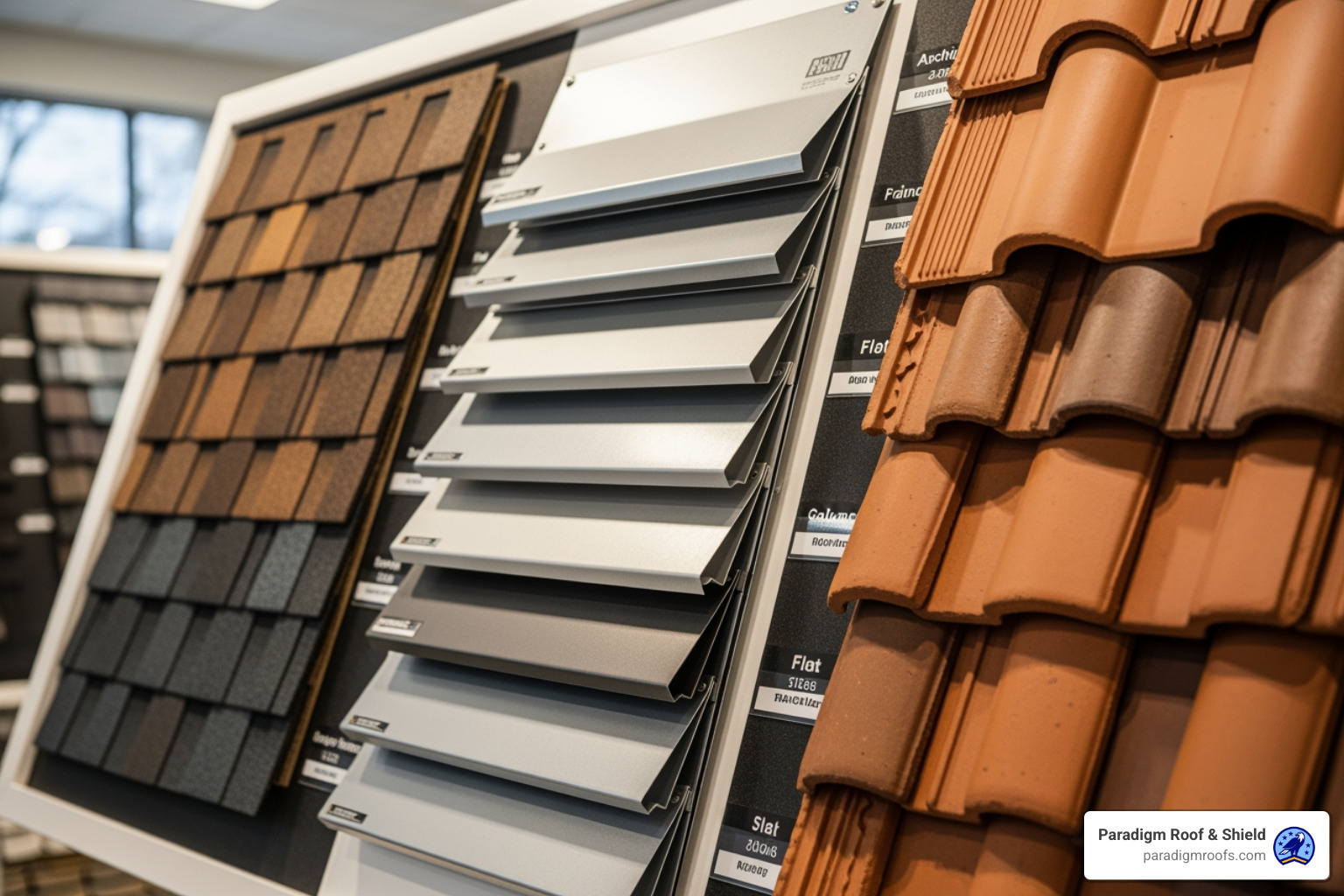
Here’s a quick comparison of popular materials:
| Material | Lifespan (Years) | Cost per Sq. Ft. (Installed) | Key Pros | Key Cons |
|---|---|---|---|---|
| Asphalt Shingles | 20-30 | $6 – $12 | Most affordable, wide variety of styles, easy to install. | Shorter lifespan, susceptible to weather damage. |
| Metal Roofing | 40-75 | $10 – $18 | Extremely durable, long lifespan, energy-efficient, low maintenance. | Higher upfront cost, requires specialized installation. |
| Clay & Concrete Tile | 50-100+ | $12 – $20 | Very long lifespan, highly durable, fire-resistant, great insulation. | Very heavy (may need structural reinforcement), high cost. |
| Wood Shakes | 20-40 | $8 – $15 | Natural, rustic aesthetic, good insulation. | High maintenance, fire risk, susceptible to rot/insects. |
Popular Roofing Materials Explained
- Asphalt Shingles: The most common and affordable choice (20-30 year lifespan). Architectural shingles offer a more dimensional look and better wind resistance than standard three-tab options.
- Metal Roofing: A highly durable, energy-efficient, and low-maintenance option with a 40-75 year lifespan. It reflects solar heat, lowering cooling costs in Texas and Florida. Learn more about the Advantages and Disadvantages of Steel Roofing.
- Clay & Concrete Tile: Offering exceptional durability (50-100+ year lifespan) and a distinctive aesthetic, these tiles are fire-resistant but very heavy, sometimes requiring structural reinforcement.
- Wood Shakes: These provide a classic, natural look but require higher maintenance and are susceptible to rot and insects, with a 20-40 year lifespan.
The Rise of Synthetic and Sustainable Roofing
Modern roofing materials offer improved performance and sustainability.
- Synthetic Shingles: These products mimic the look of slate or wood but are lightweight, highly durable, and low-maintenance. They often contain recycled materials. Explore the benefits: Three Reasons to Consider Synthetic Roof Tiles.
- Cool Roofs: Designed to reflect more sunlight and absorb less heat, cool roofs can reduce cooling costs by up to 15% in warm climates. They are an excellent energy-saving upgrade. Learn more from the Cool Roof Rating Council and their guide on What is a cool roof?
The Professional Roof Replacement Process: Step-by-Step
A professional roof replacement is a meticulous process. As a veteran-led team committed to technical excellence, we follow a rigorous procedure to ensure your new roof provides decades of protection.
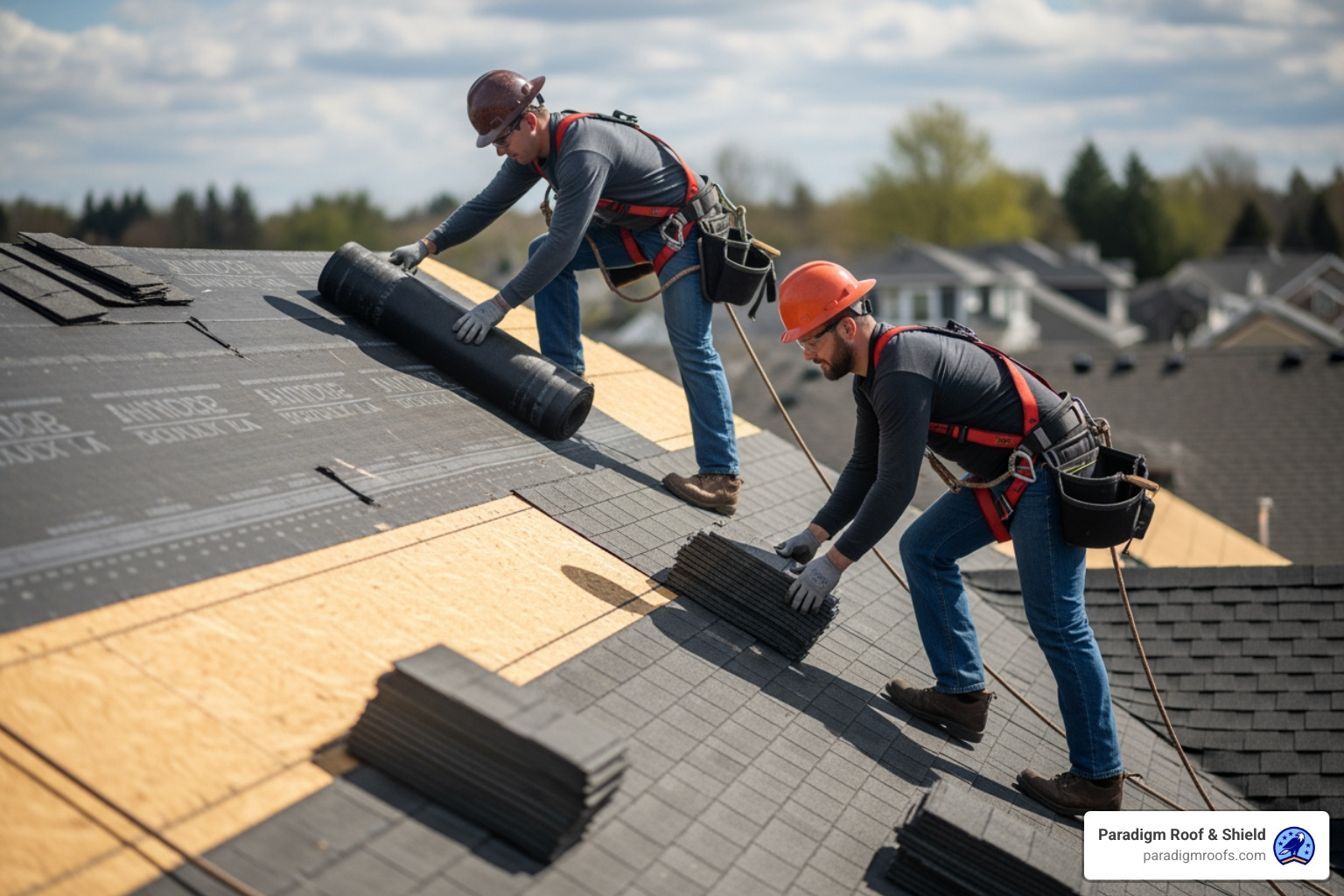
What to Expect During a Roof Replacement
Our goal is to make the process smooth and transparent. Here’s what to expect:
- Site Prep & Tear-Off: We protect your landscaping and property with tarps before carefully removing all old roofing materials down to the deck.
- Deck Inspection & Repair: We inspect the exposed roof deck for rot or damage, replacing any compromised sections to create a solid foundation.
- Underlayment & Shielding: A high-quality synthetic underlayment is installed across the entire deck. An ice and water shield is applied in critical areas like valleys and eaves for extra moisture protection.
- Component Installation: We install new metal drip edge, flashing around chimneys and vents, and ensure proper attic ventilation to extend your roof’s life.
- New Roof Installation: Our crew expertly installs your chosen roofing material according to manufacturer specifications and local building codes.
- Finishing & Final Inspection: We install the ridge cap, perform a thorough cleanup of all debris and nails, and conduct a final project inspection to ensure our high standards are met.
For a more detailed overview, This Old House provides an excellent guide: Replacing Your Roof: A Comprehensive Guide
DIY vs. Professional Roof Replacement: Cost, Safety & Value
While a DIY roof replacement may seem to save money on labor, we strongly advise against it. The risks and hidden costs often outweigh the benefits.
- Safety: Roofing is inherently dangerous. Professionals are trained and equipped to work safely at heights, minimizing the risk of serious injury.
- Warranty: Manufacturer warranties are typically voided if materials are not installed by a certified professional. A contractor’s workmanship warranty provides additional protection.
- Longevity & Value: Professional installation ensures adherence to building codes, proper flashing, and correct ventilation, maximizing your roof’s lifespan. Mistakes in a DIY project can lead to premature failure and more expensive repairs.
For a project this critical, the investment in professional expertise pays off in safety, durability, and long-term value.
Smart Upgrades to Bundle with Your New Roof
A roof replacement is the perfect time to make other improvements:
- Attic Ventilation: Upgrading to a ridge vent system improves airflow, reduces heat buildup, and can lower energy bills.
- Gutter Replacement: New gutters ensure your entire water management system is seamless and efficient.
- Skylight Installation: Install new, energy-efficient skylights for more natural light without the risk of leaks.
Warranties, Contracts, and Choosing the Right Roofing Contractor
Choosing a roofing contractor is the most important decision in a roof replacement. A reputable contractor ensures quality work, proper installation, and a valid warranty.
How to Select a Trusted Roofing Contractor
Thoroughly vet any contractor you consider. Here’s what to look for:
- Licensed, Insured, and Local: Ensure the contractor is licensed and carries full liability and worker’s compensation insurance. This protects you from liability. Local contractors understand regional building codes and climate challenges.
- Strong Reputation and Reviews: Check online reviews on Google, Yelp, and the Better Business Bureau. Ask for local references and look at their past projects. Our veteran-led team’s reputation is built on technical excellence and satisfied customers.
- Detailed Estimates: Obtain at least three written estimates that itemize all material and labor costs. A good contractor communicates clearly and answers all questions. Consumer Reports offers excellent advice on this: Roofing Buying Guide
Understanding Roof Warranties: What Homeowners Should Know
A warranty protects your investment. It’s crucial to understand the two main types:
- Manufacturer (Material) Warranty: This covers defects in the roofing materials. Coverage ranges from 20-30 years for standard shingles to 50 years or “lifetime” for premium options.
- Workmanship (Labor) Warranty: Provided by the contractor, this covers the quality of the installation. Even the best materials will fail if installed incorrectly, making this warranty essential.
Key warranty terms to understand:
- Prorated vs. Non-Prorated: Non-prorated coverage offers 100% protection for a set period, while prorated coverage decreases in value over time. Aim for a long non-prorated period.
- Transferability: A transferable warranty can be passed to a new homeowner, which is a significant selling point.
- Exclusions: Warranties typically exclude damage from storms, lack of maintenance, or unauthorized alterations. DIY installation almost always voids a manufacturer’s warranty.
For more insights on warranty longevity, explore our article: Do 50-Year Shingles Really Last 50 Years?
Conclusion: Invest in a Roof That Lasts
A quality roof replacement is a long-term investment in your home’s safety, efficiency, and value. Professional installation, the right materials, and a trusted contractor are essential for decades of protection. For a detailed evaluation and a transparent estimate from a veteran-led team committed to excellence, contact Paradigm Roof & Shield in McKinney, TX today!