

Understanding the Tesla Solar Roof: Is This Premium Roofing Innovation Right for Your Home?
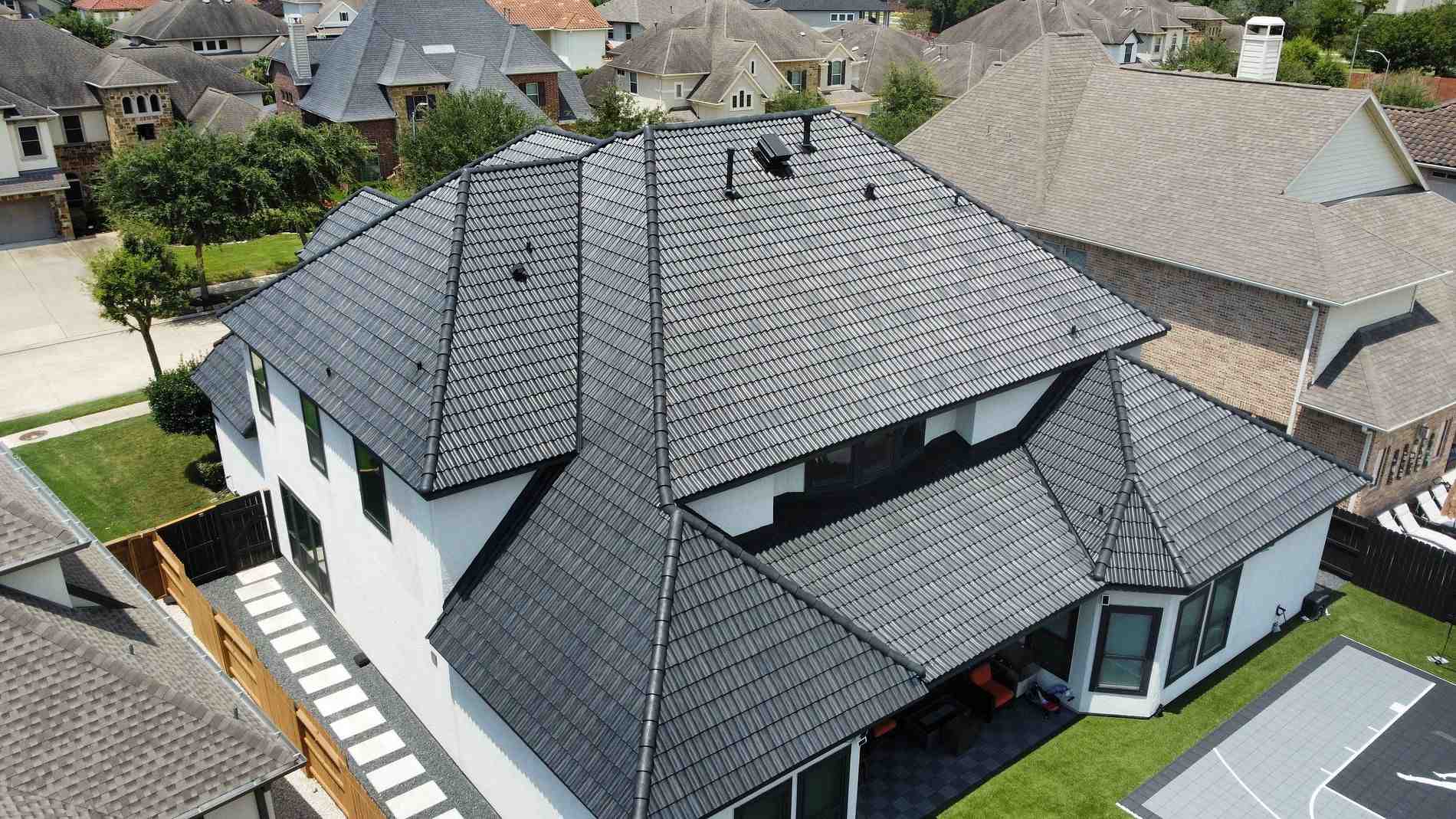
The Tesla Solar Roof is a complete roofing system that replaces traditional shingles with photovoltaic glass tiles and architectural-grade steel tiles. Unlike traditional solar panels that mount on top of a roof, the Solar Roof is the roof, integrating energy production directly into your home’s structure.
Quick Tesla Solar Roof Overview:
| Feature | Details |
|---|---|
| Average Cost | $106,000 (before incentives) |
| Cost per Watt | $16.00 |
| Efficiency | 8-14% (vs. 20-22% for traditional panels) |
| Power per Tile | 72 watts |
| Warranty | 25 years (tile, power, weatherization) |
| Durability | Class F wind, Class 4 hail, Class A fire |
| Best For | New roof needed + aesthetics priority |
| Installation Time | 5-7 business days |
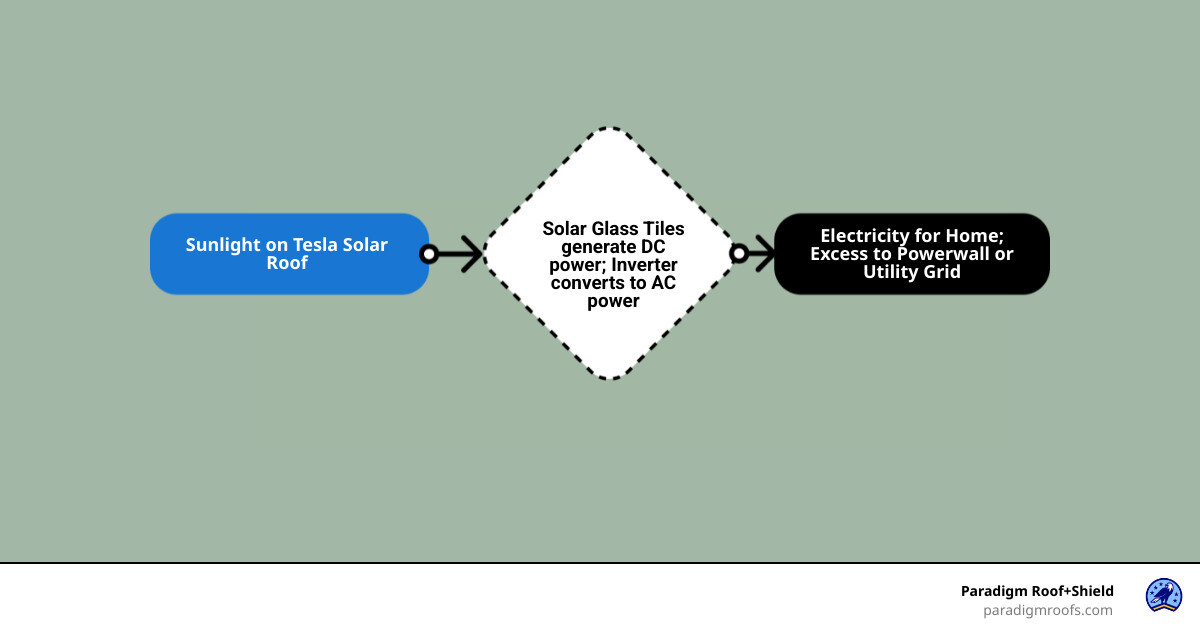
The system captures sunlight, converts it from DC to AC power for your home, and stores excess energy in a Tesla Powerwall battery or sends it to the grid. For homeowners exploring advanced roofing, Paradigm Roof+Shield offers expert guidance on premium, durable systems, providing comprehensive roofing services for any project. Understanding the true cost and performance is essential before making this significant investment.
As CEO of Paradigm Roof+Shield, I’ve used my finance and roofing expertise to help homeowners evaluate advanced systems like the Tesla Solar Roof. This guide breaks down everything you need to know to determine if this premium solar roof aligns with your goals.
Cost vs. Value: The True Price of a Tesla Solar Roof
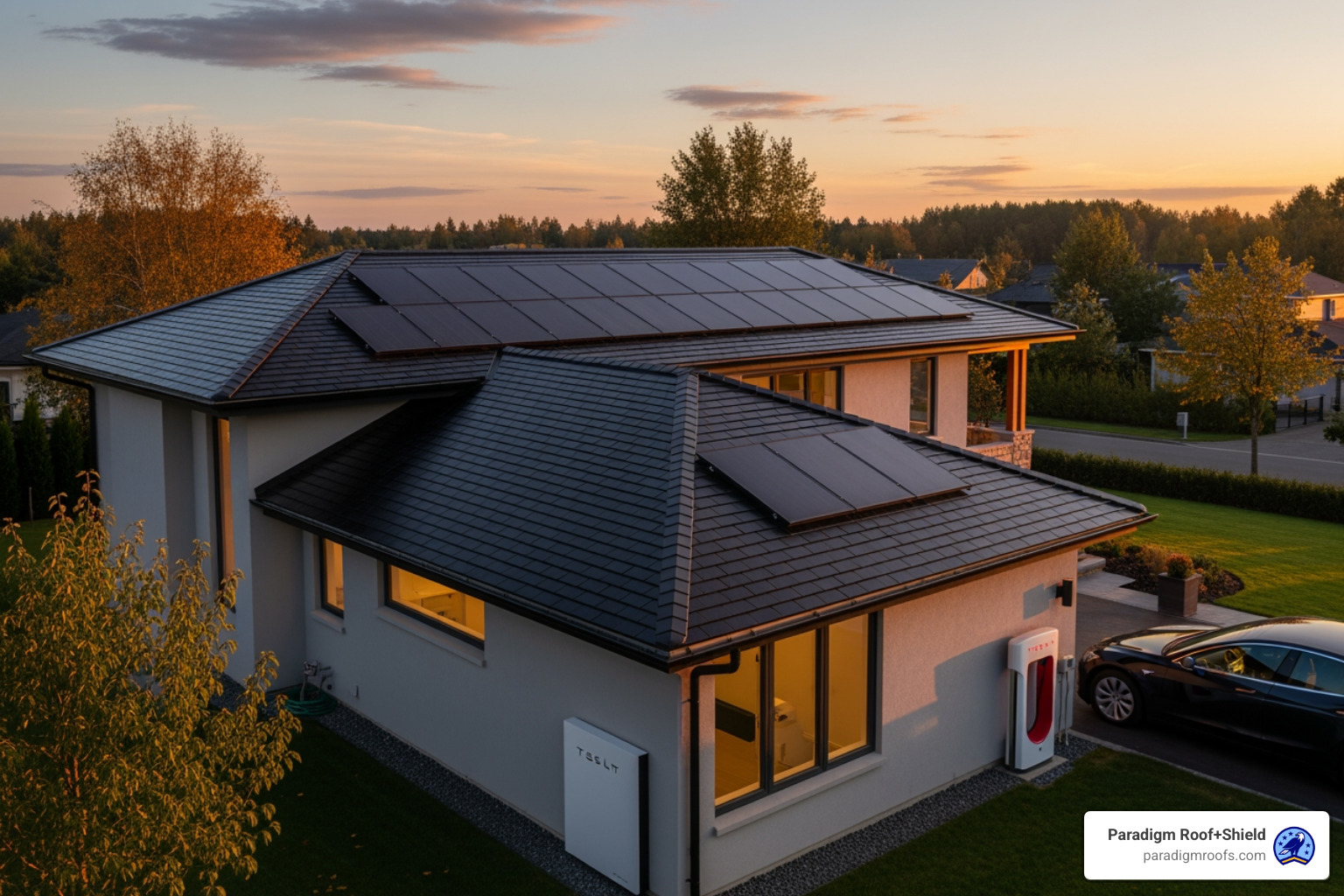
The cost of a Tesla Solar Roof is its most significant hurdle. It’s not just the price tag, but the long-term value compared to alternatives. As roofing experts, we help clients decipher the true cost-benefit analysis of this major home investment.
How Much Does a Tesla Solar Roof Really Cost?
The average total price for a Tesla Solar Roof installation is approximately $106,000 before incentives. This cost is often broken down by two key metrics:
- Price per square foot of roof space: Roughly $62, heavily influenced by roof complexity.
- Cost per watt of solar: Around $16.00, a crucial metric for comparison, as traditional solar panels average about $3.03 per watt.
The total cost includes the entire roof replacement (solar and non-solar tiles), inverters, and typically at least one Powerwall battery. Key factors that increase the final price are:
- Roof complexity: Multiple mounting planes, a steep pitch, and obstructions like chimneys or skylights add to installation costs.
- System size (kW): Larger homes with higher energy needs require more solar tiles, increasing the cost. A 4 kW system might cost around $64,000, while a 14 kW system could exceed $224,000.
- Number of Powerwalls: Each Powerwall adds about $9,300 (before incentives) to the total cost.
Notably, the total installation cost has increased by about 170% over the past five years. Compared to traditional options, a $106,000 Tesla Solar Roof is about 90% more expensive than a new roof plus a traditional solar panel installation (around $40,000 total). This makes traditional panels roughly 62% cheaper per watt.
Unpacking the Long-Term Savings and Incentives
While the upfront cost is high, long-term savings and incentives can offset a portion of the investment. An average Tesla Solar Roof provides about $90 in monthly electricity savings, totaling around $35,600 over its lifespan. In contrast, a traditional solar system of a similar size yields about $106 in monthly savings, highlighting the Solar Roof’s lower financial return.
This leads to a payback period of 20 to 30 years for a Tesla Solar Roof, significantly longer than the 11-year average for traditional solar. For many, the system may not “pay for itself” within its practical lifespan.
The most significant financial aid is the federal investment tax credit (ITC), which can reduce your federal income tax by 30% of the system’s cost. For a $54,000 Solar Roof, this is a $16,200 credit. Always consult a tax advisor about your eligibility. You can learn more about the federal investment tax credit (ITC).
State and local programs in areas like McKinney, Houston, or Neptune Beach can offer more savings. The Database of State Incentives for Renewables & Efficiency is an excellent resource. Additionally, net metering policies, which dictate how utilities credit you for excess energy, vary by region and are constantly changing, directly impacting your ROI.
Performance & Durability: Beyond the Aesthetics
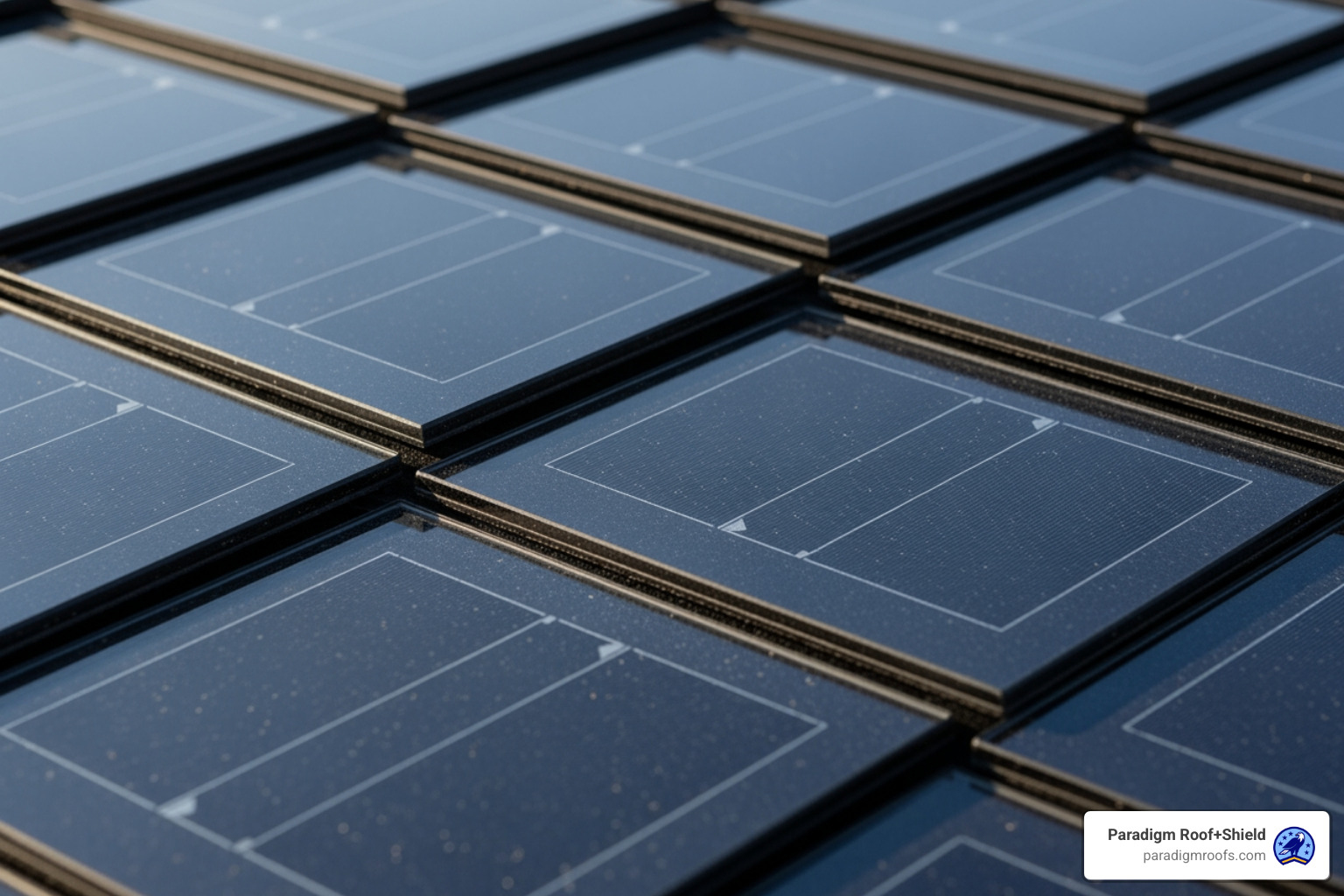
Beyond its sleek look, a roofing system’s true value is in its performance and durability. The Tesla Solar Roof must reliably protect your home while generating clean energy for decades.
Energy Efficiency: How Does It Stack Up?
The energy efficiency of Tesla Solar Roof tiles is a critical point of comparison. Third-party testing indicates an overall efficiency between 8% and 14%.
- In contrast, most tier-one traditional solar panels have efficiency ratings of 20% to 22%.
- This means Tesla Solar Roof tiles are about 50% less efficient per square foot than traditional solar arrays.
Each 15×45 inch tile has a power output of 72 watts. While the smaller tile size allows for better coverage on complex roofs, the efficiency per square foot remains lower. The system also has a negative power tolerance of -5%, meaning a 72W tile could produce as little as 68.4W, whereas many traditional panels have a positive tolerance, often exceeding their rated output.
Performance in warmer climates, like those in Texas and Florida, is also a factor. All solar panels lose efficiency as temperatures rise, a metric measured by the “temperature coefficient.” While Tesla’s data isn’t always transparent, top-tier panels like Maxeon have a low coefficient of -0.27%/°C, indicating better performance in heat.
The Tesla Solar Roof‘s degradation rate is 1.0% in the first year and 0.5% annually thereafter. This is acceptable, but many top panel manufacturers offer better rates (often 0.4% or lower), retaining more power output over time.
Built to Last? Durability and Warranty Explained
A key advantage of the Tesla Solar Roof is its impressive durability ratings:
- Fire Rating: Class A (highest rating).
- Hail Rating: Class 4 (highest rating), resisting impacts from hailstones up to two inches in diameter.
- Wind Rating: Class F (highest rating), resisting winds up to 110 mph. However, some traditional panels are rated for higher winds (200+ mph) and loads. For homeowners in hurricane-prone areas like Neptune Beach, this distinction is relevant.
Tesla offers a comprehensive 25-year warranty package:
- 25-Year Tile Warranty: Covers the material integrity of the tiles.
- 25-Year Power Output Warranty: Guarantees 85% of rated power after 25 years.
- 25-Year Weatherization Warranty: Ensures the roof remains watertight.
This warranty is robust, but the power output guarantee is not the best in class. Some top-tier traditional panels guarantee 92% efficiency after 25 years. A durable roof is essential, much like a quality 50-year roof material. The Solar Roof’s longevity is premium, but its efficiency metrics reveal a trade-off for its integrated aesthetic.
The Tesla Solar Roof Experience: Installation and Ownership
The journey with a Tesla Solar Roof involves a unique installation process and ownership experience, all integrated into the Tesla energy ecosystem. As a roofing company, we know the installation is as crucial as the product itself, and we hold all projects to the highest standards of craftsmanship.
What is the Installation Process Like?
The installation is a multi-step journey that requires coordination and patience:
- Place an Order: The process starts with an online order and an initial system size estimate from Tesla.
- Home Energy Assessment: Tesla conducts an assessment to confirm your roof’s size, complexity, and structural integrity, which finalizes the design and price.
- Review Your Solar Roof Order: You’ll review a detailed agreement covering hardware, price, and warranties.
- Permitting and Utility Approval: Tesla handles permitting with your local jurisdiction (e.g., in McKinney or Houston) and secures utility approval. This “Permission to Operate” (PTO) phase can take one to six weeks.
- Schedule Your Installation: Once all approvals are secured, you can schedule the installation.
- Installation: The process, typically lasting five to seven business days, involves:
- Removing your existing roof down to the decking.
- Installing a robust waterproofing underlayment.
- Installing and wiring the solar glass tiles and architectural-grade steel tiles.
- Installing inverters, Powerwall batteries, and other electrical components.
- Permission to Operate (PTO): After a final building inspection, Tesla submits documentation for final PTO. You cannot activate your system until this is granted.
While Tesla aims for a seamless process, some homeowners report long waits and inconsistent customer service. Tesla’s energy division holds a 2.6 out of 5-star rating on SolarReviews, indicating customer service can be a concern.
Living with a Tesla Solar Roof
Once operational, the Tesla Solar Roof offers integrated energy management and independence.
- Seamless Powerwall Integration: Every system integrates with Powerwall, a home battery that stores excess solar energy for use at night or during outages, providing 24/7 backup power.
- Real-time Monitoring via Tesla App: The Tesla app is a command center for 24/7 mobile monitoring of your energy production, consumption, and storage. Instant alerts keep you informed.
- System Control: The app allows you to customize settings to maximize self-consumption or optimize for time-of-use utility rates, enhancing savings.
- Maintenance Requirements: The integrated design requires low maintenance, typically just hosing down the roof. Avoid standing on the roof or using abrasive cleaners.
- Key Components: The system includes Solar Glass Tiles, Steel Tiles, a Powerwall battery, and a Solar Inverter.
We’ve seen the impressive results of such integrated systems, like the 30,000 Watt Tesla Solar Roof project we completed, which transformed a home’s energy profile.
The Verdict: Is the Tesla Solar Roof a Worthwhile Investment?
After diving into the costs, performance, durability, and ownership experience, we arrive at the million-dollar question (or rather, the hundred-thousand-dollar question): Is the Tesla Solar Roof a worthwhile investment? The answer, as with many significant home upgrades, is nuanced. It’s not a simple yes or no, but rather depends heavily on individual priorities, financial capacity, and specific home circumstances.
Pros of the Tesla Solar Roof:
- Unrivaled Aesthetics: This is, arguably, the strongest selling point. The seamless integration of solar technology into the roofline is visually stunning. The solar and non-solar tiles are virtually indistinguishable, preserving and often enhancing your home’s curb appeal.
- All-in-One System: It’s a complete roofing solution that generates power, integrates with battery storage (Powerwall), and connects to the Tesla app for comprehensive energy management.
- Excellent Durability Ratings: With Class A fire, Class 4 hail, and Class F wind ratings, it’s a robust and resilient roofing material designed to protect your home from severe weather.
- Single Warranty: Tesla provides a single, comprehensive 25-year warranty covering the tiles, power output, and weatherization, offering peace of mind from a single manufacturer.
Cons of the Tesla Solar Roof:
- Extremely High Cost: As we’ve seen, the upfront investment is significantly higher than traditional solar panels combined with a new roof, often two to three times more.
- Lower Energy Efficiency: Per square foot, the Tesla Solar Roof tiles are less efficient than conventional solar panels, meaning you need more roof area to generate the same amount of power.
- Poor Return on Investment (ROI): The extended payback period (20-30 years) and lower lifetime savings make it a less financially attractive option compared to traditional solar for most homeowners.
- Potential Customer Service Issues: Some customers have reported challenges with communication, installation delays, and responsiveness from Tesla’s energy division.
- Limited Availability: While improving, availability can still be a factor, leading to longer wait times for assessment and installation in some regions.
Who is the Tesla Solar Roof Best For?
Based on our research and experience, the Tesla Solar Roof shines brightest for a specific demographic of homeowners:
- Homeowners Needing a New Roof: If your roof is at the end of its life and requires a full replacement anyway, the incremental cost of the Tesla Solar Roof becomes more justifiable, as you’re already factoring in a significant roofing expense.
- Those Prioritizing Aesthetics and Technology Integration: If you value a sleek, integrated look over maximizing financial return, and you appreciate the full ecosystem of Tesla products (including Powerwall and EV charging), this system is highly appealing.
- New Luxury Home Construction: For those building a custom luxury home where visual harmony and cutting-edge technology are paramount, the Tesla Solar Roof can be an ideal choice.
- Tesla Brand Enthusiasts: If you’re a loyal follower of the Tesla brand and are willing to pay a premium for its innovations, the Solar Roof aligns perfectly with that ethos.
- Homes with Complex Rooflines or HOA Restrictions: The flexible nature of the tiles allows for better coverage on intricate roofs, and its subtle appearance can sometimes steer strict Homeowners Association (HOA) aesthetic rules more easily than traditional panels.
Who Should Consider Other Premium Roofing Solutions?
Conversely, the Tesla Solar Roof is likely not the best fit for:
- Budget-Conscious Homeowners: If your primary goal is to save money on electricity and achieve a quick return on investment, the high upfront cost and long payback period of the Solar Roof will likely be a deterrent.
- Anyone Prioritizing Maximum ROI and Energy Production: For homeowners who want the most power generated per dollar spent and the fastest financial payback, traditional high-efficiency solar panels are a superior choice.
- Homeowners with a Relatively New Roof: If your existing roof has many years of life left, investing in a full roof replacement with solar tiles might not make financial sense.
- Those Concerned About Long-Term Product Support and Availability: While Tesla offers a solid warranty, some homeowners may prefer the modularity and widespread availability of traditional solar panels and roofing materials for easier future repairs or upgrades.
- Homeowners in Extreme Weather Zones (e.g., hurricane-prone coastal areas): While the Solar Roof has a good wind rating, some traditional panels and roofing systems offer even higher resistance to sustained winds, which might be a critical consideration for those in high-risk areas like Neptune Beach, Florida.
Frequently Asked Questions about the Tesla Solar Roof
We often encounter common questions from homeowners exploring the Tesla Solar Roof. Here are some of the most pressing ones, with straightforward answers to help you make an informed decision.
Is the Tesla Solar Roof worth the high cost?
For most homeowners, from a purely financial perspective, the Tesla Solar Roof is generally not worth the high cost. It costs two to three times more than a combination of traditional solar panels and a separate roof replacement. While it offers unparalleled aesthetics and integration, the financial return does not typically justify the premium price. The primary value lies in its visually stunning, integrated aesthetic and cutting-edge technology, making it a luxury product rather than a cost-effective energy solution for the average household.
How does the warranty compare to industry standards?
The Tesla Solar Roof comes with a strong, comprehensive 25-year warranty covering the tiles, power output, and weatherization. This is generally in line with or exceeds many industry standards for roofing and solar components. However, when we look specifically at the power output guarantee, Tesla guarantees 85% of its initial efficiency after 25 years. This is good, but some top-tier traditional solar panel manufacturers, such as Maxeon, guarantee 92% efficiency after 25 years and even 87.5% after 40 years. So, while the Tesla Solar Roof warranty is robust overall, its long-term power retention guarantee is not the absolute best in the market.
What are the biggest downsides of owning a Tesla Solar Roof?
The primary drawbacks of owning a Tesla Solar Roof are:
- Prohibitive Upfront Cost: Averaging over $100,000, it’s a significant investment that many homeowners find difficult to justify financially.
- Lower Energy Efficiency: The tiles are less efficient per square foot than traditional solar panels, meaning you need a larger roof area to generate the same amount of power, or you’ll generate less power from the same area.
- Significantly Longer Payback Period: With an estimated payback period of 20-30 years, the financial return on investment is slow, making it a poor financial investment for homeowners prioritizing quick savings.
- Potential Customer Service and Installation Challenges: Some customers have reported long wait times, communication issues, and installation delays, impacting the overall experience.
- Limited Repair Options: Being an integrated system, replacing individual damaged tiles can be more complex and potentially more costly than replacing a single traditional solar panel.
Conclusion: A Premium Product for a Niche Market
The Tesla Solar Roof is undoubtedly an innovative and visually stunning product that merges a durable, high-performance roof with integrated energy generation. It represents a significant leap forward in blending aesthetics with renewable energy technology, offering a solution that is virtually indistinguishable from a high-end traditional roof. For homeowners in areas like McKinney, Houston, or Neptune Beach who prioritize a seamless, neat aesthetic and cutting-edge technology above all else, it’s a compelling option.
However, our comprehensive evaluation reveals that its high upfront cost, coupled with lower energy efficiency and a significantly longer payback period compared to traditional solar panel systems, positions the Tesla Solar Roof as a luxury choice rather than a practical one for the average homeowner primarily seeking financial return on their solar investment. It’s best suited for those building a dream home, needing a full roof replacement anyway, or those who are dedicated Tesla enthusiasts willing to pay a premium for the integrated experience.
For expert guidance on advanced and durable roofing solutions, including integrated systems, or to explore whether Tesla solar powered roof tiles or other premium roofing options are right for your home, trust the veteran-led team at Paradigm Roof+Shield. We’re committed to technical excellence and helping you make the best decision for your home and budget. Contact us today to discuss your roofing needs at 1-800-ROOF-PRO.