


Understanding the Timeless Strength of Natural Stone Roofing
Slate roofing is a premium roofing solution made from natural metamorphic stone, known for its exceptional durability, fire resistance, and timeless aesthetic appeal. As a leading provider of expert roofing services, Paradigm Roof+Shield recognizes slate as one of the oldest and most reliable roofing materials in the world, with some installations lasting over 200 years when properly installed and maintained.
Key Facts About Slate Roofing:
- Lifespan: 75 to 200+ years, depending on slate quality and installation
- Cost: $1,000 to $3,000 per roofing square (100 sq. ft.), or $10 to $25 per square foot
- Weight: Significantly heavier than asphalt shingles—may require structural reinforcement
- Benefits: Fireproof, rot-proof, insect-proof, and environmentally friendly
- Drawbacks: High upfront cost, brittle under foot traffic, requires specialized installation
Slate is a natural product quarried directly from the earth, split into thin tiles, and installed by skilled craftsmen. Its use dates back to the Roman Empire, and historic slate roofs have been protecting buildings for centuries. While the initial investment is substantial, a slate roof often outlasts multiple generations of other roofing materials, making it one of the most cost-effective options over the long term.
For homeowners in Texas seeking the look of slate without the weight or cost, synthetic roof tiles offer a modern alternative. However, for those who value authenticity, durability, and a roof that can last a lifetime—or several—natural slate remains the gold standard.
As Greg Hiltz, CEO and co-owner of Paradigm Roof+Shield, I’ve overseen complex roofing projects across Texas, including the installation and restoration of premium systems like slate roofing, where technical precision and long-term performance are paramount. My experience in construction operations and leadership ensures that every slate roofing project is executed with the integrity and craftsmanship it demands.
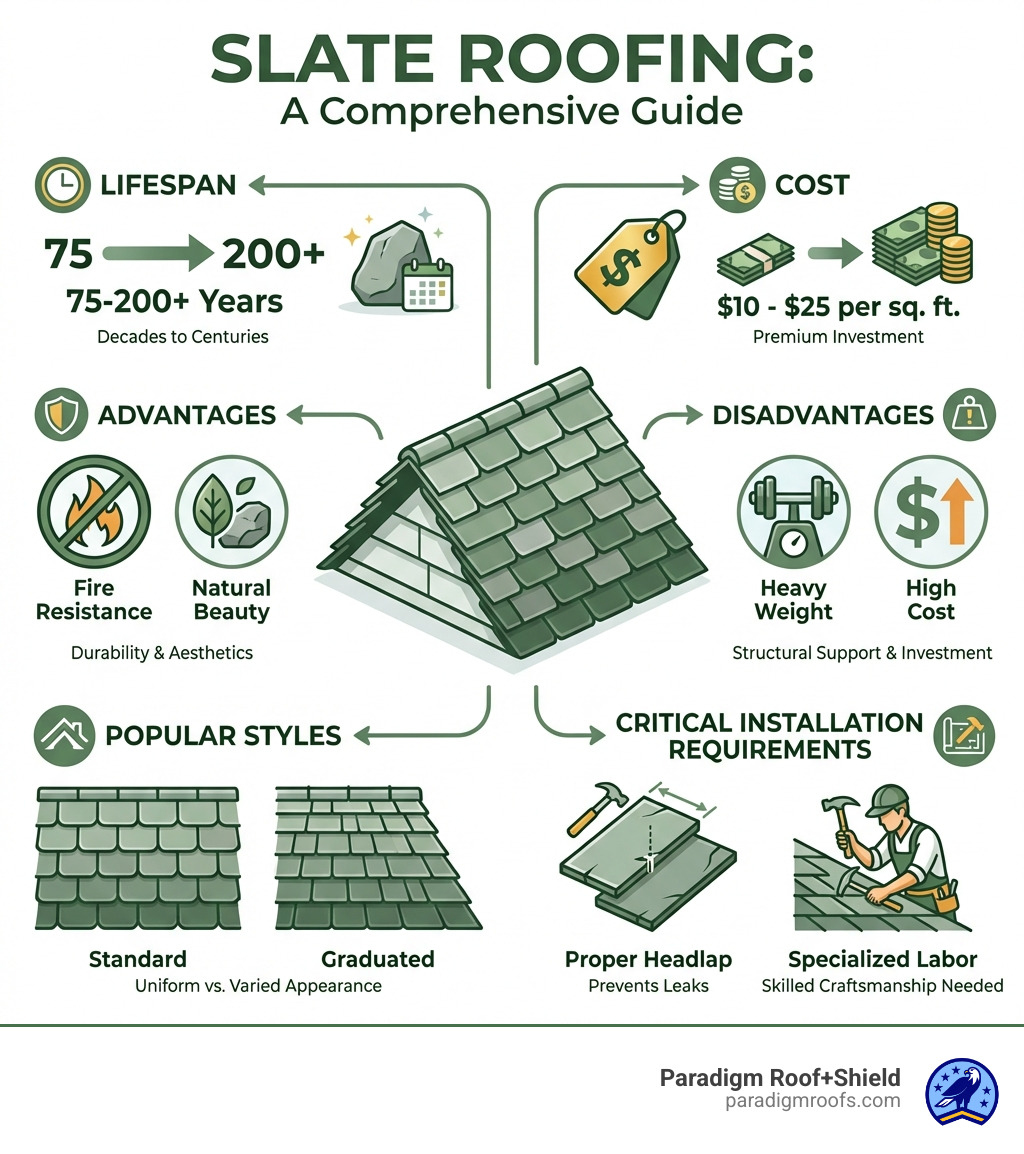
Slate roofing terms to remember:
What is Slate Roofing? A Legacy Forged in Stone
Slate is a fine-grained, metamorphic rock derived from shale, prized for its ability to be split into thin, durable tiles. Its use in roofing dates back to the Roman Empire, a testament to its enduring performance. A properly installed slate roof is a hallmark of quality craftsmanship, offering superior protection and a distinctive, natural beauty that cannot be replicated.
Roofing slates are essentially roofing tiles made out of slate rock. This rock is formed from ancient sediments of clay and fine silt, transformed by immense heat and pressure over millions of years. This geological process imbues slate with its unique properties: high strength, low porosity, and low absorption, making it an ideal material for shedding water and resisting the elements. Once quarried, the rock is split into thin sheets and then cut to the required sizes, typically ranging from 8 inches by 6 inches to 24 inches by 12 inches, with thicknesses usually around 1/4 inch, though some can be up to 1 inch thick. This meticulous process ensures each tile is ready for its long life protecting a structure.
The history of slate roofing is rich and spans centuries. While the Romans were among the first to mine and install standard-sized slate on roofs, its adoption became widespread in Europe. In the United States, slate roofs were introduced in Boston as early as 1654 and Philadelphia in 1699. Early American roofing slate was often imported from North Wales. The first commercial slate quarry in the U.S. opened in 1785, and by 1876, the country became a net exporter of roofing slate. The U.S. roofing slate industry peaked between 1897 and 1914, with over 200 quarries operating in 13 states. This legacy of durability and craftsmanship continues today, gracing historic buildings and modern luxury homes alike.
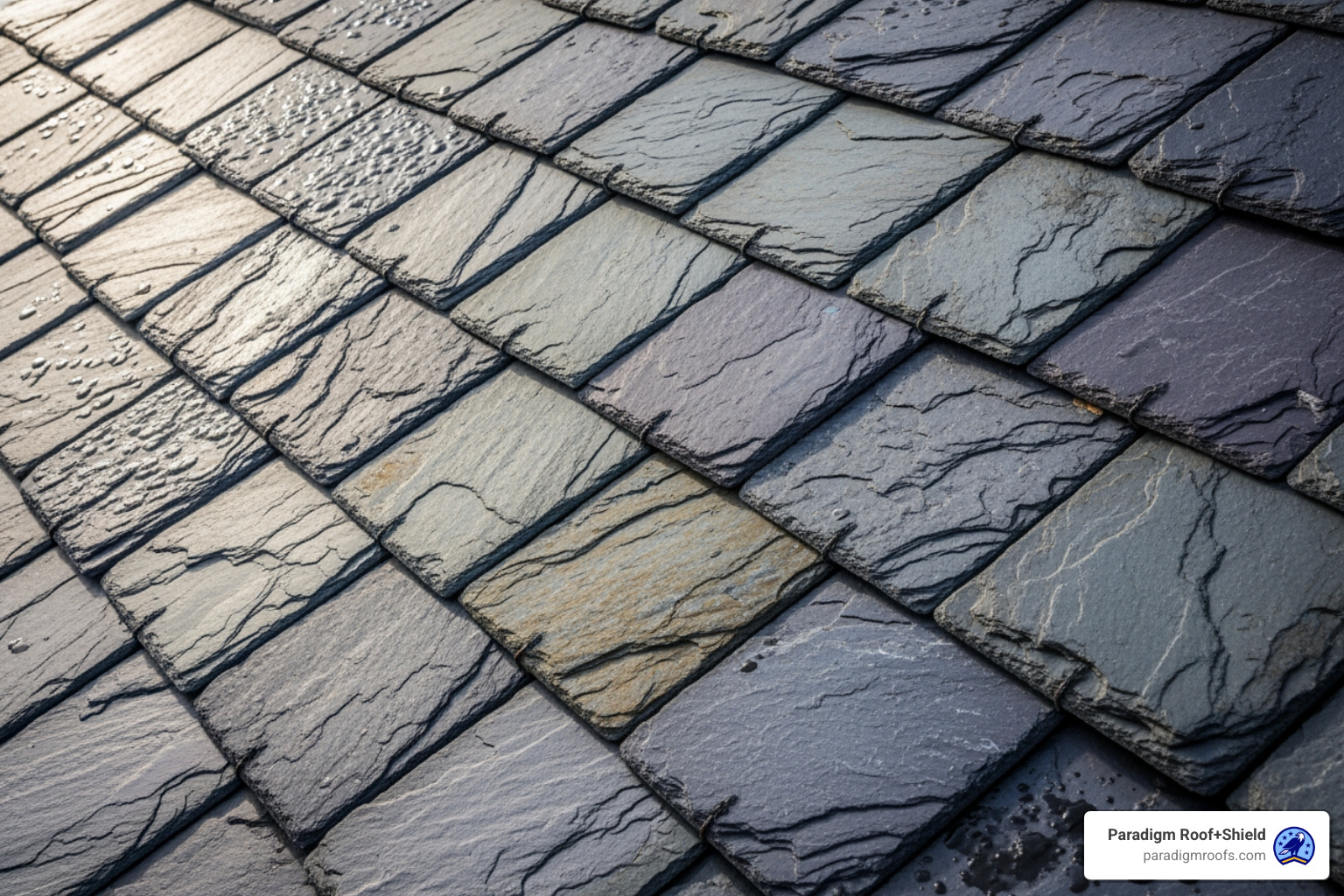
The Best Lifespan of Slate Roofing
When we talk about the longevity of roofing materials, slate roofing stands in a league of its own. While many roofing materials last 20-30 years, a high-quality slate roof can last from 75 to over 200 years. This incredible longevity makes it one of the most cost-effective materials over the life of a building, often outlasting the structure itself.
To put this into perspective, consider the typical lifespans of other common roofing materials:
- Asphalt Shingles: 20-25 years
- Metal Roofing: 40-70 years
- Wood Shake Roofing: 35-40 years
- Clay or Cement Tiles: 50-100 years
A slate roof, by contrast, can provide protection for a century or two when well-maintained. For example, Vermont and New York slates typically last about 125 years, while Buckingham Virginia slates can last 175 years or more. Some Peach Bottom slates have been known to last over 200 years. This exceptional durability means that while the initial investment is higher, the per-year cost of a slate roof can be significantly lower than other materials, especially if you plan to stay in your home for decades or if you are considering a property as a multi-generational investment. It’s truly a “set it and forget it” solution for generations.
The Environmental Benefits of Natural Slate
As a natural product, slate is inherently eco-friendly. It requires minimal processing, is fully recyclable, and its long service life reduces the waste associated with frequent roof replacements. Unlike other materials, it does not release volatile organic compounds (VOCs).
Our commitment to sustainability extends to the materials we recommend. Natural slate is quarried directly from the earth, meaning its production involves less energy and fewer synthetic chemicals compared to manufactured roofing materials. Its remarkable lifespan of 75 to 200+ years dramatically reduces landfill waste that would otherwise accumulate from multiple roof replacements. Slate is also fireproof, rot-proof, and insect-proof, reducing the need for chemical treatments. Its resistance to cold and mold further contributes to a healthy home environment. While natural slate is not considered a “cool roof” by itself, its thermal mass can contribute to stable indoor temperatures, and its inherent properties make it a sustainable choice for any home or commercial building. For more information on energy-efficient roofing options, you can explore resources on Cool Roofs.
Key Considerations: Advantages, Disadvantages, and Costs
Choosing slate is a significant decision that involves weighing its premium benefits against its specific requirements. While its advantages are substantial, factors like cost, weight, and installation complexity must be considered.
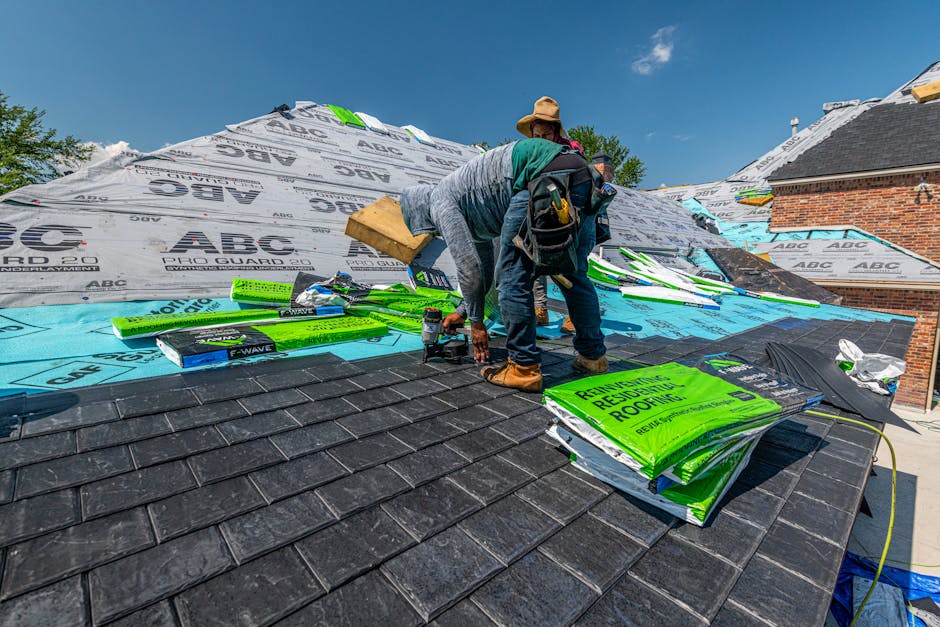
Advantages vs. Disadvantages
The primary benefits of slate include its exceptional lifespan, best aesthetic appeal, and resistance to fire, rot, and insects. However, the main drawbacks are its high initial cost, significant weight—which may require structural reinforcement—and its brittleness, which makes it susceptible to breaking if walked on improperly.
Advantages of Slate Roofing:
- Unparalleled Longevity: As discussed, slate roofs can last for centuries, often outliving the building itself. This makes it an incredibly durable and long-term investment.
- Superior Durability: Slate is naturally fireproof, rot-proof, and insect-proof. It is also resistant to cold, mold, and severe weather, including heavy rains and high winds, making it an excellent choice for the varied climates found in areas like McKinney, Houston, and Neptune Beach.
- Timeless Aesthetics: The natural beauty of slate, with its varied colors and textures, offers an neat and sophisticated appearance that improves any architectural style, from historic homes to modern luxury properties.
- Low Maintenance: Once properly installed, a slate roof requires relatively little maintenance compared to many other roofing materials. Regular inspections and prompt repair of damaged slates are usually sufficient.
- Eco-Friendly: As a natural, recyclable material with a long lifespan, it minimizes environmental impact.
Disadvantages of Slate Roofing:
- High Initial Cost: Slate is among the highest-priced roofing materials in the marketplace. The cost of materials combined with the specialized labor required makes the upfront investment substantial.
- Significant Weight: Slate is extremely heavy. A 40-square roof can require over 5000 pounds of slate. Quarter-inch thick slate weighs approximately 935 pounds per square (100 sq. ft.), and half-inch thick slate weighs about 18.70 pounds per square foot. This means existing structures, especially older ones, may require evaluation by a licensed structural engineer and supplemental framing to support the load.
- Fragility Under Foot Traffic: Slate can easily break if walked on improperly. This necessitates specialized training and equipment for any roof access, including inspections and repairs, which contributes to higher labor costs.
- Specialized Installation: Installing a slate roofing system is a highly skilled trade. It requires experienced professionals who understand the intricacies of headlap, nailing techniques, and flashing to ensure a watertight and durable roof.
- Limited Color Palette (Natural): While natural slate comes in various colors (black, green, gray, purple, red, and mottled), the options are less extensive than those offered by synthetic alternatives.
Here’s a comparison table highlighting key differences between slate and other common roofing materials:
| Feature | Natural Slate | Asphalt Shingles | Metal Roofing |
|---|---|---|---|
| Lifespan | 75-200+ years | 20-25 years | 40-70 years |
| Cost (per sq) | $1,000 – $3,000 | $100 – $400 | $500 – $1,800 |
| Weight | Very Heavy (935-1870 lbs/sq) | Light (250-450 lbs/sq) | Light (50-150 lbs/sq) |
| Maintenance | Low, but specialized for repairs | Moderate, prone to wear | Low, durable |
| Fire Rating | Class A (Fireproof) | Class A, B, or C | Class A (Fireproof) |
| Aesthetics | Premium, natural, timeless | Versatile, common | Modern, industrial, varied |
| Installation | Highly Specialized | Standard | Specialized |
Understanding the Cost of a Slate Roof
Slate roofing is one of the most expensive roofing materials. Costs can range from $1,000 to $3,000 per roofing square (100 sq. ft.), with natural hard slate costing around $25 per square foot. Soft slate shingles, a less dense and shorter-lived option, typically cost around $10 to $20 per square foot. This price reflects the high cost of the material itself and the highly specialized labor required for a proper installation.
For comparison, a conventional composite shingle roof costs significantly less, often up to three times less than slate. The installation of slate requires skilled craftsmen, often with years of experience, and specialized tools, which naturally drives up labor costs. A skilled slater and helper might cover 2-3 squares per day on clear expanses, but complex roofs can reduce this rate to less than 1 square per day.
For those seeking the classic, slate-style roofline without the premium cost or weight, alternatives are available. Synthetic Roof Tiles are more cost-effective, coming in at roughly $6 per square foot. Hybrid slate, which contains real slate but is lighter and less expensive than quarried slate, can cost between $10 to $16 per square foot. These alternatives, including Faux Clay Roof Tiles and Brava Roof Tiles, offer a similar aesthetic with different performance characteristics and price points, making them viable options for many homeowners in McKinney, Houston, and Neptune Beach.
Slate Roofing Styles and Installation Best Practices
The versatility of slate allows for a wide range of aesthetic styles, from uniform and modern to rustic and traditional. Proper installation is critical to ensuring a slate roof is both beautiful and watertight for a century or more.
Popular Slate Roof Styles
Slate roofing can be designed in various ways to complement a building’s architecture. Each style offers a unique look, from the formal appearance of a standard roof to the rustic charm of a textural one. According to the National Slate Association, the main types of slate roofs include:
- Standard (Uniform) Slate Roofs: These are characterized by their uniform appearance. They typically use slates of one standard length and width, usually 1/4″ to 3/8″ thick, with square-cut butts. They are laid in uniformly spaced horizontal courses with carefully aligned alternating vertical joints, creating a formal and orderly look.
- Patterned Slate Roofs: These roofs introduce slates of different colors or shapes in specific designs or in courses to create individual accents or banding. This allows for intricate patterns, dates, words, or even names to be incorporated into the roof design.
- Random Width Slate Roofs: Employing slates of one length and thickness in a variety of widths, these roofs are laid in courses to provide adequate joint offset without maintaining strict joint alignment. This creates a slightly less formal, more natural appearance.
- Multicolored (Blended) Slate Roofs: These roofs are achieved by blending various colors of slate together, often using random width installations. Typically incorporating 2-4 different colors, this style adds visual depth and character.
- Graduated Length Slate Roofs: This style involves installing slates of varying lengths and widths, with the longest and widest slates at the eaves and progressively shorter and narrower slates towards the top of the roof. Normal exposure is maintained for each length, creating a sense of scale and proportion on larger structures.
- Graduated Length / Graduated Thickness Slate Roofs: Taking the graduated length concept further, these roofs incorporate slates of successive thicknesses along with diminishing lengths. The largest and thickest slates (sometimes 1 inch or more) are at the eaves, gradually becoming smaller and thinner (down to 3/16 inch) towards the ridge. This provides a robust appearance and improved durability at the vulnerable eave line.
- Textural Slate Roofs: These roofs are created by mixing slates of rougher surface textures and thicknesses throughout the roof. They often feature randomly missing butt corners, giving the roof a more rustic, rough-hewn, or informal appearance.
- Hang-down (Staggered Butt) Slate Roofs: An architectural variation where longer slates are randomly used, with their heads laid to the same course line or higher. Their additional length projects past the butt line of other slates, creating a unique staggered visual effect.
Critical Installation and Maintenance Techniques
A successful slate roofing system depends on meticulous installation by trained professionals. Key factors include a sound roof deck, proper underlayment, sufficient headlap, and correct nailing techniques.
Installation Requirements:
- Structural Requirements: Due to the extreme weight of slate, a sound and robust roof deck is paramount. We recommend 3/4-in. tongue-and-groove sheathing. For homes not originally designed for slate (especially standard post-World War II construction), supplemental framing may be needed, and a licensed structural engineer’s evaluation is crucial.
- Underlayment: Underneath the slates, an underlayment protects the roof deck until the slates and flashings are installed and helps control moisture migration. Traditional options include 30-lb. tar paper, while synthetic and self-adhering underlayments offer improved grip and tear resistance, and are often code requirements at eaves in our regions.
- Headlap and Sidelap: This is critical for a watertight roof. Headlap is the amount of coverage a slate receives from the slate two rows above it. A minimum 3-in. headlap is required for roof pitches from 12:12 to 8:12, and a 4-in. headlap for pitches from 8:12 to 5:12. You cannot use slate on pitches less than 5:12. The minimum side lap for slate is 3 inches. These principles are vital for directing water flow and preventing leaks, as detailed in the 6 Basic Principles of Slate Roofing | National Slate Association.
- Nailing Techniques: Slates are typically hand-nailed with solid copper or stainless-steel roofing nails (1.5-in. length is common). Nails must be driven snug but not too tight; overdriving can crack the slate. The nail head should be flush with the slate surface, allowing the slate to hang freely. Pneumatic or electric nail guns are generally not permitted for slate installation.
- Specialized Tools: Installing slate requires specific tools such as a slate cutter (to accurately trim slates), a slate hammer (with a pointed end for punching nail holes), and a slate ripper (to remove damaged slates without disturbing surrounding tiles).
- Flashing: Durable metals like 16-ounce minimum copper (20-24 oz for critical areas) are essential for flashings at valleys, hips, and sidewalls. Sidewalls are flashed with 13-in. copper step flashing, tucked under the wall’s weather-resistive barrier. It’s crucial to use galvanically compatible metals to avoid corrosion.
Maintenance and Repair:
While a properly installed slate roof requires relatively little maintenance, it does need attention.
- Annual Inspections: We recommend annual inspections, especially after severe storms, to identify any cracked, broken, or Loose Slates on Roof. These inspections can be done from the ground with binoculars or by a professional roofer using proper safety equipment.
- Professional Inspections: Professional inspections by experienced slaters should be conducted every five to seven years.
- Prompt Repairs: The most common repair is replacing individual damaged tiles. This involves using a slate ripper to extract the old slate and its nails, then sliding a new tile into place and securing it, often with a copper bib or slate hook. Prompt repair prevents minor issues from escalating into costly leaks.
- Gutter Cleaning: Slate fines (tiny pieces of slate) found in gutters within the first several months after installation are normal, resulting from the trimming, cutting, and nail punching process. Regular gutter cleaning is still important to prevent blockages.
For complex installations or extensive repairs in McKinney, Houston, or Neptune Beach, it’s always best to consult Slate Roof Specialists who have the expertise and equipment to handle these unique roofing systems.
Frequently Asked Questions about Slate Roofing
How long does a slate roof really last?
The lifespan of a slate roof varies depending on the quality of the slate, the climate, and the quality of the installation. A high-quality, “hard” slate roof, such as those from Buckingham, Virginia, can easily last 125 to 200 years or more. These slates are denser and less prone to weathering. “Soft” slate, while still durable, may have a lifespan closer to 50 to 75 years. With proper maintenance and expert installation, many historic slate roofs have survived for centuries, often outlasting the buildings they protect.
Can you walk on a slate roof?
It is strongly advised not to walk on a slate roof without proper precautions and specialized knowledge. The tiles are brittle and can easily crack underfoot, leading to costly repairs and potential leaks. Any work on a slate roof, including inspections or repairs, should be performed by experienced professionals who use specialized equipment like roof ladders, crawling boards, or scaffolding to distribute weight properly and avoid direct contact with the slates. If foot traffic is absolutely necessary, soft-soled shoes should be worn, and weight should be placed on the lower-middle of the exposed portion of the slate.
Is synthetic slate a good alternative to natural slate?
Synthetic slate is a popular alternative that offers the look of natural slate at a lower cost and weight. Made from materials like recycled rubber and plastic (sometimes up to 80% old tires and other post-consumer products), it is typically easier to install and more impact-resistant than natural slate. While it does not boast the same century-plus lifespan as natural slate, high-quality synthetic products can last 50 years or more, making them a viable and attractive option for many projects. They are also available in a wider variety of colors and can be a good choice for structures that cannot support the heavy weight of natural slate. For more detailed information, you can explore Three Reasons to Consider Synthetic Roof Tiles.
Is a Slate Roof the Right Choice for Your Property?
A slate roofing system is an undeniable statement of quality, offering unparalleled longevity and timeless beauty. While the initial investment is significant, its centuries-long lifespan and minimal maintenance needs make it a wise long-term choice for discerning property owners in McKinney, Houston, and Neptune Beach. Its inherent durability, fire resistance, and environmental benefits provide peace of mind and contribute to the lasting value of your property.
At Paradigm Roof+Shield, we understand that a slate roof is more than just a covering; it’s an investment in your property’s future. Our expert, veteran-led team has the technical mastery to ensure your slate roof is installed with the precision and integrity it deserves. We pride ourselves on craftsmanship, innovation, and a commitment to excellence that ensures your roof will stand the test of time. To see an example of our dedication to quality, view our San Antonio Slate project.
Ready to explore the timeless elegance and enduring strength of slate for your home or commercial property? Contact our team of experts today for a consultation. Visit our website to learn more about our services in Houston, TX. We are committed to delivering roofing solutions that combine unparalleled performance with lasting beauty.